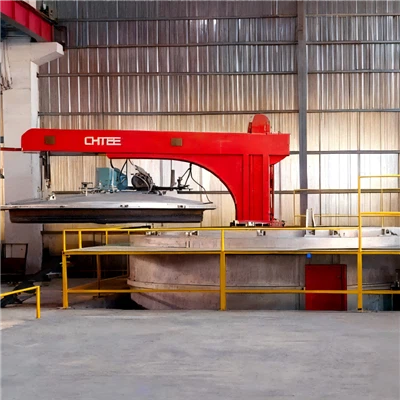
If you make gears, bearings, fasteners, chains, springs, or other steel parts, you've probably come across a mesh belt quenching furnace. It's one of the most common pieces of industrial heat treatment equipment used for continuous production.
Unlike a batch furnace, a mesh belt quenching furnace keeps parts moving through the entire process. Heating, carburizing (if required), quenching, washing, and tempering can all be connected into one production line. The result is higher output, more consistent quality, and less manual handling.
So, what exactly does a mesh belt quenching furnace do, and why do so many manufacturers choose this type of heat treatment furnace?

How Does a Mesh Belt Quenching Furnace Work?
The name comes from the heat-resistant mesh belt inside the furnace. Instead of loading parts into trays one batch at a time, components are placed directly onto the moving belt.
As the belt moves forward, the workpieces pass through different process zones. Each zone has its own temperature and function, allowing the entire heat treatment cycle to happen automatically.
Because every part travels at the same speed, the heating time stays consistent. This is one of the biggest reasons why a continuous quenching furnace can produce more stable results than many traditional batch systems.
What Happens Inside the Furnace?
Although every production line is different, the basic process is usually similar.
The first section slowly heats the parts to reduce thermal stress.
Next comes the main heating chamber, where the steel reaches the required hardening temperature. If the process includes carburizing, the furnace maintains a controlled atmosphere so carbon can diffuse into the surface.
After that, the parts move directly into the quenching tank. Since the transfer distance is very short, the temperature loss is minimal. This helps maintain consistent hardness from one part to the next.
Many production lines also include washing and tempering after quenching, so the parts leave the line ready for the next manufacturing step.
Why Is a Mesh Belt Furnace Better for Continuous Production?
A batch furnace spends a lot of time waiting. Parts need to be loaded, heated, unloaded, and prepared for the next cycle.
A continuous mesh belt furnace doesn't stop between batches. New parts enter while finished parts leave the other end of the line.
For factories producing thousands of identical components every day, this offers several practical advantages.
- Stable production rhythm
- Less manual handling
- Lower labor cost
- Better temperature consistency
- Easier process control
- Higher overall production efficiency
That's why industrial mesh belt furnaces are widely used in automotive parts, standard fasteners, bearings, hardware, bicycle components, and power transmission products.
Which Parts Are Suitable for a Mesh Belt Quenching Furnace?
Not every workpiece needs this type of furnace.
Mesh belt systems are best suited for small and medium-sized parts that can move continuously through the production line.
Typical products include:
- Screws and bolts
- Nuts
- Bearing rings
- Gears
- Roller chains
- Pins
- Bushings
- Hand tools
- Bicycle parts
- Motorcycle components
- Small automotive parts
For these products, continuous production is usually much more efficient than repeated batch processing.
What Should You Consider Before Choosing a Mesh Belt Quenching Furnace?
Choosing the right furnace isn't only about production capacity.
Engineers usually look at several questions first.
What material are the parts made from?
How many parts need to be processed every hour?
Is carburizing required?
How much hardness variation is acceptable?
What level of automation does the factory need?
The answers determine furnace dimensions, heating zones, atmosphere control, quenching method, conveyor speed, and many other design details.
A furnace that works well for screws may not be suitable for gears, even if both products use the same heat treatment process.
CHTEE Helps Build Complete Heat Treatment Solutions
Every factory has different production requirements. Some customers need higher output. Others want better hardness consistency, lower energy consumption, or a more stable furnace atmosphere.
CHTEE focuses on the design and manufacture of mesh belt quenching furnaces, continuous carburizing quenching furnaces, and complete industrial heat treatment furnace production lines. The company provides customized equipment for continuous production, together with installation guidance, commissioning, and technical support. With years of experience in industrial heat treatment equipment, CHTEE helps customers solve issues such as unstable hardness, oxidation, decarburization, production bottlenecks, and inefficient manual operation.
If you're planning a new heat treatment furnace project or upgrading an existing production line, discussing your process with an experienced furnace manufacturer is often the quickest way to find a suitable solution.