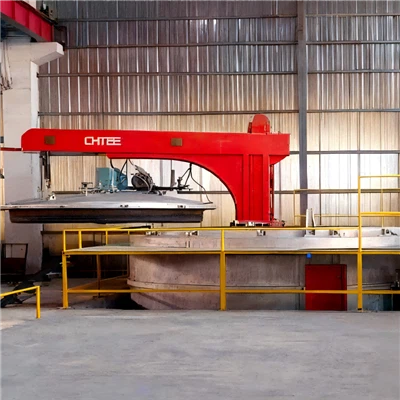
In modern metal manufacturing, production efficiency is becoming just as important as heat treatment quality. When factories need to process thousands or even millions of components with consistent results, traditional batch furnaces may no longer be the best choice.
This is where a continuous furnace becomes valuable.
Unlike batch-type equipment, where materials are loaded, heated, and removed as separate groups, a continuous furnace allows workpieces to move through different heating zones in a continuous process. This design helps manufacturers maintain stable production flow while reducing manual handling and improving process consistency.
Today, continuous furnaces are widely used in industries such as automotive parts, fasteners, bearings, hardware components, and other high-volume metal processing applications.
What Is a Continuous Furnace?
A continuous furnace is an industrial heat treatment system designed to process workpieces continuously through a controlled thermal environment.
The basic idea is similar to a production line. Instead of placing a full batch into the furnace and waiting for the entire cycle to finish, components enter from one side, pass through different treatment zones, and exit after completing the required heating process.
Depending on the application, the transportation method can include:
Mesh belts
Rollers
Pushers
Other automated conveying systems
The furnace structure is usually divided into multiple zones, allowing each stage of the process to be controlled separately.
Typical sections include:
Preheating zone
Heating zone
Holding or carburizing zone
Cooling or quenching zone
This multi-zone design allows manufacturers to create a more stable and repeatable heat treatment process.

How Does a Continuous Furnace Work in Heat Treatment?
The working principle of a continuous furnace is based on controlled movement and controlled temperature.
The workpieces continuously travel through the furnace while experiencing different thermal conditions.
Step 1: Automatic Loading
Before entering the furnace, components are usually arranged according to production requirements.
Compared with manual batch loading, automatic feeding reduces handling time and improves production rhythm.
This is especially important for small parts such as:
Bolts and nuts
Fasteners
Gears
Mechanical components
Step 2: Heating and Temperature Control
After entering the furnace, parts gradually reach the required treatment temperature.
A continuous heat treatment furnace usually contains several independent heating zones. Each zone can maintain different temperature settings according to the process requirements.
This helps achieve:
More stable heating speed
Better temperature uniformity
Reduced thermal shock
Improved product consistency
For mass production, maintaining the same thermal condition for every part is one of the biggest advantages of continuous processing.
Step 3: Atmosphere Protection and Heat Treatment Process
Many metal parts require protection from oxidation during high-temperature processing.
For processes such as carburizing, the furnace atmosphere must provide the correct carbon potential to allow carbon diffusion into the surface layer of steel components. (The Open University)
A continuous carburizing furnace combines:
Controlled heating
Protective atmosphere
Carbon diffusion process
Subsequent quenching
This allows manufacturers to produce components with a hard surface layer while maintaining a tougher core.
Step 4: Cooling and Quenching
After heating or carburizing, parts enter the cooling or quenching stage.
The cooling method depends on the required mechanical properties.
A continuous quenching furnace is designed to maintain a stable transfer between heating and cooling, reducing variation caused by delays during manual handling.
This is especially important for components where hardness consistency and dimensional stability are critical.
Why Are Continuous Furnaces Popular in High-Volume Production?
The biggest advantage of a continuous furnace is not simply speed. Its real value comes from production consistency.
Higher Production Efficiency
Because loading, heating, and unloading are connected, manufacturers can maintain a continuous workflow.
This reduces downtime between batches and improves overall production capacity.
More Consistent Heat Treatment Results
In batch production, differences between loads may occur due to:
Loading position
Operator handling
Temperature recovery time
A continuous furnace reduces these variations by keeping parts moving through a controlled process.
Lower Labor Requirement
Automation reduces the need for frequent manual loading and unloading.
This helps factories improve production efficiency while reducing dependence on manual operation.
Better Process Integration
A continuous system can combine multiple processes into one production line, such as:
Heating
Carburizing
Quenching
Tempering
Cooling
This makes it easier to build an integrated heat treatment solution.
Main Types of Continuous Furnaces Used in Heat Treatment
Continuous furnaces are not limited to one structure. Different designs are selected according to part size, production volume, and process requirements.
Mesh Belt Continuous Furnace
A mesh belt furnace uses a conveyor belt to transport components through the heating chamber.
It is commonly used for:
Small metal parts
Fasteners
Bearings
Hardware components
Its advantages include stable transportation and suitability for large quantities of small workpieces.
Pusher Continuous Furnace
A pusher furnace moves parts through the chamber using pushing mechanisms.
It is often selected for heavier components that require stronger support during processing.
Continuous Carburizing and Quenching Furnace
A continuous carburizing and quenching furnace for industrial heat treatment integrates carburizing and quenching processes into one production system.
This type of equipment is widely used for components that require:
High surface hardness
Wear resistance
Stable mechanical performance
CHTEE's continuous carburizing and quenching furnace is designed for automated production environments, combining heating, carburizing, quenching, and related heat treatment processes in one continuous system. It focuses on stable furnace atmosphere, uniform heating, and controlled cooling for consistent results.
Factors to Consider When Choosing a Continuous Furnace
Before selecting a continuous furnace system, manufacturers usually consider several factors.
Production Volume:High-output factories benefit more from continuous operation.
Part Size and Shape:Different conveying systems are suitable for different workpieces.
Heat Treatment Requirements:Processes such as carburizing, quenching, and tempering require different furnace configurations.
Atmosphere Requirements:Materials requiring oxidation protection need more precise atmosphere control.
Future Production Expansion:A properly designed continuous furnace system should support long-term production growth.