Industrial Quenching Furnace experts
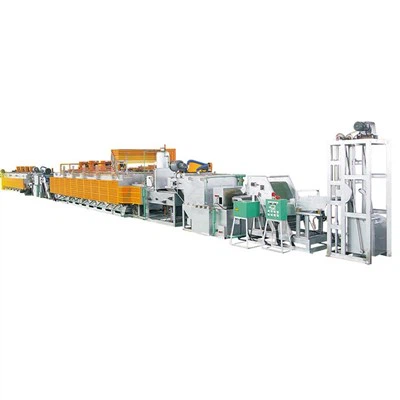
Designed for manufacturers requiring stable metallurgical results across continuous production, this system supports carburizing, quenching and tempering processes with controlled atmosphere and repeatable performance.
Commonly used in fasteners, automotive components and hardware industries where batch consistency, carbon control and production efficiency directly impact product quality and cost.

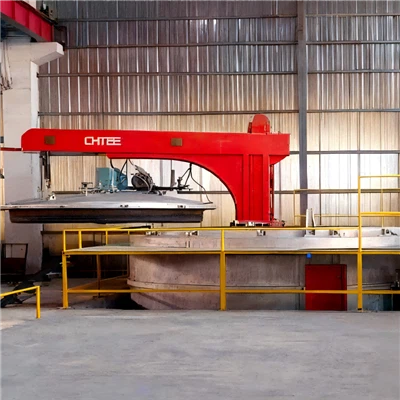
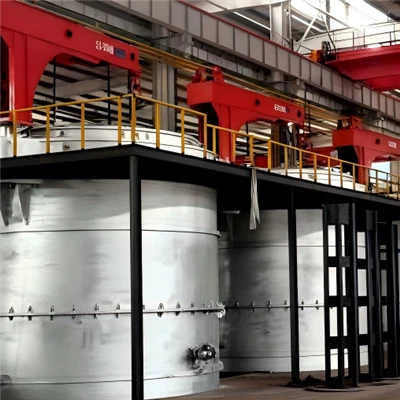
We provide industrial quenching furnace solutions, covering vacuum quenching furnaces, mesh belt quenching furnaces, and heat treatment production lines, suitable for the high-efficiency and precision heat treatment needs of the automotive, aerospace, and machinery manufacturing industries.
-
![Belt-type Quenching Furnace For Bearing Components]() Belt-type Quenching Furnace For Bearing ComponentsContinuous heat treatment equipment for bearing rings, bearing rollers and other steel components requiring controlled hardening and tempering.Belt-type Quenching Furnace for Bearing Components is
Belt-type Quenching Furnace For Bearing ComponentsContinuous heat treatment equipment for bearing rings, bearing rollers and other steel components requiring controlled hardening and tempering.Belt-type Quenching Furnace for Bearing Components is -
![Belt Type Quenching Furnace For Transmission Parts]() Belt Type Quenching Furnace For Transmission PartsContinuous carburizing and quenching equipment for transmission gears, shafts and other steel drivetrain components.Belt Type Quenching Furnace for Transmission Parts is designed for continuous
Belt Type Quenching Furnace For Transmission PartsContinuous carburizing and quenching equipment for transmission gears, shafts and other steel drivetrain components.Belt Type Quenching Furnace for Transmission Parts is designed for continuous -
![Belt Type Quenching Furnace For Automotive Fasteners]() Belt Type Quenching Furnace For Automotive FastenersBelt Type Quenching Furnace for Automotive Fasteners is a continuous heat treatment furnace designed for carburizing, quenching and tempering automotive bolts, nuts and other high-strength
Belt Type Quenching Furnace For Automotive FastenersBelt Type Quenching Furnace for Automotive Fasteners is a continuous heat treatment furnace designed for carburizing, quenching and tempering automotive bolts, nuts and other high-strength -
![Mesh Belt Quenching Furnace For Screws]() Mesh Belt Quenching Furnace For ScrewsThe Mesh Belt Quenching Furnace for Screws is designed for continuous heat treatment of small metal screws and precision fastening components. It is commonly used for carburizing, quenching, and
Mesh Belt Quenching Furnace For ScrewsThe Mesh Belt Quenching Furnace for Screws is designed for continuous heat treatment of small metal screws and precision fastening components. It is commonly used for carburizing, quenching, and


Key Features Of quenching Furnaces
Advanced quenching furnace technology combining high-efficiency heating, precise temperature control, and energy-saving design for reliable industrial heat treatment performance.
High-Efficiency Heating System
The optimized heating zone design ensures uniform temperature distribution inside the furnace, enabling rapid heating, increasing production efficiency, and reducing heat loss, ensuring precise heat treatment.
Precise Temperature Control System
Equipped with advanced temperature control technology, our quenching furnaces offer precise temperature regulation, minimizing errors and ensuring that each batch meets the required standards.
Energy-Efficient Design
Our quenching furnaces are designed to minimize energy consumption, reducing operational costs and meeting environmental protection standards.
Versatile Operating Platform
The flexible interface allows users to select from multiple modes based on production needs, simplifying operation and improving production efficiency.
Comprehensive After-Sales Service
We provide full technical support and after-sales services, including equipment installation, commissioning, training, and maintenance, ensuring long-term stable operation.
High Customization
We offer tailored solutions to meet specific customer requirements, ensuring each quenching furnace is suited to various processing techniques and production processes.
Quenching Furnace Technical Specifications
Key technical parameters and configuration options for industrial quenching furnaces used in a wide range of heat treatment applications.
| Item | Specification |
|---|---|
| Working Temperature | 850°C – 1300°C |
| Temperature Uniformity | ±5°C (depending on configuration) |
| Heating Method | Electric Heating / Gas Heating |
| Atmosphere Type | Methanol / Nitrogen / Endothermic Gas |
| Control System | PLC Automatic Control System |
| Operation Mode | Continuous / Batch |
| Conveyor Type | Mesh Belt / Roller / Tray / Manual Loading |
| Cooling Method | Oil Quenching / Water Quenching / Polymer Quenching |
| Production Capacity | Customized based on product and line design |
| Chamber Material | Heat-resistant steel / Refractory lining |
| Insulation Structure | Multi-layer insulation design |
| Power Supply | Customized (e.g. 380V / 50Hz or per country standard) |
| Temperature Control Accuracy | ±1°C |
| Process Control | Carburizing / Carbonitriding / Hardening |
| Quenching Medium Tank | Integrated / External |
| Automation Level | Semi-automatic / Fully automatic |
| Safety System | Over-temperature protection / Alarm system |
| Application | Fasteners, Automotive Parts, Bearings, Mechanical Components |
Quenching Furnace Technical Specifications & Capacity Range
Mesh belt quenching furnace parameters including capacity, power, dimensions and belt width for continuous heat treatment systems
| Model | Heating Type | Total Power / Heat Value | Length (m) | Belt Width (mm) | Carburizing Capacity (kg/h) | Tempering Capacity (kg/h) |
|---|---|---|---|---|---|---|
| TE-QM-E-1 | Electric | 220 kW | 28.5–30.5 | 400 | 80 | 160 |
| TE-QM-E-3 | Electric | 450 kW | 36.5–38.5 | 600 | 320 | 480 |
| TE-QM-E-5 | Electric | 650 kW | 40.5–42.5 | 800 | 720 | 960 |
| TE-QM-G-6 | Gas | 76000 kcal/h | 44.5–46.5 | 1000 | 960 | 1200 |
| TE-QM-G-7 | Gas | 125000 kcal/h | 49–57 | 1200 | 1380 | 1600 |
Quenching Furnace Model Selection Guide
Choose the right mesh belt quenching furnace based on production capacity, part type and continuous heat treatment requirements
Small Capacity Production
Entry-level continuous quenching furnace for manufacturers starting automated heat treatment or handling relatively low production volumes.
- • Output: 80 – 160 kg/h
- • Products: screws, small bolts
- • Short production cycles
TE-QM-E-1
Medium Capacity Production
Suitable for stable production lines with increasing demand, balancing efficiency, cost and process control.
- • Output: 300 – 700 kg/h
- • Products: fasteners, standard auto parts
- • Continuous operation required
TE-QM-E-3 / TE-QM-E-5
Large Scale Production
Designed for industrial mass production with high throughput and continuous 24/7 operation requirements.
- • Output: 900 – 1600 kg/h
- • Products: automotive parts, large batches
- • High efficiency priority
TE-QM-G-6 / TE-QM-G-7
Key Factors Affecting Quenching Furnace Selection
Important considerations when selecting continuous quenching furnace for industrial heat treatment lines
Match furnace output with real production demand to avoid under-sizing or over-investment.
Mesh belt furnaces are best suited for shallow carburizing layers (≤0.30 mm).
Avoid flat or thin parts that may overlap or stick during transport.
Electric heating for flexibility, gas heating for large-scale energy efficiency.
Not Sure Which Model Fits Your Production?
Provide your product type, size, required output and process details — CHTEE will recommend a suitable quenching furnace configuration.
Contact Quenching Furnace Expert
Advantages of Industrial Quenching Furnaces
Explore different types of quenching furnaces designed for various production needs, from continuous processing to flexible batch heat treatment.

Mesh Belt Quenching Furnace
Fasteners suitable for continuous processing
•Stable throughput
•Uniform heating
•High automation level

Industrial Pusher Type Furnace
Designed for automotive and bearing components.
•Multi-zone temperature control
•Suitable for deeper carburizing
•High consistency

Industrial Vacuum Quench Furnace
Flexible batch production system.
•Multi-process capability
•Controlled atmosphere
•Lower volume, higher flexibility

Applications of Quenching Furnace Systems
Quenching furnaces are widely used in industries where mechanical strength, wear resistance, and fatigue life are critical.
•Fasteners: bolts, nuts, screws (high-volume continuous production)
•Automotive parts: gears, shafts, transmission components
•Bearings: rings and rolling elements
•Hardware: chains, springs, structural components
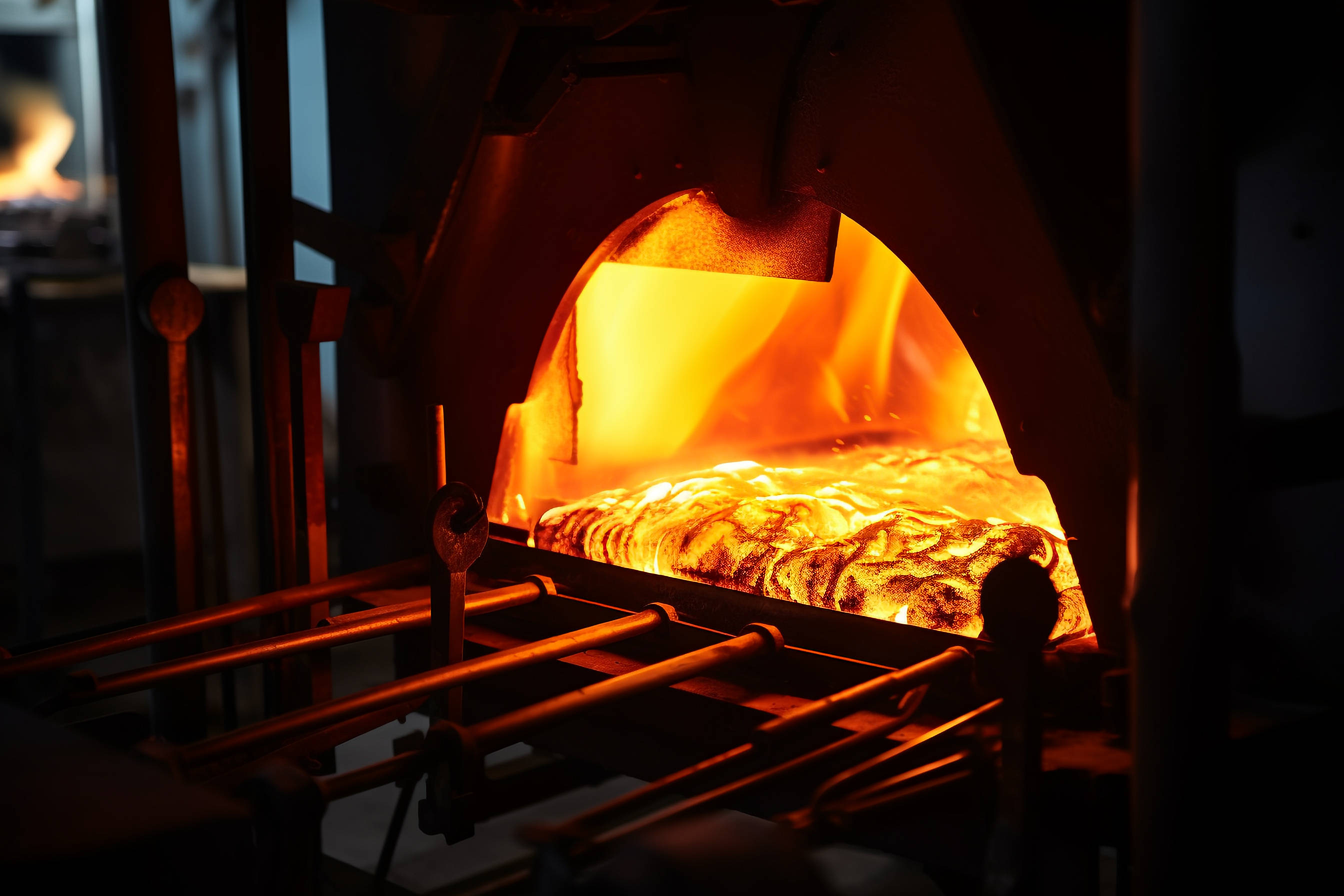
Loading → Preheating → Heating → Carburizing → Diffusion → Direct Quenching → Cleaning → Tempering → Drying
Each stage is controlled to ensure carbon diffusion, microstructure transformation, and final hardness consistency.
Key Technical Design for Stable Production
Controlled atmosphere system, temperature precision and quenching uniformity design
- • Dual oxygen probe system for precise carbon control
- •PID temperature control with SCR system
- •Uniform oil circulation and agitation
- •Sealed structure to reduce gas loss
- •Independent heating zones for uniform temperature

Why Choose Us as Your Quenching Furnace Manufacturer
As a leading quenching furnace manufacturer and heat treatment furnace supplier, we provide OEM and customized solutions for automotive parts, fasteners, and metal components. With 20+ years of experience, our furnaces ensure precise temperature control, energy efficiency, and stable operation to improve production efficiency and reduce costs.
Furnace Systems Delivered
years experience
Countries Served Worldwide
Customized Projects Completed
optimal heat treatment furnace solutions
As a leading quenching furnaces manufacturer , Chtee offers a one-stop customized quenching furnace service
We will help you maximize the return on your investment in your next industrial heat treatment furnace, ensuring it delivers maximum value to your business.
If you are planning a new heat treatment process or optimizing an existing one, please feel free to contact me.

Packaging And Transportation
Professional packaging and logistics solutions to ensure safe, stable, and on-time delivery of quenching furnace systems.


Quenching Furnace FAQ
1. What is the difference between a quenching furnace and a vacuum quenching furnace?
A standard quenching furnace typically uses controlled atmosphere (such as methanol-based gas) for carburizing and quenching, while a vacuum quenching furnace operates in a low-pressure environment without oxidation, making it more suitable for high-precision parts and materials sensitive to surface contamination.
2. How do I choose between a continuous hardening and tempering furnace and a batch furnace?
A continuous hardening and tempering furnace is ideal for high-volume, standardized production such as fasteners, while batch furnaces are better suited for flexible production with varying part sizes and processes.
3. What types of products are best suited for a continuous quenching furnace?
Continuous quenching furnaces are best for:
•Bolts, nuts, screws
•Small automotive components
•Standardized metal parts with consistent geometry
•They are not ideal for large or complex parts requiring individual process control.
4. When should I consider using a horizontal quench furnace instead of a mesh belt furnace?
A horizontal quench furnace is more suitable when:
•Parts require more stable positioning during heat treatment
•There is a need for improved deformation control
•The product geometry is not suitable for mesh belt transport
5. What carburizing depth can be achieved with a continuous quenching furnace?
Typically, continuous quenching furnaces are suitable for shallow carburizing applications, generally ≤0.30 mm. For deeper carburizing, a pusher or sealed quench furnace may be more appropriate.
6. What is the typical production capacity of a quenching furnace?
Depending on the model and configuration, capacity can range from:
•80 kg/h for small systems
•Up to 1600 kg/h for large continuous production lines
•Actual output depends on part size, loading density, and process parameters.
7. How does a vacuum quenching furnace improve product quality?
A vacuum quenching furnace reduces oxidation and decarburization, resulting in:
•Cleaner surface finish
•Better dimensional stability
•Reduced need for post-treatment cleaning
8. What are the key factors affecting quenching quality in a continuous hardening and tempering furnace?
Key factors include:
•Temperature uniformity
•Atmosphere control accuracy
•Quenching oil circulation
•Conveyor stability
•Proper control of these factors ensures consistent hardness and minimizes distortion.
9. What heating options are available for a quenching furnace?
Quenching furnaces typically offer:
•Electric heating (more precise, flexible)
•Gas heating (more energy-efficient for large-scale production)
•The choice depends on energy cost and production scale.
10. Can a quenching furnace be integrated into a complete heat treatment line?
Yes, most modern systems are designed as part of a full production line, including:
•Pre-cleaning systems
•Quenching tanks
•Tempering furnaces
•Drying and finishing units
•This integration improves efficiency and ensures consistent product quality.
We are one of the most professional quenching furnace manufacturers and suppliers in China. With abundant experience, we warmly welcome you to buy high quality quenching furnace made in China here from our factory. Thank you for your interest in our products.
Batch Integral Quench Furnaces, quenching furnace, Batch Hearth Furnace