Annealing and quenching are two common heat treatment processes used to change the microstructure and mechanical properties of metals. Both require controlled heating and cooling, but they are used for different metallurgical purposes.
An annealing furnace is generally used to reduce hardness, relieve residual stress, improve machinability, refine or homogenize microstructure, and prepare material for subsequent processing. A quenching furnace is used when the process requires rapid cooling after heating to increase hardness and strength or develop a specific hardened structure.
For manufacturers selecting industrial heat treatment equipment, the key question is not simply which furnace is more suitable. The furnace should match the material, required microstructure, heat treatment process, production volume, workpiece geometry, atmosphere requirements, and downstream operation.
Annealing Furnace vs Quenching Furnace at a Glance
| Item | Annealing Furnace | Quenching Furnace |
|---|---|---|
| Main purpose | Reduce hardness, relieve stress, improve machinability and adjust microstructure | Increase hardness and strength through controlled heating and rapid cooling |
| Cooling method | Controlled or slow cooling | Rapid cooling in oil, water, gas or another selected medium |
| Typical materials | Carbon steel, alloy steel, bearing steel, wire rods and other metal materials | Carbon steel, alloy steel, fasteners, gears, shafts, bearing components and other hardenable parts |
| Typical processes | Soft annealing, spheroidizing annealing, stress relief | Hardening, carburizing and quenching, quenching and tempering |
| Production mode | Batch or continuous depending on material and product | Batch or continuous depending on production volume and part geometry |
| Common equipment | Pit furnace, well-type furnace, bell furnace, roller hearth furnace, vacuum annealing furnace | Continuous quenching furnace, belt-type quenching furnace, vacuum quenching furnace and other quenching systems |
The main difference is the purpose of the thermal cycle. Annealing normally uses controlled cooling to obtain a softer or more stable material condition, while quenching uses rapid cooling to obtain a harder structure.
What Does an Annealing Furnace Do?
An annealing furnace heats metal to a controlled temperature, holds it for a specified period, and then cools it at an appropriate rate. The objective is to change the internal structure and mechanical properties of the material rather than simply heat it.
Common reasons for annealing include:
- Reducing hardness and improving machinability
- Relieving residual stress from forming, welding, machining or other processes
- Improving ductility and plasticity
- Adjusting grain structure
- Homogenizing the material structure
Preparing steel for subsequent machining or heat treatment
These functions make annealing particularly important for steel wire, coils, fastener materials, bearing steels, automotive components and other metal products requiring controlled material properties.
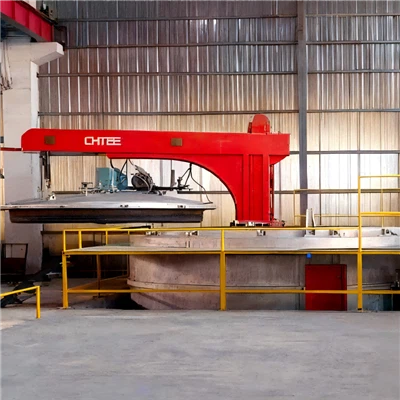
For coil and large-batch processing, a Well-Type Annealing Furnace can provide vertical loading and controlled atmosphere processing. CHTEE's well-type furnace is designed for batch treatment of coiled materials and supports processes including spheroidizing and soft annealing.

What Does a Quenching Furnace Do?
A quenching furnace heats a workpiece to the temperature required for hardening or another specified heat treatment process and then transfers the material to a controlled cooling stage.
The rapid cooling step is the defining feature of quenching. It changes the steel's microstructure and can significantly increase hardness and strength.
Industrial quenching systems are commonly used for:
- Bolts, nuts and other fasteners
- Automotive gears and transmission components
- Shafts and mechanical components
- Bearing components
- Small and medium metal parts
Components requiring carburizing, hardening and tempering
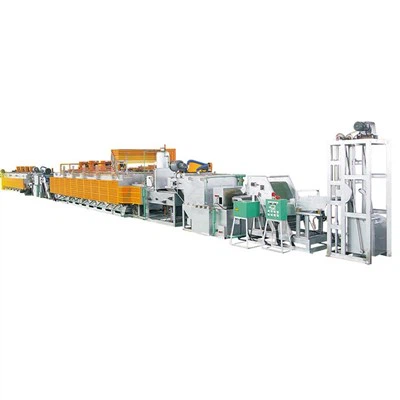
For high-volume production, a Continuous Type Carburizing Quenching Furnace can combine heating, carburizing, quenching and tempering within a continuous production line. CHTEE's continuous system uses controlled atmosphere heating and an oil quenching system for applicable production processes.

The Biggest Difference: Cooling Method
Cooling is one of the clearest differences between annealing and quenching.
Annealing requires the cooling stage to be controlled according to the material and target microstructure. The cooling rate is part of the process rather than an afterthought.
For example, a spheroidizing annealing cycle may require controlled heating, soaking and cooling to obtain the desired carbide structure and improve machinability.
CHTEE's annealing equipment uses convection heating and controlled thermal cycles to improve temperature uniformity throughout the furnace load.
Quenching intentionally cools the heated material rapidly through a selected quenching medium.
The quenching medium and cooling characteristics have a direct effect on hardness, distortion and cracking risk. The correct system therefore depends on the material, component geometry, required hardness and production process.
For industrial production, the furnace and quenching system need to work as one process. Heating temperature alone does not determine the final result.
Annealing vs Quenching: Different Metallurgical Goals
The two processes can also appear in the same manufacturing route.
A steel component may first undergo annealing to improve machinability or prepare its structure. After machining, the same component may later undergo hardening and quenching to achieve the required mechanical properties.
This is common in the production of:
Fasteners: wire rod or formed components may require spheroidizing or soft annealing before forming and machining, followed by hardening and tempering where required.
Automotive parts: gears, shafts and other components may require different heat treatment stages depending on their functional requirements.
Bearing components: bearing steels can require spheroidizing annealing before machining, followed by hardening and tempering.
For industry-specific equipment, manufacturers can review Fastener Heat Treatment Solutions ,Automotive Heat Treatment Solutions and Bearing Heat Treatment Furnace Solutions according to the actual component and process.
When Should You Use an Annealing Furnace?
An annealing furnace is normally considered when the production process requires a softer, more machinable or more structurally stable material condition.
Typical examples include:
Steel that is too hard or has an unsuitable microstructure can be difficult to machine consistently. Annealing can reduce hardness and improve machinability.
Cold working can introduce residual stress and change the material structure. Stress-relief or other annealing processes can help stabilize the material before subsequent operations.
Large quantities of wire rod or coiled material can be processed in batch-type furnaces. A vertical pit or well-type furnace is particularly suitable when the production layout requires vertical loading.
Annealing can also be used as a preparation stage before another thermal process. The required cycle depends on the steel grade and the final mechanical properties.
When Should You Use a Quenching Furnace?
A quenching furnace is appropriate when the component requires a hardening process and rapid cooling is part of the specified heat treatment cycle.
Typical applications include:
Bolts, screws and nuts may require carburizing, hardening, quenching and tempering to achieve the required combination of surface and core properties.
A Belt Type Quenching Furnace for Automotive Fasteners can be used when the component size and production requirements fit a continuous belt-type process.
Gears, shafts and other transmission parts often require controlled hardening and quenching processes.
For this application, a Belt Type Quenching Furnace for Transmission Parts can be integrated into an industrial heat treatment production line.
Bearing components require carefully controlled heat treatment because hardness, dimensional stability and microstructure are closely related to service performance.
A Belt-type Quenching Furnace for Bearing Components is one equipment option for continuous processing of suitable bearing components.
Annealing Furnace vs Quenching Furnace: Which One Fits Your Production?
The equipment selection should start from the required heat treatment result rather than the furnace name.
Consider these factors:
1. Required Hardness
If the process needs to reduce hardness and improve machinability, annealing may be appropriate.
If the process requires substantially increased hardness through rapid cooling, quenching should be considered.
2. Required Microstructure
Different steel grades require different thermal cycles. Spheroidizing annealing, soft annealing, stress relief, hardening and carburizing-quenching are not interchangeable processes.
3. Workpiece Size and Shape
Large coils, long shafts and heavy batches may require a different furnace configuration from small fasteners or gears.
Vertical pit furnaces are useful for certain coil and large-batch applications, while continuous belt furnaces are commonly used for smaller parts in high-volume production. CHTEE's well-type annealing furnace, for example, is designed around vertical loading and batch processing.
4. Production Volume
Batch furnaces provide flexibility for different loads and production schedules.
Continuous furnaces are more suitable when parts move through a defined sequence of heating, treatment, quenching and tempering stages at a consistent production rate.
5. Atmosphere Requirements
Atmosphere control becomes important when oxidation, decarburization or surface condition needs to be controlled.
CHTEE's vertical annealing furnace uses nitrogen protective atmosphere technology to reduce oxidation and decarburization during processing.
Can Annealing and Quenching Be Used in the Same Production Line?
Yes. They are different processes, but they can be part of the same overall heat treatment route.
A typical manufacturing sequence may look like:
Raw Material → Annealing → Forming/Machining → Carburizing or Hardening → Quenching → Tempering → Inspection
The actual sequence depends on the material, component design and required mechanical properties.
For example, a fastener manufacturer may use annealing to prepare wire rod for forming and later use continuous carburizing, quenching and tempering equipment for the finished fastener.
This is why selecting an industrial furnace should be based on the complete heat treatment process, rather than selecting equipment only by furnace type.
Annealing Furnace and Quenching Furnace Selection for Industrial Projects
For an industrial furnace project, the equipment specification normally needs to account for:
- Material grade
- Part dimensions and weight
- Target hardness or mechanical properties
- Required heat treatment process
- Batch size or hourly production capacity
- Heating temperature and holding time
- Cooling requirements
- Furnace atmosphere
- Loading and unloading method
- Automation requirements
- Workshop layout
- Energy source
CHTEE provides Industrial Heat Treatment Furnace Manufacturer services covering annealing furnaces, quenching furnaces, vacuum furnaces and customized heat treatment systems.
The company's annealing equipment portfolio includes pit-type and vertical furnace configurations for applications such as steel wire rod coils, fasteners, bearing steels and automotive components.