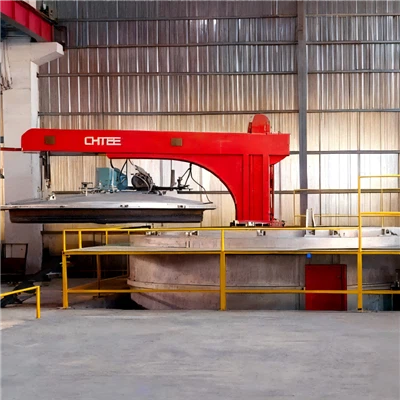
High-volume fastener manufacturing requires heat treatment equipment that can process bolts, nuts, screws, and other steel components at a consistent production rate. A continuous quenching furnace allows parts to move through controlled heating and quenching stages without handling each batch as a separate operation.
For fastener manufacturers, selecting the right furnace involves more than comparing rated capacity. Steel grade, fastener dimensions, required hardness, carburizing depth, production volume, atmosphere control, and tempering requirements all influence the equipment configuration.
CHTEE provides continuous mesh belt heat treatment systems for fasteners and other suitable metal components, with furnace configurations selected according to production requirements and the specified heat treatment process.

Match the Furnace to Your Fastener Type and Heat Treatment Process
Different fasteners require different thermal cycles. The furnace should be selected according to the material and the mechanical properties required in the finished product.
✅ Bolts and High-Strength Fasteners
Automotive bolts, construction fasteners, and industrial bolts may require quenching and tempering to achieve specified hardness, strength, and toughness.
The process typically involves controlled heating, quenching, and tempering. The actual cycle depends on the steel grade, fastener dimensions, and applicable product specifications.
For suitable fasteners requiring continuous production, a Mesh Belt Quenching Furnace for Fasteners supports automated material movement through the heat treatment line.
✅ Screws and Small Threaded Components
Screws, self-tapping screws, and other small threaded parts are commonly processed in continuous mesh belt furnaces.
Depending on the steel grade and application, the required process may include hardening and tempering or carburizing followed by quenching. For surface-hardened components, the specified case depth and surface properties should guide process selection.
✅ Nuts, Washers, and Standard Hardware
Nuts, washers, and other small steel components can be processed continuously when their dimensions, loading arrangement, and heat treatment requirements are compatible with the mesh belt system.
For mixed product ranges, the equipment configuration should account for the smallest and largest parts, loading density, and the time required for each component to complete the thermal cycle.
Determine the Required Production Capacity
Production capacity is one of the most important factors when selecting a continuous quenching furnace. The target output must be matched to part dimensions, loading density, belt width, conveyor speed, and the required heat treatment cycle.
When evaluating capacity, manufacturers should establish:
✅ Target output in kilograms per hour or tons per month
✅ Fastener size and weight range
✅ Product mix and daily production schedule
✅ Required heating and holding time
✅ Carburizing and tempering requirements
✅ Mesh belt width and conveying speed
✅ Planned operating hours and production shifts
CHTEE's continuous furnace range includes configurations with different belt widths and production capacities. For example, published models include belt widths from 400 mm to 1,200 mm, with carburizing capacities varying by configuration.
These figures are equipment-specific reference values, not a guarantee of output for every fastener. Actual production capacity depends on the workpiece dimensions, loading density, process time, and final treatment requirements.
For a new production line, capacity planning should also consider future product demand and the expected proportion of different fastener sizes.
Choose Between Quenching and Carburizing-and-Quenching
Not every fastener requires the same heat treatment process. The distinction between direct hardening and carburizing followed by quenching is especially important when specifying a continuous furnace.
✅ Quenching and Tempering
Quenching and tempering are commonly used for suitable medium-carbon and alloy steel fasteners.
Quenching increases hardness and strength through rapid cooling after heating. Tempering then adjusts the balance between hardness, strength, and toughness to meet the required mechanical properties.
The process parameters must be matched to the steel grade and the finished fastener specification.
✅ Carburizing and Quenching
Carburizing introduces additional carbon into the surface layer of suitable low-carbon steel before hardening. After quenching, the treated component can achieve a hard surface while retaining a comparatively tougher core.
This process is relevant to fasteners and other components requiring specified surface hardness, wear resistance, and core properties.
CHTEE's Continuous Type Carburizing Quenching Furnace integrates heating, carburizing, quenching, and tempering for suitable continuous production applications. The published product information identifies thin-layer carburizing, particularly case depths below 0.30 mm, as a suitable application range for this furnace design.
The appropriate process must be confirmed against the fastener material and product specification.
Evaluate Mesh Belt Width, Conveyor Speed, and Loading Density
A continuous quenching furnace moves fasteners through the heating and treatment zones using a mesh belt. The conveyor configuration affects how parts are distributed, how long they remain in each zone, and how consistently they are processed.
✅ Mesh Belt Width
Belt width should match the dimensions and quantity of fasteners being processed. A wider belt can accommodate a larger loading area, but usable capacity also depends on the loading pattern and required treatment time.
✅ Conveyor Speed
Conveyor speed determines the residence time of parts in each furnace zone. It must be coordinated with the heating profile, carburizing requirements, and overall production target.
✅ Loading Density
Fasteners need to be distributed appropriately on the belt so that the thermal process matches the required treatment conditions. Part shape, size, and loading pattern should be considered during equipment selection.
These factors should be evaluated together rather than selected independently. Increasing the loading quantity alone does not establish the correct production capacity if the required thermal cycle cannot be maintained.
Consider Temperature and Atmosphere Control
Temperature consistency and atmosphere control are important for repeatable fastener heat treatment.
During carburizing, the furnace atmosphere must support the required carbon transfer into the steel surface. Temperature, carbon potential, residence time, and subsequent quenching conditions all influence the final metallurgical result.
For high-volume production, the equipment specification should address:
✅ Temperature control across the heating zones
✅ Atmosphere composition and monitoring
✅ Carbon control for carburizing processes
✅ Belt speed and process-time control
✅ Quenching system operation
✅ Process data monitoring and alarms
CHTEE's continuous quenching furnace systems use controlled heating and atmosphere arrangements suited to the selected process. The configuration can be matched to the steel grade, required treatment cycle, and production target.
For fastener manufacturers, consistent process parameters help maintain the specified hardness and metallurgical properties across large production runs.
Plan the Complete Fastener Heat Treatment Line
A continuous quenching furnace is usually part of a broader production system rather than an isolated piece of equipment.
A typical production route may include:
Loading → Heating or Preheating → Carburizing (if required) → Quenching → Washing → Tempering → Oil Coating (if required) → Drying → Unloading
The exact arrangement depends on the fastener material, treatment process, surface requirements, and plant configuration.
For example, a line producing carburized fasteners needs the appropriate carburizing and quenching stages. A line processing fasteners through quenching and tempering may use a different process arrangement.
When planning a new installation, manufacturers should also consider:
✅ Automatic loading and unloading
✅ Quenching tank arrangement
✅ Washing and tempering equipment
✅ Oil coating and drying requirements
✅ Material transfer between process stages
✅ Control system integration
✅ Available workshop space and maintenance access
CHTEE's Heat Treatment Solutions for Fasteners covers continuous mesh belt furnace applications and other equipment options for different fastener production requirements.
Select the Furnace Configuration for Your Production Scale
The most suitable furnace configuration depends on the production target, product range, and required process.
| Production Requirement | Selection Considerations |
|---|---|
| Small screws and standard fasteners | Part dimensions, belt loading, required treatment time, and hourly output |
| High-volume bolt and nut production | Belt width, continuous operating rate, process consistency, and automation |
| Carburized fasteners | Steel grade, required case depth, atmosphere control, and quenching arrangement |
| High-strength fasteners | Quenching and tempering cycle, target hardness, and required mechanical properties |
| Multiple fastener sizes | Product range, loading arrangement, process flexibility, and changeover requirements |
| New production line | Total line layout, auxiliary equipment, material flow, and future capacity needs |
CHTEE's Belt Type Quenching Furnace for Automotive Fasteners is designed for continuous carburizing, quenching, and tempering of automotive bolts, nuts, and other suitable high-strength fasteners.
For general fastener production, the Mesh Belt Furnace for Steel Fasteners provides another option for matching furnace configuration to material, part dimensions, belt speed, and required production capacity.
The final choice should be based on the actual fastener specification and production process rather than output figures alone.
What Information Should You Prepare Before Requesting a Quotation?
A clear technical specification helps the furnace manufacturer recommend an appropriate configuration.
Before requesting a quotation, prepare the following information where available:
✅ Fastener type: Bolts, nuts, screws, washers, studs, or specialty fasteners
✅ Material grade: Carbon steel, alloy steel, or another specified material
✅ Part dimensions: Length, diameter, and weight range
✅ Heat treatment process: Quenching and tempering, carburizing and quenching, or another required cycle
✅ Target properties: Required hardness, case depth, and applicable mechanical specifications
✅ Production capacity: Target kilograms per hour or tons per month
✅ Heating requirements: Electric or gas heating preferences
✅ Surface requirements: Atmosphere control, oxidation control, and post-treatment needs
✅ Production layout: Available space and connections to upstream or downstream equipment
If some parameters are not yet finalized, the fastener drawings, material specifications, current production volume, and intended treatment process provide a useful starting point for technical discussion.
FAQ
1.What is a continuous quenching furnace used for in fastener production?
A continuous quenching furnace is used to heat-treat suitable fasteners such as bolts, nuts, screws, and washers in a continuous production process. Depending on the equipment configuration, it can support quenching and tempering or carburizing, quenching, and tempering.
2.How do I select the capacity of a mesh belt quenching furnace?
Start with the target hourly output, fastener dimensions, product weight, loading density, and required treatment cycle. Belt width, conveyor speed, and the residence time required in each processing zone should then be evaluated together.
3.Can a continuous quenching furnace perform carburizing and quenching?
Yes. A suitable continuous carburizing quenching furnace can integrate heating, carburizing, quenching, and tempering into a production line. The process must be configured for the steel grade and required surface properties.
4.What fasteners can be processed in a mesh belt quenching furnace?
Suitable products may include bolts, nuts, screws, washers, studs, automotive fasteners, and other small steel components. The actual range depends on part dimensions, weight, material, loading arrangement, and heat treatment requirements.
5.What determines the quality consistency of continuous fastener heat treatment?
Key factors include temperature uniformity, heating and holding time, atmosphere control, conveyor speed, quenching conditions, and tempering parameters. These settings must be matched to the material and finished fastener specification.
6.Can the furnace be customized for different fastener production requirements?
Furnace configuration can be selected according to fastener size, material grade, process requirements, output target, heating method, and production line layout. Technical details should be confirmed with the manufacturer before the equipment specification is finalized.