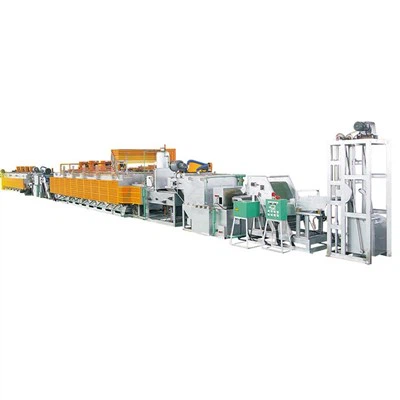
An annealing furnace is used to heat metal to a controlled temperature, hold it for a defined period, and then cool it under controlled conditions. The purpose is to change the material's internal structure and mechanical properties rather than simply increase its temperature.
In industrial production, annealing can be used to soften metal, reduce hardness, improve ductility, relieve residual stress, refine or adjust microstructure, and prepare components for subsequent machining or forming.
Different materials and production processes require different annealing cycles. Furnace design therefore needs to match the material, workpiece dimensions, batch size, atmosphere requirements, and cooling method.
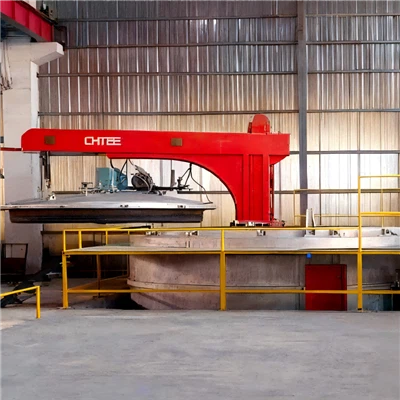
For manufacturers processing coils, steel components, fasteners, forgings, or other large batches, a Well-Type Annealing Furnace provides a vertical batch-processing configuration with controlled heating, atmosphere management, and cooling.

What Does an Annealing Furnace Do?
The main function of an annealing furnace is to provide controlled heating, soaking, and cooling conditions for a metal heat treatment process.
A typical annealing cycle consists of three basic stages:
Heating → Soaking → Controlled Cooling
During heating, the workpiece is brought to the required process temperature. The soaking stage maintains the material at that temperature long enough for the required metallurgical changes to occur. The cooling stage then follows a controlled rate appropriate for the selected annealing process.
The exact temperature and cycle depend on the material and the intended result.
For example, annealing may be used after casting, forging, rolling, welding, or machining to modify the material condition before the next manufacturing operation.
What Is Annealing Used For?
Annealing can serve several different purposes in metal processing.
1.Reducing Hardness
Some manufacturing processes leave steel or other metals harder than required for the next operation. Annealing can reduce hardness and make the material easier to machine, cut, form, or otherwise process.
This is particularly relevant when a component needs further machining after forging, rolling, or other forming operations.
2.Improving Ductility and Plasticity
Annealing can improve the ability of a material to deform without cracking. This makes the process useful for components that will undergo additional forming or mechanical processing.
3.Relieving Residual Stress
Casting, welding, forging, machining, and cold working can introduce residual stresses into metal components.
A suitable stress-relief annealing cycle can reduce these internal stresses and help stabilize the material before subsequent processing or service.
4.Adjusting Microstructure
Annealing is also used to obtain a specific metallurgical structure.
Depending on the material and process, manufacturers may use spheroidizing annealing, soft annealing, or isothermal annealing to achieve the required material condition.
5.Improving Processability
For manufacturers, annealing is often not the final treatment. It can be a preparation step before machining, forming, drawing, cutting, or another heat treatment process.
The required furnace should therefore be selected according to what happens before and after annealing.
Which Annealing Processes Can an Industrial Furnace Perform?
Different annealing processes are used for different material and production requirements.
1.Spheroidizing Annealing
Spheroidizing annealing is commonly used for suitable steels when a softer and more machinable structure is required.
It is particularly relevant to applications involving bearing steel, fasteners, and other components that require subsequent forming or machining.
A controlled heating and cooling cycle is important because the resulting microstructure depends heavily on the process conditions.
2.Soft Annealing
Soft annealing is used when reducing hardness and improving machinability are important objectives.
It can be applied to steel materials that need to be prepared for machining or further manufacturing operations.
3.Isothermal Annealing
Isothermal annealing uses a controlled thermal cycle in which the material is cooled to a specified temperature and held for a defined period.
This approach can provide a more controlled transformation compared with unrestricted cooling.
4.Stress Relief
Stress-relief annealing focuses on reducing residual stresses generated during previous manufacturing operations.
It is commonly considered for components that have experienced welding, machining, forming, or other processes that can leave internal stress.
The appropriate process depends on the material, component geometry, and required final condition.
What Materials Can Be Processed in an Annealing Furnace?
An industrial annealing furnace can be used for a range of metallic materials, but the actual suitability depends on the material grade and required thermal cycle.
Typical applications include:
- Carbon steel
- Alloy steel
- Bearing steel
- Steel wire rod
- Forged components
- Metal coils
- Fastener materials
Other steel components requiring controlled annealing
The material grade should be provided to the furnace manufacturer before equipment selection.
A furnace cannot be selected solely according to the word "annealing." The required process temperature, holding time, atmosphere, cooling rate, load weight, and material structure all influence the equipment configuration.
Why Is Atmosphere Control Important During Annealing?
Surface quality is an important consideration during long heat treatment cycles.
When steel is heated at high temperatures, exposure to oxygen can cause oxidation and scale formation. Decarburization can also become a concern when the process atmosphere is not properly controlled.
For this reason, industrial annealing furnaces may use protective or controlled atmospheres to reduce unwanted reactions at the material surface.
The CHTEE well-type annealing furnace uses a methanol decomposition and nitrogen atmosphere system and includes decarburization control. Its product configuration is designed to address issues such as surface oxidation, unstable decarburization, temperature inconsistency, and batch variation.
For manufacturers where surface condition is important, atmosphere control should be considered together with furnace temperature control rather than treated as a separate issue.
Why Is Temperature Uniformity Important in Annealing?
Annealing cycles can involve long heating and holding periods, so temperature uniformity throughout the load is important.
If different areas of a batch receive significantly different thermal conditions, the resulting material structure and hardness can vary from one part of the load to another.
The furnace structure, heating arrangement, air circulation, insulation, and control system all affect temperature distribution.
The CHTEE well-type furnace uses a vertical cylindrical structure and convection-based heating. A strong convection fan circulates the atmosphere inside the furnace to improve heat distribution between the inner and outer portions of the load.
This design is particularly relevant to batch processing of coils and vertically loaded components.
How Does a Well-Type Annealing Furnace Work?
A well-type annealing furnace uses a vertical chamber, with the workpieces loaded from the top.
A typical operating sequence is:
1. Loading
The material is placed into the furnace chamber using suitable lifting equipment.
2. Furnace Closing
The furnace cover is positioned and the chamber is sealed according to the operating requirements.
3. Heating
The heating system raises the temperature according to the programmed annealing cycle.
4. Soaking
The load remains at the required temperature for the specified holding period.
5. Controlled Cooling
The material is cooled according to the selected process.
6. Unloading
After the required cooling stage, the treated material is removed from the furnace.
This vertical configuration is particularly suitable for batch treatment of coils and components where loading by crane is practical.
What Are the Advantages of a Well-Type Annealing Furnace?
The furnace structure provides several practical advantages for batch annealing applications.
1.Vertical Loading for Large Batches
The pit-style chamber allows materials to be loaded vertically, making it suitable for certain coils and component batches.
CHTEE's published electric heating models range from 4-ton to 32-ton maximum charging capacities, while its natural-gas models range from 16-ton to 36-ton maximum charging capacities. The appropriate capacity depends on the actual workpiece and production requirements.
2.Convection-Based Heat Distribution
Strong internal circulation helps distribute heat through the load.
This is important when treating a large batch where the temperature needs to remain consistent across different areas of the furnace chamber.
3.Controlled Atmosphere
A controlled atmosphere can help limit oxidation and decarburization during extended heating cycles.
This is particularly relevant when surface condition is part of the required quality standard.
4.Batch Processing
Unlike continuous furnaces, a well-type annealing furnace is designed around batch processing. This can be useful when production involves large loads of coils or components that are processed together.
What Industries Use Industrial Annealing Furnaces?
Annealing equipment is used across several metal-processing industries.
1.Automotive Components
Automotive manufacturers and suppliers use annealing for suitable steel components that require controlled hardness, machinability, or microstructure before subsequent manufacturing stages.
2.Fastener Manufacturing
Fasteners may require annealing before forming, machining, or other heat treatment processes. Spheroidizing and soft annealing are particularly relevant to certain fastener materials.
3.Aerospace Components
Metal components used in aerospace manufacturing can require carefully controlled thermal processing to achieve the specified material condition.
4.Steel Wire Rod and Coil Processing
Coils and wire rod are well suited to batch furnace configurations when large quantities of material need to undergo a controlled annealing cycle.
5.Forging
Forged components can undergo annealing to reduce hardness, relieve stress, and prepare the material for machining or subsequent heat treatment.
How Do You Choose the Right Annealing Furnace?
Choosing an annealing furnace should start with the production process rather than furnace capacity alone.
1. Identify the Material
Provide the exact material grade and current material condition.
Different steels may require different annealing temperatures and cooling cycles.
2. Define the Annealing Process
Specify whether the requirement is:
- Spheroidizing annealing
- Soft annealing
- Isothermal annealing
- Stress relief
- Another controlled annealing process
3. Calculate the Batch Load
Determine the required load per cycle rather than selecting a furnace based only on maximum capacity.
For example, CHTEE's published well-type electric furnace configurations cover maximum charging capacities from 4T to 32T.
4. Check Workpiece Dimensions
The loading diameter, height, coil dimensions, component geometry, and available lifting equipment all affect the furnace chamber design.
5. Consider Atmosphere Requirements
If oxidation, decarburization, or surface quality is important, the furnace should include an appropriate atmosphere system and sealing configuration.
6. Define the Cooling Requirement
Cooling speed affects the final material condition and should be included when determining the furnace configuration.
7. Consider Factory Layout
A well-type furnace requires sufficient vertical clearance for loading and unloading. Crane height and workshop space therefore need to be considered during equipment planning.
Well-Type Annealing Furnace Specifications
CHTEE's well-type annealing furnace is available in different configurations according to heating method and batch capacity.
For electric heating models, published specifications include:
| Model | Power | Maximum Charging Capacity | Loading Size |
|---|---|---|---|
| TE-A-MH-E-100/200 | 145 kW | 4T | φ1000 * H2000 |
| TE-A-MH-E-180/240 | 200 kW | 8T | φ1800 * H2400 |
| TE-A-MH-E-240/240 | 320 kW | 16T | φ2400 * H2400 |
| TE-A-MH-E-280/240 | 420 kW | 20T | φ2800 * H2400 |
| TE-A-MH-E-320/240 | 460 kW | 24T | φ3200 * H2400 |
| TE-A-MH-E-360/240 | 520 kW | 28T | φ3600 * H2400 |
| TE-A-MH-E-360/340 | 580 kW | 32T | φ3600 * H3400 |
Natural-gas heating configurations are also available, with published maximum charging capacities from 16T to 36T.
These specifications are reference configurations. Final furnace dimensions and capacity should be determined from the actual material, batch weight, process cycle, and workshop conditions.
Why Work With CHTEE for Industrial Annealing Equipment?
CHTEE manufactures industrial heat treatment furnaces, including annealing furnaces, quenching furnaces, tempering furnaces, and customized equipment.
The company provides well-type annealing furnace configurations for batch processing of coils, components, and alloy materials. Its published applications include automotive fasteners, aerospace metal components, railway fastening systems, power equipment parts, and steel wire rod coils.
For manufacturers planning a new annealing line or replacing existing equipment, CHTEE's Well-Type Annealing Furnace can be configured according to the required batch capacity, heating method, atmosphere, and process conditions.
CHTEE also states that it provides installation guidance, commissioning, training, and technical support for its furnace equipment.