
Customized Car-Type Heat Treatment Furnace Expert
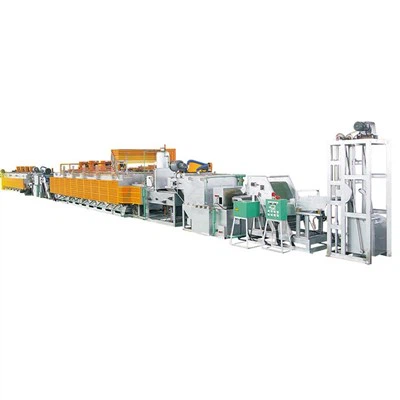
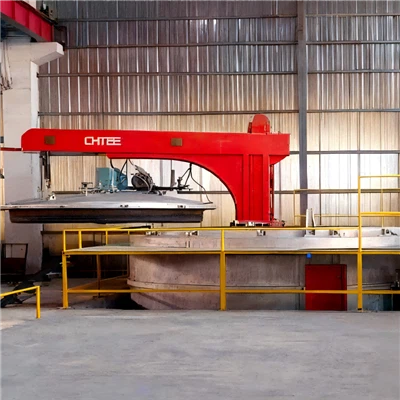
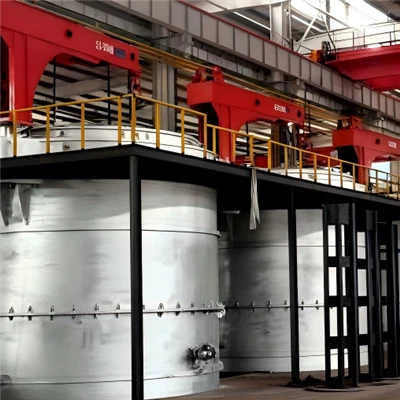
The bogie-type annealing furnace is a national standard energy-saving periodic furnace with an ultra-energy-efficient structure made of fiber, saving 30% on electricity. It is exclusively manufactured using composite high-alumina ceramic nail assemblies, impact-resistant sealing bricks on the bogie, automatic sealing of the bogie and furnace door, and integrated rail connection, requiring no foundation installation and can be used simply by placing it on a level surface. It is mainly used for quenching, annealing, aging of high-chromium and high-manganese steel castings, ductile iron, rolls, steel balls, 45 steel, stainless steel, etc., as well as heat treatment of various mechanical parts.
Professional Car Bottom Industrial Furnace Manufacturer
-
![High Temperature Car Bottom Furnace]() High Temperature Car Bottom FurnaceA high temperature car bottom furnace is a batch-type industrial heat treatment system designed for processing heavy and oversized metal components. The furnace utilizes a motorized car platform to
High Temperature Car Bottom FurnaceA high temperature car bottom furnace is a batch-type industrial heat treatment system designed for processing heavy and oversized metal components. The furnace utilizes a motorized car platform to -
![Car Bottom Type Heat Treatment Furnace]() Car Bottom Type Heat Treatment FurnaceA car-bottom annealing furnace is a widely used heat treatment device in the metal processing industry, primarily used for annealing metallic materials. Annealing is a metal heat treatment process
Car Bottom Type Heat Treatment FurnaceA car-bottom annealing furnace is a widely used heat treatment device in the metal processing industry, primarily used for annealing metallic materials. Annealing is a metal heat treatment process -
![Car Bottom Hearth Furnace For Forgings]() Car Bottom Hearth Furnace For ForgingsA Car Bottom Hearth Furnace for Forgings is a batch-type industrial furnace in which the furnace hearth is mounted on a movable car. Forging workpieces are loaded onto the car outside the furnace,
Car Bottom Hearth Furnace For ForgingsA Car Bottom Hearth Furnace for Forgings is a batch-type industrial furnace in which the furnace hearth is mounted on a movable car. Forging workpieces are loaded onto the car outside the furnace, -
![Car Bottom Annealing Furnace]() Car Bottom Annealing FurnaceThis equipment is a heat treatment furnace specially designed for annealing, normalizing, quenching and tempering of automotive fasteners, aerospace, railway fasteners, power accessories,
Car Bottom Annealing FurnaceThis equipment is a heat treatment furnace specially designed for annealing, normalizing, quenching and tempering of automotive fasteners, aerospace, railway fasteners, power accessories,

Car-Type Industrial Heat Treatment Furnace Solution
In actual production, to address the stability of heat treatment quality in pipe fittings, a key technical approach is to accurately simulate the furnace operating conditions. This involves establishing a realistic 3D computational model, combined with turbulence and thermal radiation models, to simulate the flow and temperature field distribution within the furnace under different workpiece placement conditions. This not only clarifies the impact of each operating condition on workpiece quality but also provides direct technical support for on-site operation and process optimization.
Please continue reading for the specific implementation details of this solution.
Bogie-type Heat Treatment Furnace
A car-type heat treatment furnace (5.5m×3.6m×2.8m, 0.5m-deep chamber) heats long-distance high-pressure gas pipelines. Staggered combustion nozzles (0.5m horizontal offset, 0.6m above gantry) are arranged on both sides; they use Baisite 40 gas burners, with gas-air volume ratio 20:40, 0.168m diameter, 20–40m³/h air intake, and alternate high/low-fire operation. A fire baffle (0.25m from the furnace) protects the tee joint from high-temperature flue gas.
The tee joint (0.115m long, 0.25m wide, 0.5m high, aligned with the gantry top) requires internal temperatures of 910–920°C; the furnace maintains this range to meet heat treatment needs.
The furnace’s rear-side flue (0.63m diameter, 15m high) vents gas via 0.5m-diameter bottom channels. The tee joint’s main pipe is 0.1858m long (0.065m wall thickness), and its branch pipe is 0.853m long (0.055m wall thickness).

Gas Density Inside The Furnace
Premixed methane and air burn rapidly in the high-temperature furnace. Deflected by the fire barrier, the flue gas diffuses outward, which avoids localized overheating from direct contact between high-temperature flue gas and the three-way pipe and improves the uniformity of flue gas temperature distribution in the furnace.
Data shows that under three working conditions—outer circular channel furnace cavity, uniformly arranged three-way pipes, and three-way pipes away from the furnace door—the average flue gas density in the furnace (excluding areas near the inlet or nozzles) is consistently 0.2921 kg/m³, with maximum density differences of only 0.0013, 0.0004 and 0.0007 kg/m³ respectively (max relative difference ≤ 0.44%). Comparative results confirm that the flue gas density is uniform across all conditions, and the installation position of three-way pipes has little impact on flue gas diffusion.

Temperature Distribution Inside The Furnace
The temperature distribution inside the furnace directly affects the treatment effect and quality of the three - way valves. The high - temperature combustion gas rapidly passes through the top surface of the trolley from the bottom, eliminating the low - temperature zone at the center of the trolley bottom, displacing the original low - temperature gas in the furnace, and quickly raising the furnace temperature to the required level until it stabilizes, with the entire furnace reaching the standard treatment temperature.
Under the three working conditions of different three - way valve placement positions, the average temperature inside the furnace (excluding the area near the nozzles) is consistently 910℃, with the maximum temperature differences being 6℃, 8℃ and 3℃ respectively, all within the allowable range of ±10℃, indicating a uniform temperature distribution. The maximum temperature difference between the three - way valves on both sides is only 1℃, and there is no temperature difference when they are placed far away from the furnace door. It can be seen that the placement position of the three - way valves has a limited impact on the temperature difference between the two sides, and will not cause quality differences of the three - way valves due to uneven temperature distribution.

Conclusion
Overall, different placement positions of the tees inside the furnace barely affect the flue gas and temperature distribution, but slightly impact the flue gas velocity (turbulence intensity). Under the three working conditions, the flue gas density in the furnace stays consistent (0.2921 kg/m³) and uniformly distributed, so the tee placement basically does not hinder flue gas diffusion, nor does it alter the overall trend of flue gas velocity.
When tees are placed differently, the average temperature in the furnace remains the same and evenly distributed. Although this causes minor temperature differences between the tees on both sides, the variation range is extremely limited and will not lead to any quality changes of the tees.
We are one of the most professional car bottom furnace manufacturers and suppliers in China. With abundant experience, we warmly welcome you to buy high quality car bottom furnace made in China here from our factory. Thank you for your interest in our products.
Car Bottom Box Furnace, car bottom furnace, Car Bottom Annealing Furnace