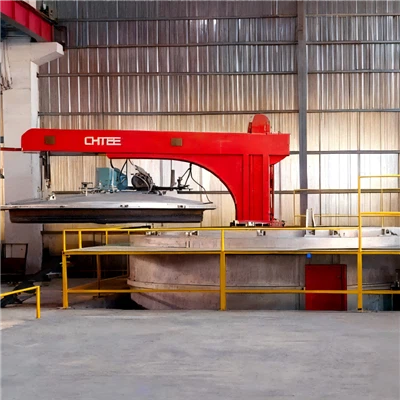
Choosing an industrial annealing furnace requires more than matching the furnace size to the production volume. Steel grade, workpiece dimensions, annealing process, batch weight, atmosphere requirements, and downstream manufacturing operations all affect equipment selection.
For steel wire rod manufacturers, fastener factories, bearing steel processors, and metal component producers, the right annealing furnace helps achieve consistent material properties before wire drawing, cold heading, machining, or further heat treatment.
CHTEE manufactures industrial annealing furnaces for different materials and production requirements, including well-type and pit-type configurations for batch processing of steel wire rods, coils, and selected steel components.

Identify the Annealing Process Required for Your Steel
Different annealing processes produce different metallurgical results. Before selecting a furnace, determine the required material condition and how the treated steel will be used in the next production stage.
1.Spheroidizing Annealing for Steel Wire Rods
Spheroidizing annealing is widely used for suitable high-carbon and alloy steels before cold forming, wire drawing, or machining. The process promotes a spheroidized carbide structure that can improve machinability and cold-working performance.
For fastener manufacturers, spheroidizing annealing is particularly important when preparing steel wire rods for cold heading and subsequent forming operations.
A Spheroidizing Annealing Furnace for Steel Wire Rods can be configured around the steel grade, coil dimensions, batch weight, and required metallurgical condition.
2.Soft Annealing for Improved Machinability
Soft annealing reduces hardness and helps make suitable steel materials easier to machine or form. It is commonly applied to carbon steel, alloy steel, and other materials that require a softer condition before further manufacturing.
For manufacturers processing bolts, nuts, screws, and other metal components, the annealing cycle should match the material specification and the forming or machining process that follows.
3.Stress-Relief Annealing for Steel Components
Forging, welding, machining, and forming can introduce residual stress into metal components. Stress-relief annealing uses a controlled thermal cycle to reduce these stresses and improve dimensional stability.
This process is relevant to steel shafts, rings, sleeves, forged components, and other parts requiring a controlled material condition before subsequent operations.
An Industrial Annealing Furnace can be selected according to the workpiece material, dimensions, thermal cycle, and production requirements.
Match the Furnace Type to Your Workpieces
Furnace structure affects loading, batch capacity, heat distribution, and how materials move through the production process.
1.Well-Type Annealing Furnace for Steel Wire Rod Coils
A well-type annealing furnace uses a vertical chamber and is suitable for batch processing of steel wire rods and coils. This arrangement accommodates heavy loads and supports production processes that require controlled heating, holding, and cooling.
CHTEE's TE-A-MH-G series uses natural gas heating and a protective atmosphere based on methanol decomposition gas and nitrogen. Available configurations have maximum charging capacities from 16 to 36 tons per batch.
The series is designed for spheroidizing and soft annealing of medium- and low-carbon steel, alloy steel, bearing steel, and suitable fastener wire rods and coils.
For projects involving different coil dimensions or batch weights, the furnace chamber and loading arrangement should be selected according to the actual production requirements.
2.Pit-Type Annealing Furnace for Steel Parts
Steel parts vary considerably in shape, weight, and loading requirements. Shafts, bars, rings, sleeves, forged components, and machined parts may require batch treatment rather than continuous belt transport.
A Pit Type Annealing Furnace for Steel Parts can accommodate suitable components through a vertical chamber, with the loading method and chamber dimensions configured around the parts being processed.
This type of furnace is relevant when manufacturers need to soften steel parts, reduce residual stress, or prepare components for subsequent machining or hardening.
3.Other Industrial Annealing Furnace Configurations
Different production requirements may call for other furnace designs. Bell-type furnaces are used for suitable coil-processing applications, while continuous annealing furnaces serve production lines that require a steady material flow.
The furnace configuration should follow the material, product dimensions, production volume, and required thermal cycle rather than a general preference for one furnace type.
Looking for the Right Annealing Furnace?
Explore our industrial annealing furnace solutions or contact our team for equipment recommendations based on your production requirements.
Calculate Batch Capacity and Production Requirements
Furnace capacity directly affects production planning. Selecting a suitable model requires more than estimating the total weight of steel processed each day.
For batch annealing, manufacturers should consider:
✅ Maximum workpiece or coil weight per batch
✅ Coil diameter, height, and overall dimensions
✅ Required loading and unloading method
✅ Number of batches required per shift
✅ Heating, holding, and cooling time
✅ Available production space and crane height
✅ Required output per day or month
For example, CHTEE's TE-A-MH-G well-type annealing furnace series includes configurations with maximum charging capacities of 16, 24, 28, 32, and 36 tons per batch.
The appropriate model depends on the dimensions and weight of the actual load, not just the nominal tonnage. Loading clearance, chamber geometry, and the required temperature distribution must also be considered.
For steel parts with varied dimensions, batch capacity may need to be determined from the loading fixture or basket arrangement rather than weight alone.
Evaluate Heating Method and Temperature Control
Heating method selection depends on the available energy source, production requirements, and furnace configuration.
Industrial annealing furnaces may use electric heating or fuel-fired heating. CHTEE's TE-A-MH-G series uses natural gas heating for large-batch annealing applications.
Temperature control is equally important. The heating profile, holding time, and cooling cycle must correspond to the material grade and required metallurgical result.
For large steel coils, temperature distribution throughout the load is a key consideration. The furnace design should support consistent heating conditions between different areas of the batch, helping maintain repeatable processing results.
When evaluating an industrial annealing furnace, manufacturers should review the available control system, temperature measurement points, programmable heating profiles, and process monitoring requirements.
Select the Right Protective Atmosphere for Steel Annealing
Surface condition can be important when annealed steel will undergo cold heading, wire drawing, machining, coating, or other downstream processes.
When oxidation and decarburization need to be controlled, the furnace may require a protective atmosphere matched to the steel grade and annealing process.
CHTEE's TE-A-MH-G well-type annealing furnace uses methanol decomposition gas and nitrogen as its protective atmosphere system. This configuration helps control oxidation and decarburization during the treatment of suitable steel wire rods and coils.
Atmosphere selection should account for:
✅ Steel grade and carbon content
✅ Required surface condition after annealing
✅ Spheroidizing or soft-annealing requirements
✅ Furnace sealing and atmosphere distribution
✅ Gas supply and control arrangements
✅ Applicable production and quality specifications
For fastener wire rods, maintaining the required surface and material condition supports subsequent forming operations and helps keep the manufacturing process consistent.
Consider the Complete Production Route
An annealing furnace should be selected as part of the overall manufacturing process. The condition required after annealing depends on what happens next.
For example, fastener production may involve:
✅ Steel Wire Rod → Spheroidizing Annealing → Wire Drawing → Cold Heading → Thread Rolling → Hardening and Tempering → Inspection
The exact route depends on the fastener material and product specification.
For bearing steel, spheroidizing annealing may be used before forming or machining, followed by additional heat treatment to achieve the required bearing properties.
For forged or machined steel components, stress-relief annealing may be required before precision machining or another production stage.
Manufacturers should therefore communicate the complete process route when specifying an annealing furnace. This helps determine the required thermal cycle, loading arrangement, atmosphere system, and production capacity.
For industry-specific equipment, see [Fastener Heat Treatment Solutions] (建议内链:Fastener Industry 解决方案)and [Bearing Heat Treatment Furnace Solutions] (建议内链:Bearings Industry 解决方案).
Why Choose a Well-Type Annealing Furnace for Large Steel Batches?
A well-type annealing furnace is a practical option for manufacturers processing large quantities of steel wire rods and coils in batches.
Its vertical chamber supports heavy batch loading, while the heating and protective atmosphere systems can be configured for the required annealing process. For suitable steel grades, spheroidizing and soft annealing help prepare material for wire drawing, cold heading, and further manufacturing.
CHTEE's well-type furnace configurations provide several options for production planning:
✅ Batch capacity: Available TE-A-MH-G models cover 16–36 tons per batch.
✅ Heating method: Natural gas heating for the TE-A-MH-G series.
✅ Protective atmosphere: Methanol decomposition gas and nitrogen.
✅ Material applications: Medium- and low-carbon steel, alloy steel, bearing steel, and suitable fastener wire rods and coils.
✅ Process applications: Spheroidizing annealing and soft annealing.
✅ Configuration: Furnace chamber dimensions and loading capacity selected according to production requirements.
For manufacturers comparing equipment models, these specifications provide a starting point for matching the furnace to the steel grade, batch size, and required processing conditions.
What Information Is Needed for an Annealing Furnace Quotation?
To identify a suitable industrial annealing furnace, manufacturers should prepare the main process and production parameters.
| Information | Why It Matters |
|---|---|
| Steel grade | Determines the appropriate annealing cycle |
| Workpiece type | Defines the loading arrangement and furnace structure |
| Workpiece dimensions | Determines chamber size and loading clearance |
| Batch weight | Helps establish the required furnace capacity |
| Annealing process | Defines heating, holding, and cooling requirements |
| Required output | Helps determine the production configuration |
| Heating energy | Supports selection of the heating system |
| Atmosphere requirements | Determines the protective atmosphere configuration |
| Workshop layout | Affects furnace dimensions, crane height, and installation planning |
Providing these details allows the furnace manufacturer to evaluate the project against actual operating conditions rather than recommending a model based only on nominal capacity.
FAQ
1.What is the best annealing furnace for steel wire rods?
The suitable furnace depends on the steel grade, coil dimensions, batch weight, annealing process, and production capacity. A well-type or pit-type annealing furnace is commonly considered for batch processing of steel wire rod coils.
2.What is a well-type annealing furnace used for?
A well-type annealing furnace is used for controlled batch annealing of suitable metal materials. CHTEE's TE-A-MH-G series is designed for spheroidizing and soft annealing of medium- and low-carbon steel, alloy steel, bearing steel, and suitable fastener wire rods and coils.
3.What batch capacities are available for CHTEE's TE-A-MH-G series?
The published TE-A-MH-G configurations cover maximum charging capacities of 16, 24, 28, 32, and 36 tons per batch. The final model should be selected according to workpiece dimensions, loading requirements, and production needs.
4.Why is a protective atmosphere used during steel annealing?
A protective atmosphere helps control oxidation and decarburization during heat treatment. The appropriate atmosphere depends on the steel grade, annealing process, and required surface condition.
5.Can an annealing furnace be customized for different steel parts?
Yes. Furnace configuration can be selected according to the material, part dimensions, batch weight, heating method, atmosphere requirements, loading arrangement, and required thermal cycle. These details should be confirmed during equipment specification.