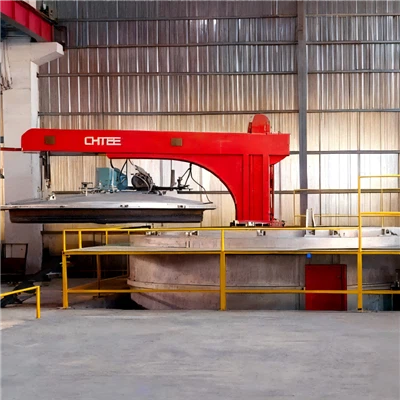
Industrial annealing furnaces are used to change the microstructure and mechanical properties of metals through controlled heating, holding, and cooling. The process can reduce hardness, improve machinability, relieve residual stress, and prepare steel for subsequent manufacturing operations.
For steel wire rods, fasteners, bearing materials, and machined components, the annealing result depends on more than the furnace temperature. Heating uniformity, soaking time, cooling rate, atmosphere composition, and workpiece loading all affect the final material condition.
Understanding the working principle of an industrial annealing furnace helps manufacturers select suitable equipment for their materials and production processes.

How Does an Industrial Annealing Furnace Work?
The basic working principle of an industrial annealing furnace consists of three main stages: heating, soaking, and cooling. Each stage contributes to the final metallurgical properties of the workpiece.
✅ Stage 1: Heating the Metal
Metal workpieces are loaded into the furnace and heated to a temperature specified for the selected annealing process.
The heating method depends on the furnace design. Industrial annealing furnaces may use electric heating elements or gas burners. Heat is transferred to the workpieces through radiation, convection, and conduction.
During this stage, the material's internal structure begins to respond to the thermal cycle. The required temperature depends on the steel grade, initial microstructure, workpiece dimensions, and intended treatment.
For example, steel wire rods intended for cold heading may require spheroidizing annealing, while forged or machined components may need stress-relief annealing.
✅ Stage 2: Holding at the Required Temperature
Once the workpieces reach the target temperature, the furnace maintains the specified conditions for a defined period.
This stage allows the material to undergo the required metallurgical changes throughout the load. The holding time depends on the material, workpiece thickness, batch size, and annealing process.
Temperature uniformity is particularly important when processing large batches of steel coils. If different areas of the load experience different thermal conditions, the resulting material properties may vary.
Industrial furnaces therefore use temperature monitoring and control systems to maintain the required heating profile throughout the treatment cycle.
✅ Stage 3: Controlled Cooling
After the holding stage, the workpieces are cooled according to the selected annealing process.
Some annealing cycles use slow furnace cooling, while others use a specified controlled cooling rate or a different cooling arrangement. The correct method depends on the desired microstructure and mechanical properties.
For spheroidizing annealing, the heating and cooling cycle is designed to promote a suitable carbide structure. For stress-relief annealing, the cooling schedule is selected to reduce residual stress while maintaining the required material condition.
The cooling stage is therefore part of the heat treatment process, not simply the period after heating.
What Happens to Metal During Annealing?
Annealing changes the internal structure of a metal through a controlled thermal cycle. The exact metallurgical response depends on the material composition, initial condition, heating temperature, holding time, and cooling rate.
The main objectives include:
✅ Reducing hardness: Softening suitable steels to improve machinability or forming performance.
✅ Improving ductility: Preparing materials for forming, drawing, or other manufacturing operations.
✅ Relieving residual stress: Reducing stress introduced during casting, forging, welding, rolling, or machining.
✅ Adjusting microstructure: Producing a material structure suited to the next manufacturing stage.
✅ Improving processing consistency: Helping establish more uniform material properties across a production batch.
For example, spheroidizing annealing is widely used for suitable high-carbon and alloy steels before cold forming or machining. The process promotes a spheroidized carbide structure that can improve machinability and cold-working performance.
A suitable Industrial Annealing Furnace provides the heating and cooling conditions needed to carry out the specified annealing cycle.
How Do Heating Uniformity and Temperature Control Affect Annealing?
Temperature uniformity is essential when workpieces of different positions within a furnace load must achieve consistent properties.
Several factors influence heating uniformity:
✅ Furnace structure: The chamber design, insulation, heating arrangement, and internal circulation system affect how heat reaches the workpieces.
✅ Workpiece loading: Coil dimensions, stacking arrangement, load density, and spacing affect heat transfer throughout the batch.
✅ Temperature control: Thermocouples, control instruments, and programmed heating profiles help maintain the specified thermal conditions.
✅ Soaking time: The holding period must account for the time needed for the load to reach the required temperature, not just the furnace chamber's temperature reading.
For large steel coils, convection-based heating can help distribute heat between different areas of the load. The furnace configuration should be matched to the material, coil dimensions, batch weight, and required annealing cycle.
CHTEE's Well-Type Annealing Furnace uses a vertical chamber and a convection-based heating arrangement for suitable batch annealing applications involving steel wire rods and coils.
Why Is a Protective Atmosphere Used in Industrial Annealing Furnaces?
When steel is heated at elevated temperatures, its surface can react with the surrounding atmosphere. Oxidation and decarburization may affect surface condition and the properties of the treated material.
A protective atmosphere helps control the chemical environment inside the furnace during heat treatment.
The appropriate atmosphere depends on the steel grade, annealing process, and required surface condition. Nitrogen and other controlled-atmosphere systems may be used according to the furnace design and process requirements.
For suitable steel wire rods and coils, CHTEE's TE-A-MH-G well-type annealing furnace series uses natural gas heating with a protective atmosphere based on methanol decomposition gas and nitrogen. The atmosphere system helps control oxidation and decarburization during annealing.
Atmosphere control is especially relevant when the material will undergo wire drawing, cold heading, machining, or additional heat treatment after annealing.
How Does a Well-Type Annealing Furnace Work?
A well-type annealing furnace uses a vertical furnace chamber in which workpieces are loaded from above, commonly with an overhead crane or a suitable lifting arrangement.
After loading, the furnace follows the specified heating, holding, and cooling cycle. The chamber, heating system, and atmosphere arrangement are selected according to the workpiece dimensions and processing requirements.
This configuration is suitable for large-batch treatment of steel wire rods and coils where vertical loading and controlled thermal processing are required.
CHTEE's TE-A-MH-G series is designed for spheroidizing and soft annealing of medium- and low-carbon steel, alloy steel, bearing steel, and suitable fastener wire rods and coils.
Published models cover maximum charging capacities of 16, 24, 28, 32, and 36 tons per batch. The suitable model depends on the actual coil dimensions, batch weight, loading arrangement, and required process conditions.
A Pit-Type Annealing Furnace is another option for suitable steel materials requiring batch annealing. The final configuration should match the workpiece type and the required thermal cycle.
Which Industries Use Industrial Annealing Furnaces?
Industrial annealing furnaces are used across metalworking industries where materials need specific mechanical properties before or after manufacturing operations.
✅ Steel Wire Rod and Fastener Manufacturing
Wire rods may undergo spheroidizing or soft annealing before wire drawing and cold heading. The resulting material condition supports subsequent forming operations.
For these applications, manufacturers can explore Fastener Heat Treatment Solutions and suitable well-type annealing furnace configurations.
✅ Bearing Steel Processing
Bearing steel may require spheroidizing annealing before machining or forming. The selected cycle depends on the steel grade and the required carbide structure.
The Bearing Heat Treatment Furnace Solutions page provides a relevant starting point for reviewing furnace options for bearing-related production.
✅ Automotive and Mechanical Components
Forged, machined, or formed steel components may require annealing to improve machinability, relieve residual stress, or prepare the material for further heat treatment.
The furnace type and thermal cycle should be determined by the component's material, dimensions, production volume, and final application.
What Determines the Working Cycle of an Industrial Annealing Furnace?
The heating, holding, and cooling stages must be specified for the material and the required result. There is no single thermal cycle suitable for every steel grade or annealing process.
The main factors include:
✅ Material composition: Carbon content and alloying elements influence the required process conditions.
✅ Initial material condition: Casting, forging, rolling, and cold working can produce different starting microstructures and residual stresses.
✅ Workpiece dimensions: Thick sections and large coils require consideration of heat transfer through the load.
✅ Required properties: Softening, spheroidizing, and stress relief involve different process objectives.
✅ Production quantity: Batch weight and loading arrangement influence heating uniformity and cycle planning.
✅ Atmosphere requirements: Surface condition and decarburization limits may determine the atmosphere system.
✅ Cooling conditions: The cooling rate must support the intended microstructure and material properties.
For these reasons, industrial annealing furnace selection should begin with the material specification and required process result. Furnace capacity, heating method, chamber dimensions, atmosphere system, and control configuration can then be matched to the production requirements.
Conclusion
The working principle of an industrial annealing furnace is based on controlled heating, holding, and cooling to achieve the required metallurgical changes in metal materials. Temperature uniformity, cooling conditions, workpiece loading, and atmosphere control all contribute to the final result.
For manufacturers processing steel wire rods, fasteners, bearing materials, and other metal components, choosing a furnace that matches the material and production process helps establish repeatable heat treatment conditions.
CHTEE supplies industrial annealing furnace systems, including well-type configurations for suitable steel wire rods and coils. Equipment selection can be based on material grade, annealing process, batch capacity, workpiece dimensions, heating method, and protective atmosphere requirements.
FAQ
1.What is the working principle of an industrial annealing furnace?
An industrial annealing furnace heats metal to a specified temperature, holds it for a defined period, and cools it according to the required process. The controlled thermal cycle changes the material's microstructure and mechanical properties.
2.Why is holding time important during annealing?
Holding time allows the workpiece to reach the required thermal condition and undergo the intended metallurgical changes. The appropriate duration depends on the material, workpiece dimensions, batch loading, and annealing process.
3.Why is controlled cooling important in annealing?
Cooling affects the resulting microstructure and mechanical properties. The required cooling rate depends on whether the process is intended to soften the material, promote spheroidization, relieve residual stress, or achieve another specified result.
4.What is a well-type annealing furnace used for?
A well-type annealing furnace uses a vertical chamber for batch processing of suitable workpieces, including steel wire rods and coils. CHTEE's TE-A-MH-G series supports spheroidizing and soft annealing for specified steel materials.
5.Why does an annealing furnace need a protective atmosphere?
A protective atmosphere helps control oxidation and decarburization during heating. The required atmosphere depends on the steel grade, annealing process, and surface condition required after treatment.