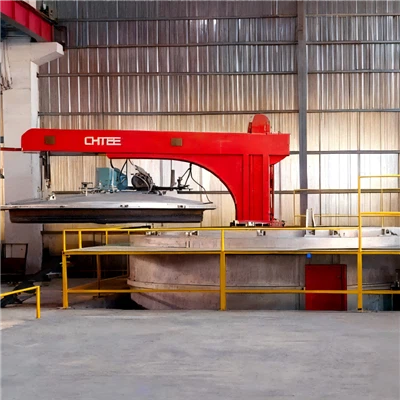
Annealing is a metal heat treatment process that involves slowly heating a metal to a certain temperature, holding it for a sufficient time, and then cooling it at a suitable rate. Annealing heat treatment is divided into full annealing, incomplete annealing, and stress relief annealing. The mechanical properties of annealed materials can be tested using tensile tests or hardness tests. Many steels are supplied in the annealed heat treatment state. Steel hardness can be tested using a Rockwell hardness tester, measuring HRB hardness. For thinner steel plates, strips, and thin-walled steel pipes, a surface Rockwell hardness tester can be used to measure HRT hardness.

The Purposes Of Annealing Are:
① To improve or eliminate various structural defects and residual stresses caused in steel during casting, forging, rolling, and welding processes, preventing workpiece deformation and cracking.
② To soften the workpiece for machining.
③ To refine the grain structure and improve the mechanical properties of the workpiece.
④ To prepare the structure for final heat treatment (quenching and tempering).
Why Is Annealing Important?
① Eliminates Work Hardening
Cold processing increases hardness but reduces ductility. Annealing restores the crystal structure, improving flexibility and toughness, making the pipe more durable and suitable for further processing.
② Relieves Residual Stress
Cold working introduces residual stresses, which can cause cracking and deformation. Annealing helps release these stresses, enhancing the pipe's stability and extending its lifespan.
③ Restores Corrosion Resistance
Cold working can damage the chromium oxide protective layer. Annealing helps regenerate a complete protective layer, boosting corrosion resistance, especially in harsh environments.
④ Improves Machining Performance
After annealing, stainless steel pipes have optimal hardness and good ductility, making them easier to cut, weld, and process, improving production efficiency.

Common Annealing Processes Include:
① Full annealing.
Used to refine the coarse, overheated structure with poor mechanical properties found in medium and low-carbon steels after casting, forging, and welding. The workpiece is heated to 30-50°C above the temperature at which all ferrite transforms into austenite, held for a period of time, and then slowly cooled in the furnace. During cooling, the austenite transforms again, resulting in a finer steel structure.
② Spheroidizing annealing.
Used to reduce the high hardness of tool steel and bearing steel after forging. The workpiece is heated to 20-40°C above the temperature at which the steel begins to form austenite, held for a period of time, and then slowly cooled. During cooling, the lamellar cementite in the pearlite transforms into a spherical shape, thus reducing the hardness.
③ Isothermal annealing.
Used to reduce the high hardness of some alloy structural steels with high nickel and chromium content for machining. Generally, it is first cooled at a relatively fast rate to the temperature where austenite is most unstable, held for an appropriate time, and the austenite transforms into bainite or sorbite, thus reducing the hardness.
④ Recrystallization annealing.
Used to eliminate the work hardening phenomenon (increased hardness, decreased plasticity) in metal wires and sheets during cold drawing and cold rolling. The heating temperature is generally 50-150°C below the temperature at which steel begins to form austenite. Only in this way can the work hardening effect be eliminated and the metal softened.
⑤ Stress-relief annealing.
Used to eliminate internal stresses in steel castings and welded parts. For steel products, heating to a temperature 100-200°C below the temperature at which austenite begins to form, followed by cooling in air, can eliminate internal stresses.
FAQ
1. What is an annealing furnace?
An annealing furnace is a type of heat treatment furnace used to heat metals or alloys to a specific temperature and then allow them to cool at a controlled rate. The purpose is to alter the material's properties, typically to relieve internal stresses, soften the material, and improve its ductility.
2. What is the main purpose of annealing?
The main purpose of annealing is to improve the material's properties by reducing hardness, enhancing ductility, and relieving internal stresses. This process allows metals, especially after cold working, to regain some of their original properties, making them more workable and less likely to crack under stress.
3. What is annealing in HVAC?
In HVAC (Heating, Ventilation, and Air Conditioning), annealing refers to the process of heating copper or other metals used in piping to remove internal stresses, increase ductility, and make the material easier to bend or form during the installation of HVAC systems.
4. What are the three stages of annealing?
The three stages of annealing are:
● Recovery: The material is heated, and atomic movements begin to relieve some of the internal stresses without changing the material's microstructure significantly.
● Recrystallization: New, strain-free grains form, replacing the deformed grains created during the previous processing steps.
● Grain Growth: The new grains grow in size, which can affect the mechanical properties of the material, such as strength and ductility.
5. How many times can you anneal metal?
Metal can be annealed multiple times depending on the type of metal and its usage. However, excessive annealing may lead to grain growth, which can reduce the strength of the metal. It's important to follow optimal annealing cycles for specific metals to balance strength and ductility.