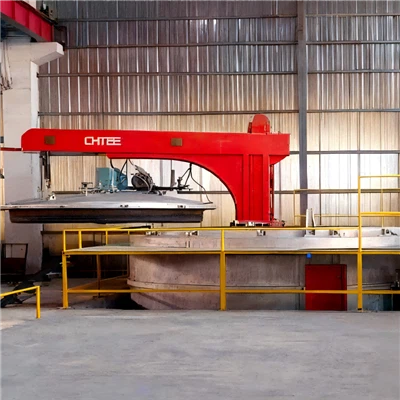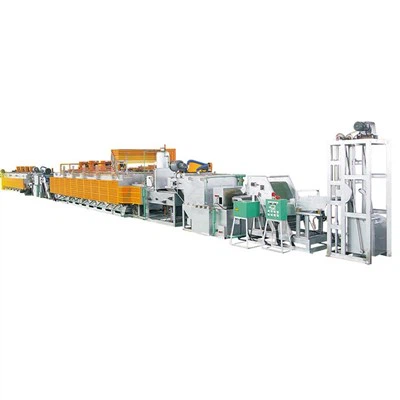
A continuous carburizing quenching furnace is used when metal components need controlled carburizing, quenching, and tempering in a continuous production process. Unlike batch heat treatment equipment, the system moves parts through the treatment line on a mesh belt, allowing repeated processing of suitable components with a defined production flow.
This furnace type is commonly associated with fasteners, small gears, springs, hardware, and other small or medium-sized metal parts that require surface hardening and consistent heat treatment. CHTEE's continuous mesh belt furnace integrates heating, carburizing, quenching, and tempering into one production line.
For manufacturers evaluating equipment for continuous carburizing and quenching, the Continuous Type Carburizing Quenching Furnace provides a useful example of how these processes can be arranged in a production system.

What Does a Continuous Carburizing Quenching Furnace Do?
The basic purpose of the furnace is to modify the surface properties of steel parts through a controlled sequence of thermal and chemical treatment.
Carburizing introduces carbon into the surface of suitable steel components at elevated temperature. This increases the carbon content of the surface layer while the core retains different mechanical characteristics.
The parts then undergo quenching, which rapidly cools the heated material to develop the required hardened structure.
A subsequent tempering process reduces excessive brittleness and adjusts the final mechanical properties.
The production sequence can therefore be simplified as:
Heating → Carburizing → Quenching → Tempering
In CHTEE's continuous mesh belt system, these processes are integrated into a continuous production line rather than being carried out as separate batch operations.
What Parts Are Processed in a Continuous Carburizing Quenching Furnace?
The furnace is mainly intended for parts that are suitable for mesh belt transportation and continuous processing.
Typical applications include:
Fasteners
Screws, bolts, nuts, and other standard fasteners are among the main applications. Continuous processing is useful when large quantities of similar parts need the same heat treatment cycle.
The furnace is designed to support carburizing, quenching, and tempering of these components under controlled furnace conditions.
Small Gears
Small gears can require a hardened surface to improve resistance to wear while maintaining appropriate core properties.
CHTEE specifies that its continuous furnace can process small gears that meet the size and weight requirements for mesh belt transportation, particularly where a thin carburized case is required.
Spring Components
Small and medium-sized spring components can be processed through continuous quenching and tempering.
The suitability depends on the component's dimensions, weight, loading arrangement, material, and required process parameters.
Hardware and Stamping Parts
Small metal hardware and stamping components can also be processed when their shape and loading condition are compatible with mesh belt transportation.
Thin or plate-shaped parts require particular attention because overlapping and adhesion can affect heat treatment results.
Why Use Continuous Carburizing Instead of Batch Processing?
The main reason is production continuity.
In a batch furnace, parts are loaded, treated, unloaded, and then the next batch begins. A continuous furnace establishes a production flow in which parts enter the system, pass through each required zone, and exit after completing the process.
This operating method is useful when:
The same parts are processed repeatedly
Production volume is relatively high
A stable process sequence is required
Material handling needs to be integrated with heat treatment
The manufacturer wants continuous rather than batch production
CHTEE's published specifications include several furnace models with different belt widths and output capacities. The listed carburizing capacity ranges from 80 kg/h on one configuration to 1,380 kg/h on the largest listed model, showing that continuous furnace systems can be configured for different production requirements.
The actual furnace model should be selected according to the required production rate, workpiece characteristics, process cycle, and factory layout.
How Does the Carburizing Process Work?
Carburizing requires a controlled atmosphere because the surface carbon content must be influenced during the heating process.
CHTEE's continuous furnace uses methanol as the carrier gas and propane as the enriching gas. Methanol is gasified outside the furnace and then cracked inside the furnace, while propane is used to enrich the atmosphere.
The furnace separates the heating zones to maintain controlled thermal conditions. Each heating zone uses SCR continuous PID temperature control, allowing the operating temperature to be regulated during continuous production.
Atmosphere stability is important because variations in the carburizing environment can affect the final surface condition of treated components.
This is particularly relevant when the same product is processed continuously over an extended production period.
What Carburizing Depth Is Suitable for This Furnace?
Not every carburizing requirement is equally suitable for a mesh belt furnace.
CHTEE specifically recommends thin-layer carburizing, with a carburized layer below 0.30 mm identified as particularly suitable for this furnace configuration.
This is an important point when selecting equipment.
A buyer should provide the required case depth rather than simply asking for a "carburizing furnace." The required depth, material grade, component geometry, production rate, and target hardness all influence the appropriate furnace configuration and process parameters.
If a component requires a different carburizing depth or treatment route, the furnace manufacturer should evaluate the application before equipment selection.
Can It Perform Carburizing, Quenching and Tempering in One Line?
Yes.
The continuous mesh belt system is designed to connect multiple treatment stages into one production line.
A typical configuration includes:
1. Heating and carburizing
The workpieces enter the furnace and are heated under a controlled atmosphere while carburizing takes place.
2. Quenching
After the required thermal and carburizing cycle, the parts move into the quenching stage. CHTEE's system uses an oil tank quenching system.
3. Tempering
The quenched parts then pass through the tempering furnace to achieve the required final condition.
4. Optional processing
The system can also be configured with gas DX blackening and protective gas processing where required.
Combining these stages reduces the need to transfer parts manually between separate pieces of equipment.
What Are the Main Components of the System?
A continuous carburizing quenching furnace is more than a heating chamber. The production line combines several systems that must work together.
Heating Zones
The furnace contains separated heating zones for controlled thermal processing. Refractory brick separation helps maintain temperature and atmosphere stability between zones.
Mesh Belt Conveyor
The mesh belt transports the workpieces through the furnace at a controlled rate.
Belt width, belt speed, loading density, and workpiece arrangement all affect production performance.
Atmosphere System
The atmosphere system supplies and controls the gases required for carburizing and controlled-atmosphere heating.
Quenching System
The quenching section rapidly cools the parts after the required heating and carburizing cycle. The published CHTEE configuration uses an oil tank system.
Tempering Furnace
Tempering follows quenching and provides a controlled thermal treatment for the final condition of the parts.
Control System
CHTEE's system combines PLC control with a touchscreen HMI. The monitoring system can track temperature, atmosphere, power consumption, historical data, production records, and alarms.
What Production Problems Does a Continuous System Address?
A continuous furnace can address several practical production issues that occur when high-volume heat treatment relies heavily on separate batch operations.
Repeated Loading and Unloading
Continuous belt transportation reduces the need to load and unload every individual batch.
Multiple Process Transfers
When carburizing, quenching, and tempering are arranged within one production line, parts do not need to be manually transferred between separate furnace systems for each stage.
Production Flow
The furnace can become part of a broader manufacturing process, connecting material feeding with downstream inspection, cleaning, sorting, or packaging operations.
Process Monitoring
A PLC and HMI-based control system allows operating data to be monitored and recorded throughout production.
These benefits matter most when the production environment involves repeated processing of similar components rather than constantly changing small batches.
What Parts Are Not Ideal for This Furnace?
A continuous carburizing quenching furnace is not automatically suitable for every metal component.
CHTEE specifically warns against processing light, thin plate-shaped workpieces without appropriate preventive measures because overlapping and adhesion can affect the heat treatment result.
The manufacturer also recommends avoiding the carbonitriding process in this particular furnace configuration because it can affect the service life of the mesh belt and radiant tubes.
These limitations demonstrate why furnace selection should be based on actual workpiece and process information rather than production volume alone.
Before placing an equipment order, manufacturers should provide:
Material grade
Part dimensions
Part weight
Required case depth
Required hardness
Hourly production volume
Loading method
Heat treatment cycle
Quenching medium
Required atmosphere
Available installation space
The furnace manufacturer can then determine whether the continuous mesh belt configuration is appropriate.
Continuous Carburizing Quenching Furnace Output
Production capacity is an important consideration when evaluating a continuous heat treatment furnace.
CHTEE publishes different configurations with varying belt widths and production capacities. For example, the listed models have carburizing hourly outputs from 80 kg/h to 1,380 kg/h, while monthly carburizing output ranges from 58 tonnes to 1,000 tonnes under the stated specifications.
These figures should not be treated as a universal production rate for every application.
Actual output depends on factors such as:
Part dimensions
Part weight
Loading density
Carburizing cycle
Belt speed
Required case depth
Quenching requirements
Tempering cycle
For this reason, furnace sizing should be based on the actual component and process data.
How to Select a Continuous Carburizing Quenching Furnace
When purchasing this type of equipment, buyers should evaluate five areas.
1. Workpiece Compatibility
Confirm that the part size, shape, weight, and loading condition are suitable for mesh belt transportation.
2. Required Case Depth
Specify the target carburized layer rather than simply requesting a carburizing furnace.
For CHTEE's current continuous mesh belt configuration, a carburized layer below 0.30 mm is recommended.
3. Production Capacity
Calculate the required hourly output and determine the appropriate belt width and furnace configuration.
4. Process Integration
Check whether carburizing, quenching, tempering, atmosphere control, blackening, and other required processes can be incorporated into the same line.
5. Control and Safety
Review temperature control, atmosphere monitoring, belt detection, overload protection, abnormal-height detection, and equipment interlocks.
CHTEE's system includes thermocouple monitoring, mesh belt operation detection, a torque limiter, abnormal-height detection, and interlock protection.
Why Choose CHTEE for Continuous Carburizing Equipment?
CHTEE manufactures industrial heat treatment furnaces and provides customized equipment based on product and production requirements. The company states that it has more than 15 years of experience, a 30,000-square-meter facility, and annual production exceeding 90 units.
For continuous carburizing applications, its mesh belt furnace combines carburizing, quenching, and tempering within one production line. The company also provides installation guidance, commissioning, training, and technical support as part of its equipment service.
For buyers comparing continuous heat treatment equipment, the CHTEE Continuous Type Carburizing Quenching Furnace can be reviewed alongside the actual part specifications and required production capacity.
FAQ
What is a continuous carburizing quenching furnace used for?
It is used to continuously carburize, quench, and temper suitable steel components. Common applications include fasteners, small gears, spring components, and hardware parts that meet the size and weight requirements for mesh belt transportation.
What is the difference between carburizing and quenching?
Carburizing changes the carbon content of the steel surface through controlled-atmosphere heating. Quenching rapidly cools the heated component to develop the required hardened structure. They are different stages of the heat treatment process.
Can a mesh belt furnace be used for fasteners?
Yes. CHTEE specifically lists screws, bolts, nuts, and other fasteners among the applications of its continuous mesh belt furnace.