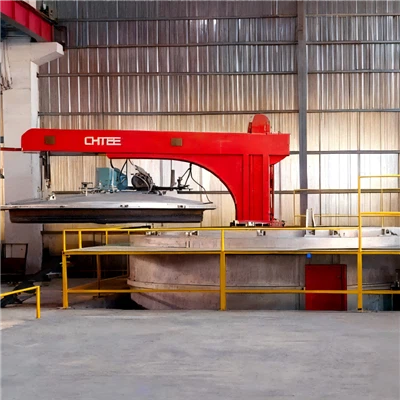
Choosing between a mesh belt furnace and a box furnace depends mainly on production volume, workpiece characteristics, heat treatment process, and the way parts need to move through production. Both are used for industrial heat treatment, but their operating modes are fundamentally different.
A mesh belt furnace is designed around continuous material movement, making it suitable for repeated processing of small and medium-sized components. A box furnace works with separate batches and provides more flexibility when production volumes, part types, or process schedules change frequently.
For manufacturers evaluating continuous carburizing, quenching, and tempering equipment, CHTEE's Continuous Type Carburizing Quenching Furnace is one example of a continuous mesh belt system designed for small metal parts, fasteners, gears, and hardware components.
Understanding the differences between these two furnace types can help purchasing teams and heat treatment engineers match the equipment to their actual production requirements.
Mesh Belt Furnace and Box Furnace: The Basic Difference
The main distinction is continuous production versus batch production.
A mesh belt furnace uses a heat-resistant conveyor belt to transport parts through different treatment zones. Depending on the system configuration, these zones can include heating, carburizing, quenching, cooling, and tempering.
Parts enter the line continuously and move through the programmed process according to belt speed and furnace configuration.
A box furnace uses a fixed chamber. Parts are loaded into the chamber, the furnace runs a defined heat treatment cycle, and the load is removed after the process is completed.
This makes the two furnace types suitable for different manufacturing conditions.
| Factor | Mesh Belt Furnace | Box Furnace |
|---|---|---|
| Production mode | Continuous | Batch |
| Material movement | Conveyor belt | Manual or mechanical loading |
| Production volume | Medium to high-volume repetitive production | Small to medium batch production |
| Part changeover | Better suited to repeated production | More flexible for varied batches |
| Automation | High potential | Depends on configuration |
| Typical parts | Fasteners, gears, bearings, hardware | General-purpose metal components |
| Process flow | Integrated production line | Independent heat treatment cycles |
The choice should therefore start with the production process rather than the furnace name itself.
When a Mesh Belt Furnace Makes More Sense
A mesh belt heat treatment furnace becomes more practical when the same or similar components need to be processed repeatedly.
Typical applications include:
Screws and bolts
Nuts and other fasteners
Small gears
Bearings
Springs
Small mechanical components
Hardware and stamping parts
These components are generally suitable for conveyor-based processing because they can be loaded onto the belt and transported through the required treatment zones.
For example, a continuous carburizing and quenching system can combine carburizing, quenching, and tempering into one production line. CHTEE's continuous furnace is specifically configured for these processes, with the product page noting applications for fasteners, small gears, spring components, and small hardware parts.
For a manufacturer running repetitive production every day, this production-line approach can reduce the need for repeated batch loading and unloading.
When a Box Furnace Is More Practical
A box furnace is generally more suitable when production requires batch flexibility rather than continuous material flow.
Manufacturers may choose this type of equipment when they need to process different components at different times, change process parameters between batches, or handle production that does not justify a continuous line.
Typical situations include:
Small production batches
Multiple part types
Frequent process changes
General annealing or tempering work
Maintenance or repair operations
Production environments where continuous feeding is unnecessary
CHTEE describes box furnaces as flexible equipment for small to medium-sized batches with varying process requirements. Its furnace selection information lists box furnaces for general annealing, normalizing, quenching, and tempering applications.
The fixed chamber also makes the operating concept straightforward: load the workpieces, run the programmed cycle, unload the treated parts, and prepare the next batch.
Production Capacity Is a Major Selection Factor
Production volume is one of the clearest factors separating these furnace types.
A box furnace processes a defined quantity during each cycle. Increasing total output therefore generally means running more cycles or increasing the amount loaded per batch within the furnace's design limits.
A mesh belt furnace takes a different approach. Parts continuously enter the heating line while treated parts leave the system after completing the programmed process.
This makes continuous equipment particularly relevant when manufacturers need stable output over long production periods.
CHTEE's published mesh belt furnace specifications include different configurations with stated hourly and monthly output capacities, showing that the equipment can be configured around different production requirements rather than relying on a single standard throughput.
For purchasing teams, the more useful question is not simply "Which furnace has a higher capacity?" It is:
How many parts or how much material must the heat treatment line process per hour, shift, month, or year?
That figure provides a practical basis for furnace sizing.
Process Requirements Also Change the Equipment Choice
Production volume is only one part of the decision. The required heat treatment process must also match the furnace configuration.
Mesh belt systems can be designed for continuous processes such as:
Carburizing
Quenching
Tempering
Controlled-atmosphere heating
Certain protective gas processes
CHTEE's continuous mesh belt quenching furnace integrates heating, carburizing, quenching, and tempering within a continuous production line. Its published configuration also supports optional blackening and protective gas processing.
The same principle applies to box furnaces. A batch furnace may be more appropriate when a manufacturer needs different thermal cycles for different loads rather than maintaining one continuous production sequence.
The furnace should therefore be selected according to the complete process route, not only the required operating temperature.
Part Size and Geometry Matter
The physical characteristics of the workpiece are another important consideration.
Mesh belt furnaces work particularly well with small and medium-sized components that can be transported reliably on a conveyor. Part overlap, adhesion, loading density, and belt transport behavior need to be considered during system design.
CHTEE specifically notes that thin, plate-shaped workpieces can create heat treatment problems when they overlap or adhere during processing.
Box furnaces provide a different loading arrangement because the parts remain stationary inside the chamber during the cycle. This can make them more suitable for components that do not work well with continuous belt transportation.
For this reason, suppliers should evaluate actual samples or detailed workpiece information before recommending a furnace configuration.
Automation and Production Management
Automation is another area where continuous and batch systems differ.
A mesh belt furnace can integrate material feeding, conveyor movement, temperature control, atmosphere monitoring, quenching, tempering, and production data management into one line.
CHTEE's continuous furnace uses PLC and touchscreen HMI control, with monitoring functions covering temperature and atmosphere, power consumption, historical data, production records, and alarm information.
A box furnace can also be automated, but its production logic remains batch-oriented. The level of automation depends on the furnace configuration and the manufacturer's control system.
For a factory operating a repetitive high-volume process, the automation architecture of a continuous furnace can be more closely aligned with the rest of the production line.
Mesh Belt Furnace vs Box Furnace: Operating Considerations
The difference becomes clearer when looking at day-to-day production.
Mesh Belt Furnace
A typical production cycle follows a continuous sequence:
Loading → Heating → Process Atmosphere → Quenching → Tempering → Unloading
The operator manages the production line rather than starting an entirely new furnace cycle for every load.
Box Furnace
The production sequence is usually:
Loading → Furnace Cycle → Cooling/Processing → Unloading → Next Batch
This batch structure gives operators more opportunities to change the material, process parameters, or production schedule between cycles.
Neither operating method is universally suitable for every factory. The correct choice depends on how the heat treatment department is organized.
Which Furnace Should You Choose?
A simple way to evaluate the two options is to compare your production conditions.
Choose a mesh belt furnace when:
Production volume is consistently high
Parts are relatively small or medium-sized
The same or similar components are processed repeatedly
Continuous carburizing, quenching, or tempering is required
Automated material handling is important
The heat treatment process needs to connect with upstream and downstream production
Consider a box furnace when:
Batch production is more common
Part types change frequently
Production quantities are smaller
Different thermal cycles are required for different loads
Continuous material transportation is unnecessary
The furnace will serve general-purpose heat treatment needs
The decision becomes more precise when the manufacturer provides actual production data, workpiece drawings, material information, required hardness, case depth, process cycle, and target output.
What Should You Ask a Heat Treatment Furnace Manufacturer?
Before requesting a quotation, prepare the information that directly affects furnace design.
A useful technical inquiry should include:
Workpiece information - material, dimensions, weight, shape, and loading condition.
Heat treatment process - carburizing, quenching, tempering, annealing, or another process.
Production requirement - hourly, daily, or monthly output.
Required metallurgical result - hardness, case depth, microstructure, or other applicable specifications.
Heating and atmosphere requirements - required temperature range and process atmosphere.
Factory conditions - available space, utilities, loading direction, and production-line layout.
Automation requirements - manual, semi-automatic, or integrated production-line operation.
This information allows the furnace manufacturer to determine whether a mesh belt, box, or another furnace configuration is appropriate.
Why Work With CHTEE for Custom Furnace Selection?
CHTEE manufactures industrial heat treatment furnaces and provides equipment configurations based on the required process and production conditions. Its continuous furnace range covers applications including fasteners, gears, spring components, and hardware parts, with continuous carburizing, quenching, and tempering configurations available.
For manufacturers comparing a mesh belt furnace with a box furnace, the key is not simply selecting one furnace type. The equipment needs to match the workpiece, process sequence, production volume, and required automation.
You can review the CHTEE continuous type carburizing quenching furnace for more information about continuous mesh belt heat treatment equipment, or visit the CHTEE company page to learn more about its furnace manufacturing capabilities.
FAQ
Is a mesh belt furnace better than a box furnace for mass production?
A mesh belt furnace is designed for continuous production and is generally better aligned with repetitive, high-volume processing of suitable small and medium-sized components. A box furnace operates in batches and may require more loading and unloading cycles for the same continuous production requirement.
What parts are commonly processed in a mesh belt furnace?
Common applications include fasteners, screws, bolts, nuts, small gears, bearings, springs, and hardware components. The actual suitability depends on part dimensions, weight, geometry, loading condition, and the required heat treatment process.
Can a mesh belt furnace perform carburizing and quenching?
Yes. Continuous mesh belt systems can be configured for carburizing, quenching, and tempering. CHTEE's continuous furnace integrates these processes into a continuous production line.
Is a box furnace suitable for small-batch heat treatment?
Yes. Box furnaces are commonly used when production involves smaller batches, multiple workpiece types, or different process requirements. CHTEE lists box furnaces for general annealing, normalizing, quenching, and tempering applications.
How do I decide between a mesh belt furnace and a box furnace?
Start with four factors: production volume, workpiece characteristics, required heat treatment process, and production automation. If the process is repetitive and requires continuous material flow, a mesh belt system may fit the production model. If the work involves varied batches and frequent process changes, a box furnace may be more appropriate.