Annealing is a heat treatment process used to change the microstructure and mechanical properties of metal. It involves heating a material to a specified temperature, holding it for a set period, and cooling it under controlled conditions.
In industrial manufacturing, annealing is commonly used to soften steel, relieve internal stress, improve ductility, and prepare materials for machining, forming, or further heat treatment. The final result depends on the material grade, annealing temperature, holding time, cooling rate, and furnace atmosphere.
An industrial annealing furnace provides the controlled heating environment needed to achieve the required material condition across individual workpieces or large production batches.
How Does an Annealing Furnace Work?
The working principle of an annealing furnace is based on three main stages: heating, holding, and controlled cooling. Each stage contributes to the final microstructure and properties of the treated material.
1. Heating the Material
The metal is heated according to a specified temperature curve. The target temperature depends on the material composition and the type of annealing required.
During heating, temperature control helps the workpiece reach the required thermal condition. Uniform heating is particularly important when processing large components, steel wire rods, or coils, where differences in temperature can affect the consistency of the finished batch.
2. Holding at the Target Temperature
Once the material reaches the specified temperature, it remains in the furnace for a defined period. This stage is often called soaking or holding.
The holding period allows heat to distribute through the workpiece and gives the material time to undergo the required metallurgical changes. The appropriate duration depends on the steel grade, workpiece dimensions, batch arrangement, and annealing process.
For large batches of steel coils or wire rods, furnace loading and temperature uniformity must be considered alongside the programmed holding time.
3. Controlled Cooling
After the holding stage, the material is cooled according to the selected process. Furnace cooling, controlled cooling, or other specified cooling methods may be used depending on the material and required result.
Cooling conditions affect the final microstructure, hardness, and ductility. For example, soft annealing aims to obtain a softer material condition, while spheroidizing annealing promotes a suitable carbide structure in certain steels.
The three stages work together. A correct heating temperature alone is not enough; the holding period and cooling conditions must also match the material requirements.
| Stage | Main purpose | Key process factor |
|---|---|---|
| Heating | Bring the material to the target temperature | Heating rate and temperature uniformity |
| Holding | Allow the required metallurgical changes to occur | Holding time and workpiece temperature |
| Cooling | Establish the required final material condition | Cooling rate and cooling method |

What Happens to Metal During Annealing?
Annealing changes the material's internal structure through temperature-dependent metallurgical processes. The exact changes depend on the metal, its previous processing history, and the annealing cycle.
1.Stress Relief
Casting, forging, welding, machining, and cold working can introduce residual stress into metal. Stress-relief annealing uses a controlled thermal cycle to reduce these stresses and improve dimensional stability.
It is commonly considered for steel components that need further machining, assembly, or processing after an earlier manufacturing operation.
2.Recovery and Recrystallization
In suitable metals, heating can support recovery and, when the required conditions are reached, recrystallization. Recovery helps reduce some effects of prior deformation, while recrystallization forms new grains with lower stored deformation.
These changes can restore ductility and reduce work-hardening effects, making the material more suitable for further forming or machining. The temperatures at which these processes occur vary by material and processing history.
3.Softening and Microstructure Adjustment
Annealing can reduce hardness and improve the workability of suitable steel grades. The result depends on the selected process rather than on heating alone.
For example, soft annealing is used when a softer material condition is required. Spheroidizing annealing is used for suitable steels when a spheroidized carbide structure is needed, including certain bearing steels and fastener wire rods.
These processes help prepare materials for operations such as cutting, wire drawing, cold heading, and subsequent heat treatment.
What Are the Main Components of an Industrial Annealing Furnace?
An industrial annealing furnace combines a heating system, insulated chamber, temperature controls, and a suitable workpiece loading arrangement. Additional systems depend on the furnace design and process requirements.
1.Heating System
The heating system supplies the energy needed to reach and maintain the specified process temperature. Industrial furnaces may use electric heating or gas heating, depending on the equipment configuration and production requirements.
The selected heating method should suit the material, batch size, operating schedule, and required temperature range.
2.Furnace Chamber and Insulation
The chamber accommodates the workpieces during the annealing cycle. Its dimensions and structure must match the workpiece size, batch weight, and loading method.
Thermal insulation helps reduce heat loss and maintain the required operating conditions. For large-batch furnaces, chamber design and loading arrangement also influence how heat reaches the workpieces.
3.Temperature Measurement and Control
Temperature sensors and a control system monitor the furnace and regulate heating according to the programmed cycle. Proper temperature control helps maintain repeatable process conditions between batches.
For production applications, the control configuration should be considered together with temperature uniformity, batch loading, and the required annealing specification.
4.Protective Atmosphere System
When steel is heated at elevated temperatures, its surface can react with the surrounding atmosphere. Depending on the material and process, oxidation and decarburization may affect surface condition.
A protective atmosphere helps control the chemical environment inside the furnace. The appropriate gas system depends on the steel grade, annealing process, and required surface quality.
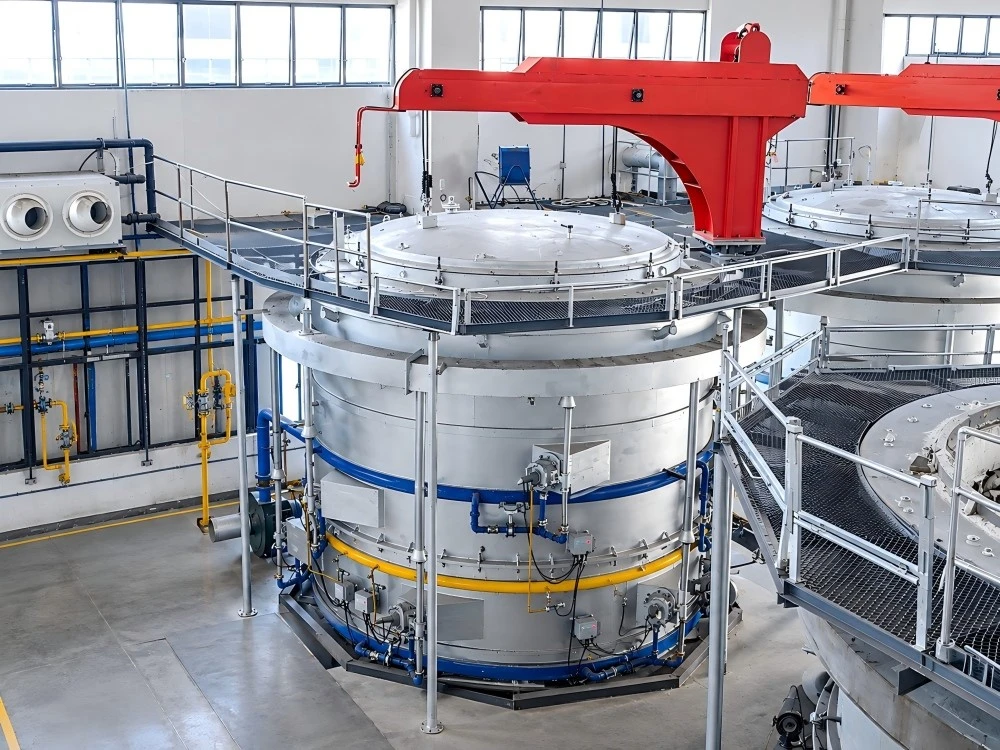
For example, CHTEE's Well-Type Annealing Furnace uses natural gas heating with a protective atmosphere based on methanol decomposition gas and nitrogen in its TE-A-MH-G series. This configuration is designed for suitable batch annealing applications involving steel wire rods and coils.
What Types of Annealing Furnaces Are Used in Industry?
Different furnace configurations support different workpiece shapes, batch sizes, and production processes. Furnace selection should be based on the required annealing result and the way materials move through the factory.
1.Well-Type Annealing Furnace
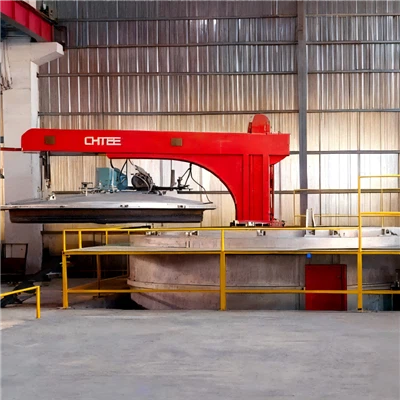
A well-type annealing furnace has a vertical chamber, with workpieces loaded from above using an appropriate lifting arrangement. It is suitable for batch processing of selected materials, including steel wire rods and coils.
CHTEE's TE-A-MH-G series is designed for spheroidizing and soft annealing of medium- and low-carbon steel, alloy steel, bearing steel, and suitable fastener wire rods and coils. Published models cover maximum charging capacities of 16, 24, 28, 32, and 36 tons per batch; the appropriate model depends on the actual load and process requirements.
Learn more about the Well-Type Annealing Furnace .
2.Pit-Type Annealing Furnace
Pit-type annealing furnaces are used for batch heat treatment where a below-floor or vertical chamber arrangement suits the workpiece and plant layout. Depending on the furnace design, they can accommodate suitable metal parts and other workpieces requiring a controlled thermal cycle.
The required chamber dimensions, loading arrangement, heating method, and atmosphere should be confirmed according to the application.
3.Industrial Annealing Furnace Systems for Different Processes
Not every annealing application requires the same configuration. Material grade, component geometry, batch size, surface requirements, and production output all influence the equipment specification.
CHTEE offers Industrial Annealing Furnaces for different heat treatment requirements. Selecting the furnace around the actual process helps align the heating cycle, loading arrangement, and atmosphere system with production needs.
What Materials and Components Can Be Annealed?
Annealing is used across multiple metalworking industries. The appropriate process depends on the material specification and the next manufacturing step.
✅ Steel wire rods and coils: Soft annealing or spheroidizing annealing may prepare suitable materials for wire drawing and fastener production.
✅ Bearing steel: Spheroidizing annealing can help establish the material structure required before machining or later heat treatment.
✅ Forged steel components: Annealing may reduce hardness or relieve residual stress before further machining.
✅ Machined steel parts: Stress-relief annealing may be used when dimensional stability is important.
✅ Carbon steel and alloy steel: The selected cycle depends on composition, initial microstructure, and the required final condition.
For fastener manufacturers, annealing may form part of a production route that includes wire drawing, cold heading, and subsequent hardening or tempering. Explore CHTEE's [Fastener Heat Treatment Solutions] (建议内链:Fastener 解决方案页) for equipment applications related to fastener manufacturing.
What Determines the Annealing Process?
A suitable annealing cycle must be established for the specific material and production objective. Several factors need to be considered together.
✅ Material composition: Carbon content and alloying elements influence transformation behavior and suitable processing conditions.
✅ Initial material condition: Forging, rolling, drawing, welding, or previous heat treatment can affect the required cycle.
✅ Target properties: Softening, stress relief, spheroidization, and other objectives require different process conditions.
✅ Workpiece dimensions: Thickness, coil diameter, and component geometry affect heat transfer and the time needed for the load to reach the required condition.
✅ Batch weight and loading: Workpiece arrangement influences temperature distribution and production capacity.
✅ Atmosphere requirements: Surface quality requirements determine whether a protective or controlled atmosphere is needed.
✅ Cooling conditions: The cooling method must suit the material and the intended metallurgical result.
For industrial production, these factors should be considered when specifying the furnace rather than relying on a general temperature range alone.
Frequently Asked Questions
1. What is the working principle of an annealing furnace?
An annealing furnace heats metal to a specified temperature, holds it for a defined period, and cools it under controlled conditions. This thermal cycle changes the material's microstructure and properties according to the selected process.
2. Why is holding time important in annealing?
Holding time allows the workpiece to reach the required thermal condition and undergo the intended metallurgical changes. The appropriate duration depends on the material, workpiece dimensions, batch arrangement, and annealing objective.
3. Why is cooling control important during annealing?
Cooling conditions influence the final microstructure, hardness, and ductility. The required cooling method depends on the material grade and whether the process is intended for softening, spheroidization, stress relief, or another specific purpose.
4. Why is a protective atmosphere used in an annealing furnace?
A protective atmosphere helps control oxidation and decarburization during heating. The required atmosphere depends on the steel grade, process conditions, and surface quality requirements.
5. How do I choose an annealing furnace for steel wire rods and coils?
Consider the steel grade, annealing process, coil dimensions, batch weight, required surface condition, heating method, and production schedule. These details help determine the furnace type, chamber size, atmosphere system, and suitable batch capacity.
Choose an Annealing Furnace for Your Production Process
The working principle of an annealing furnace is built around controlled heating, holding, and cooling. The material's composition and initial condition determine the required cycle, while temperature control, atmosphere management, and loading design help establish consistent production conditions.
CHTEE provides industrial heat treatment furnace solutions for steel wire rods, coils, fasteners, bearing materials, and other metal components. Furnace configuration can be discussed according to the required annealing process, workpiece dimensions, batch capacity, heating method, and atmosphere requirements.