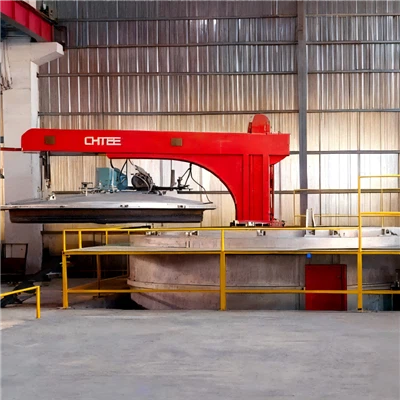

Overview of a Bell Furnace
A bell furnace is a vertical, batch-type industrial heat treatment furnace characterized by a movable, bell-shaped hood. During operation, the workload remains stationary on a furnace base while the hood is lowered to create an enclosed thermal chamber.
Unlike continuous furnaces, bell furnaces are designed to prioritize thermal uniformity, controlled atmospheres, and process stability, making them particularly suitable for applications where metallurgical consistency is critical.
Structural Design and Operating Principle
Key Structural Elements
A typical bell furnace consists of several integrated systems:
● Furnace Base – supports the load and may include circulation components
● Bell Hood – a liftable enclosure containing heating elements
● Heating System – provides uniform heat distribution around the workload
● Control System – regulates temperature profiles, time cycles, and process parameters
Basic Operating Sequence
The standard operation of a bell furnace follows these steps:
1.Components are arranged on the furnace base
2.The bell hood is lowered to seal the heating chamber
3.The system heats to the programmed temperature range
4.Soaking is maintained for metallurgical transformation
5.Controlled or natural cooling is performed
6.The hood is raised and the load is removed
Functional Systems and Configuration Options
To accommodate different heat treatment requirements, bell furnaces may be equipped with:
● High-efficiency heating assemblies for stable thermal output
● Advanced insulation systems to reduce heat loss
● Temperature sensing and feedback controls for precision regulation
● Atmosphere management systems using inert or reducing gases
These configurations allow the furnace to support a wide range of industrial processes.
Common Types of Bell Furnaces
Bell furnaces can be classified according to their heating method and operating environment:
1. Electrically Heated Bell Furnace
This type uses electrical resistance heating and offers excellent temperature accuracy and clean operation. It is widely used in laboratories, precision manufacturing, and small-to-medium batch production.
2. Gas-Fired Bell Furnace
Gas-fired bell furnaces generate heat through combustion and are suitable for large workloads or high-throughput operations. They are often selected for applications where operating cost efficiency is a priority.
3. Controlled Atmosphere Bell Furnace
These furnaces operate with protective gases to minimize oxidation and decarburization, making them ideal for alloy steels and sensitive components.
4. Vacuum Bell Furnace
Vacuum bell furnaces function under reduced pressure, eliminating air-related contamination. They are commonly applied in advanced manufacturing sectors that demand superior surface integrity.
Key Advantages of Bell Furnaces
Bell furnaces offer several technical and operational benefits:
● Consistent temperature distribution due to enclosed design
● Flexible process control for different materials and heat cycles
● Adaptability to varied load sizes and geometries
● Reliable performance with relatively simple maintenance
These advantages contribute to their continued use across multiple industries.
Industrial Applications
Bell furnaces are widely used in:
● Steel and non-ferrous metal processing for annealing and softening
● Mechanical manufacturing for structural property optimization
● Automotive production for gears and transmission components
● High-precision industries requiring controlled thermal environments
Conclusion
The bell furnace remains an essential piece of heat treatment equipment due to its structural simplicity, process reliability, and adaptability. By selecting the appropriate furnace type and configuration, manufacturers can achieve consistent product quality while maintaining operational efficiency.
view more CHTEE's Bell Furnaces:www.chtemake.com/bell-furnace