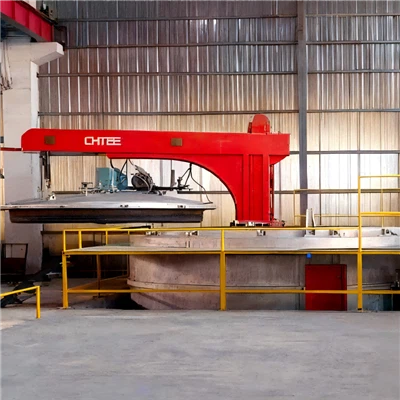

Why Use an Annealing Furnace
In high-precision manufacturing and measurement environments, thermal stability is a foundational requirement. Whether the application involves material processing or the preparation of sensitive measurement components, controlling internal stress and structural consistency is essential. An annealing furnace is specifically designed to meet these requirements by providing a controlled thermal process that improves reliability and repeatability.
This article explains what annealing furnaces are used for, why they are important in technical and calibration environments, and when their use becomes necessary.
Understanding the Annealing Process
Annealing is a controlled heat treatment in which a material is heated to a defined temperature, held for a specified duration, and then cooled at a regulated rate. The objective is not rapid transformation, but structural stabilization. During this process, internal stresses introduced during manufacturing, handling, or operation are reduced, allowing the material's microstructure to reach a more stable state.
For precision components, this stabilization is critical. Even minor internal stress can alter physical or electrical properties, which in turn affects performance, accuracy, and long-term behavior.
Why Annealing Matters for Precision Applications
Many precision components-particularly those used in sensing and measurement-are sensitive to mechanical strain and thermal history. Manufacturing steps such as winding, welding, bending, or encapsulation can introduce residual stress. Over time, these stresses may lead to drift, nonlinearity, or reduced repeatability.
Annealing helps restore uniformity by allowing the material structure to relax and reconfigure under controlled thermal conditions. This is especially important before calibration or after exposure to elevated temperatures, where material properties may have shifted from their original state.
Without proper annealing, calibration results may appear inconsistent or degrade more rapidly, even if external conditions remain stable.
The Role of an Annealing Furnace
An annealing furnace provides a purpose-built environment that ensures the annealing process is both controlled and repeatable. Unlike general heating equipment, an annealing furnace is designed to minimize temperature gradients, environmental contamination, and uncontrolled cooling.
Key functional advantages include:
1.Stable temperature control
Annealing requires tight control over temperature. Fluctuations or uneven heating can lead to incomplete or inconsistent stress relief. A dedicated furnace maintains uniform conditions throughout the heating zone.
2.Clean and controlled atmosphere
High-temperature processes increase the risk of oxidation or contamination. Many annealing furnaces are designed to operate in clean air or controlled atmospheres to protect sensitive components.
3.Repeatable thermal profiles
Precise control over heating, soaking, and cooling rates ensures that each annealing cycle produces consistent results, which is essential for quality assurance and traceability.
When Annealing Is Typically Required
Annealing is not always required after every operation, but it is commonly recommended in the following situations:
● After mechanical processing or assembly that may introduce stress
● Following transportation or handling of high-precision components
● After exposure to high operating temperatures
● Prior to critical calibration or verification procedures
● As part of periodic maintenance for long-term stability
In these cases, annealing serves as a preventative measure, reducing the likelihood of future drift or instability.
Considerations When Selecting an Annealing Furnace
Choosing the right annealing furnace depends on the application and performance requirements. Important factors include:
1.Temperature range and uniformity
The furnace must cover the required operating range while maintaining consistent temperature distribution.
2.Environmental control
The ability to limit contamination or oxidation is especially important for precision components and standards.
3.Construction materials
Internal furnace materials should be selected to minimize outgassing or particle generation at high temperatures.
4.Process control and automation
Programmable temperature profiles improve repeatability and simplify compliance with internal procedures or external standards.


ENGINEERED TO ORDER
Our strength is the ability to custom engineer a complete furnace system for any customer requirement.
REQUEST A QUOTE