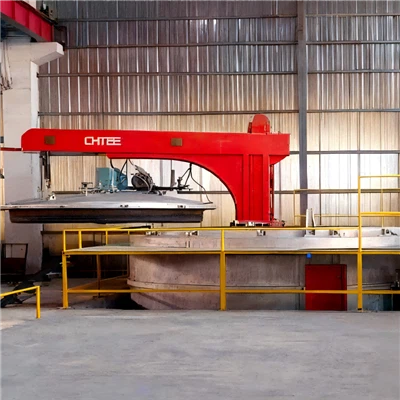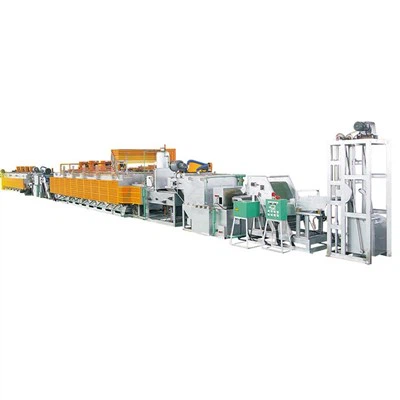
Mesh belt quenching furnace is a continuous heat treatment equipment widely used for quenching, tempering, and solution treatment of metal parts. The following is a detailed introduction:
1. Basic Structure
Mesh Belt Conveyor System: Composed of high-temperature resistant metal mesh belt (usually stainless steel or alloy material). Workpieces are placed on the belt and move at a constant speed driven by a motor, achieving continuous feeding and discharging.
Heating Zone: Uses electric heating (resistance wire, silicon carbide rods, etc.) or gas heating. The temperature range is typically 800°C to 1100°C. Multi-zone temperature control ensures uniform heating.
Quenching Tank: Located at the end of the heating zone. After heating, workpieces fall into the quenching medium (water, oil, polymer solution, etc.) for rapid cooling.
Control System: PLC or computer-based control to precisely adjust temperature, mesh belt speed, and quenching time.
Auxiliary Devices: Including cleaning machine (pre-treatment), drying machine (post-treatment), and atmosphere protection systems (such as nitrogen or methanol decomposition gas).
2. Working Principle
Feeding: Workpieces are evenly distributed on the mesh belt and slowly enter the heating zone.
Heating: Temperature rises gradually in the heating zone to the set value and is maintained to achieve austenitization (for steel).
Quenching: High-temperature workpieces fall into the quenching tank and cool rapidly to obtain martensitic structure with high hardness.
Post Treatment: Some systems integrate a tempering furnace to reduce brittleness after quenching.
3. Key Features
Continuous Production: Suitable for mass processing of small parts such as fasteners, bearings, and hardware tools. High efficiency.
Temperature Uniformity: Multi-zone control with hot air circulation. Temperature deviation can be controlled within ±5°C.
High Automation Level: Programmable parameters reduce manual error.
Energy Saving Design: Waste heat recovery and sealed structure reduce energy consumption.
Strong Adaptability: Different materials such as steel, copper alloy, and titanium alloy can be processed by adjusting mesh belt material and quenching medium.
4. Application Fields
Automotive Industry: Gears, spring washers.
Machinery Manufacturing: Saw blades, drill bits.
Aerospace: Precision bearings, fasteners.
Hardware Tools: Knives, scissors, screws, nuts.
5. Advantages and Limitations
Advantages:
High processing consistency, suitable for standardized production.
Compared with box furnace, saves labor and cycle time.
Limitations:
High equipment investment and maintenance cost (such as mesh belt replacement).
Not suitable for oversized or irregular parts (may cause belt deformation or uneven cooling).
6. Selection Reference
Capacity: Calculated based on mesh belt width (typically 300–1200 mm) and speed (usually 0.5–5 m/min).
Atmosphere Requirement: Select protective atmosphere models when oxidation prevention is required.
Quenching Medium: Choose based on material. Alloy steel usually uses oil quenching, carbon steel can use water quenching.
7. Maintenance Points
- Regularly check mesh belt tension and wear condition.
- Clean impurities in the quenching tank to keep the medium clean.
- Calibrate temperature control system to avoid thermocouple aging errors.
Mesh belt quenching furnace has become one of the core equipment in modern heat treatment due to its high automation and stable process control. It shows significant advantages especially in batch processing of precision parts. In practical applications, selection should be based on material characteristics, production requirements, and budget.