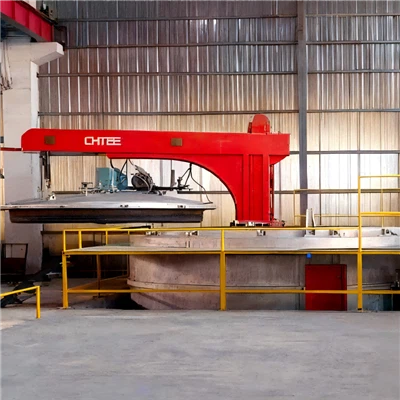
An annealing furnace is an industrial heat treatment system designed to modify the internal structure of metals through controlled heating and cooling cycles.
Unlike simple heating equipment, its function is not to raise temperature alone, but to precisely manage how a material responds to thermal energy over time. This controlled process changes mechanical properties such as hardness, ductility, and internal stress distribution.
In industrial production, annealing is widely used as an intermediate step between forming, machining, and final finishing operations.
The Engineering Purpose of Annealing
From a metallurgical standpoint, annealing is used to restore equilibrium in metal structures that have been altered by mechanical processing such as rolling, forging, or welding.
When metals undergo deformation, their internal crystal structure becomes distorted and unstable. Annealing allows the material to return to a more stable state by reorganizing its grain structure.
The main outcomes of this process include:
- Reduction of internal stress
- Improved ductility and formability
- Lower hardness for easier machining
- More uniform grain structure
- Improved dimensional stability
These changes are essential in ensuring that downstream manufacturing processes remain consistent and controllable.
How an Annealing Furnace Works in Industrial Operation
The working principle of an annealing furnace is based on a controlled thermal cycle that includes three main stages:
The material is gradually heated to a defined temperature range below its melting point. The goal is to activate atomic mobility without causing phase melting.
Once the target temperature is reached, the material is held for a specific period to allow full heat penetration and structural transformation across the entire load.
Cooling is carefully controlled to avoid introducing new internal stress. The cooling rate has a direct impact on final mechanical properties.
In industrial systems, each stage is tightly controlled through automated temperature regulation and thermal feedback systems.
What Happens Inside the Metal During Annealing
The real transformation in an annealing furnace occurs at the microstructural level.
During heating and soaking, the metal undergoes a sequence of structural changes:
Internal stress begins to relax without major structural change.
New strain-free grains begin to form, replacing deformed structures.
Grain structure stabilizes and reaches its final configuration.
These transformations determine whether the material becomes softer, more stable, or more machinable.
Key System Components of an Industrial Annealing Furnace
The performance of an annealing furnace depends on its system configuration rather than heating capacity alone.
Provides controlled thermal energy using electric or fuel-based sources depending on application scale.
Maintains precise temperature distribution, often using multi-zone control logic to reduce thermal deviation.
Controls the internal environment to prevent oxidation or surface contamination, especially important for high-grade materials.
Determines heat retention efficiency and directly affects energy consumption and cycle stability.

Industrial Furnace Types Used in Annealing Processes
Different production requirements lead to different furnace configurations, each optimized for specific material and process conditions.
A spheroidizing annealing furnace is used primarily for high-carbon steel materials. Its function is to convert carbide structures into spherical forms, improving machinability and reducing tool wear during subsequent machining.
This type of furnace is commonly applied in:
bearing steel processing
tool steel preparation
wire and rod production lines
pre-machining heat treatment stages
A pit-type annealing furnace is designed for vertical loading of long or heavy components. Its structure allows deep chamber utilization and stable heat distribution in batch production environments.
Typical applications include:
shafts and long rods
forged structural components
large steel parts
heavy industrial batch processing
Its vertical design makes it suitable for factories where floor space efficiency and batch capacity are important.
Vacuum Annealing Furnace for High-Precision Manufacturing
A vacuum annealing furnace operates in a sealed, oxygen-free environment to eliminate oxidation and surface contamination during heating.
This makes it suitable for high-value materials requiring strict surface quality control, such as:
aerospace components
stainless steel precision parts
titanium and nickel alloys
advanced engineering materials
Vacuum conditions ensure high consistency in both surface finish and material stability.

Pit-Type Furnace for Industrial Heat Treatment Systems
Another configuration of pit-type furnace is widely used in heavy industrial environments where stable batch processing is required.
Compared with horizontal furnace systems, it provides better vertical load capacity and more efficient space utilization, especially in large-scale production lines.
Key Factors That Influence Annealing Furnace Performance
In real production environments, furnace performance is affected by multiple operational variables:
Uneven heating leads to inconsistent microstructure formation.
Poor arrangement reduces heat circulation and slows thermal response.
Gas leakage or unstable pressure affects surface quality.
Thermal ramping speed directly influences final material properties.
Aging heating elements and insulation degradation reduce efficiency over time.
Role of Annealing Furnaces in Industrial Production Chains
Annealing is not an isolated process. It is integrated into a wider manufacturing workflow.
It is commonly positioned:
- after forging to release internal stress
- before machining to improve cutting performance
- after welding for structural stabilization
- before forming to increase ductility
Because of this, furnace selection directly affects downstream productivity and tooling cost.
Manufacturers such as CHTEE design different furnace configurations to match these industrial requirements across steel processing and heat treatment applications.