List of 10 Quenching Furnace Suppliers
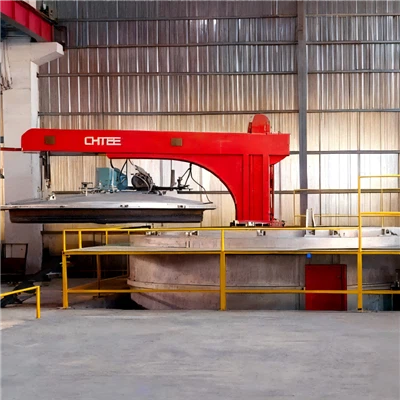
1.Haiyan Teyi Intelligent Technology Co.,LTD.
Company Overview:Founded in 1972 and headquartered in Osaka, Japan, CHT MAKE Co., Ltd. is a leading global manufacturer of high-frequency induction heating and hardening equipment. The company specializes in providing precise and efficient heat treatment solutions for gears, bearings, tool steel, and other high-strength parts, and is committed to technological innovation and process optimization in the industrial heat treatment field.
Core Technologies and Products:The company's main products include high-frequency induction heating systems, full-cycle one-shot hardening equipment, automated hardening lines, and intelligent control systems. CHT MAKE's equipment enables highly precise and repeatable hardening and tempering processes and can be customized to meet customer needs. High-frequency induction heating technology ensures uniform heating of metal parts, reduces material stress, and improves product quality.
Customized Services and Applications:CHT MAKE provides comprehensive customized services, from equipment design and manufacturing to on-site commissioning, to create customized heat treatment solutions for customers. Its equipment is widely used in industries such as automotive, construction machinery, robotics, aviation, and precision parts manufacturing. Through continuous research and development and process optimization, the company helps customers improve production efficiency, reduce energy consumption, and ensure stable and reliable workpiece performance.
Keywords:High-frequency induction heating, quenching equipment, customized services, heat treatment technology, gear quenching.
2. Fujidenshi
Founded in 1949 and headquartered in Osaka, Japan, Fujidenshi Co., Ltd. specializes in the research, development, and manufacture of industrial heat treatment equipment. Its core products include high-frequency induction heating systems, full-circuit quenching equipment, and tempering furnaces, meeting the precision heat treatment needs of various metal parts. =
3. Chugai Ro
Founded in 1949 and headquartered in Tokyo, Japan, Chugai Ro Co., Ltd. specializes in the manufacture of industrial furnaces and heat treatment equipment. Its products include walking beam furnaces, annealing furnaces, and quenching furnaces, and are widely used in the steel, non-ferrous metals, electronics, and automotive industries. =
4. ONEX
Founded in 1971 and headquartered in Saitama Prefecture, Japan, ONEX Corporation specializes in the manufacture of heat treatment equipment. Its main products include quenching furnaces, tempering furnaces, and fully automated heat treatment systems. ONEX offers one-stop services from design and manufacturing to installation and commissioning, meeting the precision heat treatment needs of automotive, mechanical, and electronic parts.
5. AFC-Holcroft
Founded in 1962 and headquartered in Michigan, USA, AFC-Holcroft is a globally renowned industrial furnace manufacturer. Its products include gas quenching furnaces, annealing furnaces, and multi-functional heat treatment systems for the automotive, aviation, and energy industries. AFC-Holcroft provides customized services to optimize heat treatment processes, improve production efficiency and product quality, and prioritize energy efficiency and environmental friendliness.
6. CEC Furnaces
Headquartered in the United States, CEC Furnaces specializes in the research, development, and manufacture of aluminum and metal heat treatment equipment. Its core products include aluminum heat treatment furnaces, roller-hearth furnaces, and annealing furnaces for the aviation, automotive, and metalworking industries.
7. S.M. Engineering
Headquartered in the United States, S.M. Engineering & Heat Treating specializes in the manufacture of customized heat treatment systems and industrial furnaces. Its products include quenching furnaces, tempering furnaces, and fully automated heat treatment lines to meet the needs of high-volume precision parts.
8. Surface Combustion
Founded in 1949 and headquartered in the United States, Surface Combustion specializes in the manufacture of industrial furnaces and heat treatment equipment. Its core products include the Allcase® series of quenching furnaces and multifunctional heat treatment systems for the automotive, aviation, and energy sectors.
9. Mass Engineers
Founded in 2018 and headquartered in India, Mass Engineers is an emerging manufacturer of industrial furnaces and heat treatment equipment. Its products include quenching furnaces, tempering furnaces, and industrial heat treatment systems for the steel, non-ferrous metals, and machinery manufacturing industries.
10. Lucifer Furnaces
Founded in 1946 and headquartered in Pennsylvania, USA, Lucifer Furnaces specializes in the manufacture of industrial furnaces and heat treatment equipment. Its products include quenching furnaces, tempering furnaces, and multi-functional heat treatment systems for the automotive, machinery, and metalworking industries.
What Is A Quenching Furnace?
A quenching furnace is a furnace used to heat workpieces before quenching. Quenching involves heating the workpiece to a temperature above the critical point and holding it there for a period of time. The workpiece is then quickly removed from the furnace and placed in a quenching liquid (oil or water) for quenching. The furnace's heat source can be either electricity or fuel, and the temperature can be measured using thermocouples. Furnaces powered by electricity, gas, or liquid fuels can automatically control and adjust the temperature using instruments.

What Is A Vacuum Quenching Furnace?
Vacuum quenching furnaces are the main type of vacuum heat treatment furnace, with a wide variety, large volume, complex structure, and rapid development.
Structures of various types of gas quenching vacuum furnaces. Vertical and horizontal single-chamber gas quenching vacuum furnaces perform heating and cooling in the same chamber. They have a simple structure, are easy to operate and maintain, and require minimal floor space. They are commonly used. Vertical and horizontal double-chamber gas quenching vacuum furnaces. This type of furnace uses a vacuum gate valve to separate the heating and cooling chambers. While the workpiece is cooling in the cooling chamber, the heating chamber remains unaffected. Therefore, workpiece cooling is faster than in a single-chamber vacuum gas quenching furnace. Since the cooling gas in a dual-chamber furnace is only fed into the cooling chamber, while the heating chamber remains vacuumed, workpiece processing time (vacuuming, heating, etc.) is shortened, resulting in approximately 25% to 30% higher production efficiency than a single-chamber vacuum furnace. A three-chamber semi-continuous gas quenching vacuum furnace consists of a feeding chamber, a heating chamber, and a cooling chamber, with adjacent chambers separated by a vacuum gate valve. Continuous vacuum heat treatment furnaces offer high production efficiency, energy savings, and cost reductions, making them suitable for continuous production and large-scale operations. They represent the future development trend of vacuum heat treatment furnaces.
With the advancement of industrial technology and the improvement of product processing quality and technical requirements, the range of steel grades and alloys suitable for vacuum heat treatment has expanded. Over the past decade, high-pressure gas quenching vacuum furnaces, high-flow rate vacuum furnaces, and high (negative) pressure and high-flow rate vacuum furnaces have experienced rapid development. These furnaces typically feature cooling gas pressures of 0.1 to 0.5 MPa, with some operating at up to 2 MPa or even 4 MPa. The workpiece is cooled by high-velocity airflow.
The core principle of a quenching furnace is a "heating-holding-cooling" heat treatment cycle, performed under a vacuum environment. The operation typically involves the following steps:
Evacuation: Air is removed from the furnace chamber using a vacuum pump to reduce the pressure to the desired vacuum level, thereby minimizing oxidation reactions and heat loss.
Heating: The workpiece is uniformly heated using resistance heating, induction heating, or vacuum heating elements. The vacuum environment ensures even heat distribution while preventing surface oxidation.
Holding: The workpiece is maintained at the target temperature for a specified period of time to achieve uniform internal temperature and fully adjust the metal structure.
Cooling (Quenching): Quenching is achieved by rapidly cooling the metal through the circulation of an inert gas (such as nitrogen or argon) or a specific cooling medium within the furnace. Rapid cooling locks in the metal's crystal structure, achieving the desired hardness and toughness.
The entire process is extremely precise and can be controlled over a wide temperature range (typically from several hundred to over 2,000 degrees Celsius), making it suitable for demanding heat treatment processes.
Functions of a Quenching Furnace
A quenching furnace is more than just a heating or cooling tool; it performs a variety of specialized functions that make heat treatment more efficient and reliable:
Hardening and Quenching: Rapid heating and cooling increase the metal's surface hardness and wear resistance.
Annealing and Tempering: Reduce internal stresses in the material, improve toughness and ductility, and prevent cracking or deformation.
Vacuum Degassing and Cleaning: Remove gases and impurities from the metal in a high-temperature vacuum environment, increasing its internal density.
Welding and Brazing: High-precision metal joining is performed under vacuum conditions, ensuring weld quality and material properties.
Uniform Temperature Control: Utilizing multi-zone temperature control and heat radiation, consistent temperatures are achieved across the workpiece, ensuring machining accuracy.
High-Temperature Durability Treatment: Supports adjustments to material properties in high-temperature environments, such as optimizing the microstructure and improving the mechanical properties of high-temperature alloys.
These features make quenching furnaces indispensable equipment for high-end manufacturing and precision industries, and a core tool for ensuring product quality and performance stability.

Applications of Quenching Furnaces
Quenching furnaces are widely used in various industries, primarily for heat treating components with stringent material performance requirements:
Aerospace: Turbine blades, engine components, and titanium alloy structural parts require high-temperature quenching and annealing to ensure high-temperature resistance and high strength.
Automotive: Core components such as engine crankshafts, gears, and bearings require quenching furnace treatment to improve wear resistance and service life.
Precision Tools: Products such as cutting tools, molds, and gauges require uniform heating and rapid cooling for high hardness and precision.
Electronics and Semiconductors: High-performance metal components, ceramic materials, and certain alloys require vacuum quenching during manufacturing to improve conductivity and durability.
Medical devices: Surgical instruments and implantable metal parts, through quenching to improve hardness and corrosion resistance while maintaining material safety.
FAQ About Quenching Furnaces
1. What is a quenching heat treatment furnace?
A quenching heat treatment furnace is equipment used to quench metal materials. It provides the heating and cooling conditions required for quenching. By rapidly heating and cooling the metal, its structure and properties are altered.
2. What is the core purpose of quenching?
Heating metal to a specific temperature and then rapidly cooling it increases its hardness, strength, and wear resistance, while also improving its structure, mechanical properties, processing performance, corrosion resistance, and heat resistance.
3. What are the core stages of a quenching heat treatment furnace's operation?
It consists of three core stages: heating, holding, and cooling.
4. What are the key operations in the heating and holding stages?
The heating stage involves placing the metal material into the furnace and heating it to the quenching temperature using a heating element or heat source. The holding stage involves holding the metal at the quenching temperature for a period of time after reaching the quenching temperature to allow the internal structure to fully transform and achieve the quenching effect.
5. What cooling medium is typically used in quenching heat treatment furnaces?
Water or oil are typically used to rapidly cool the heated metal material.
6. What metal materials are quenching heat treatment furnaces primarily used for?
They are widely used for processing and treating a variety of metal materials, including steel, nonferrous metals, and alloys.
7. In the machinery manufacturing industry, what key components can be treated with quenching heat treatment furnaces?
They can be used to quench key components such as machine tool beds, bearings, and gears to improve their wear resistance and service life.
8. What is the purpose of using quenching heat treatment furnaces in the automotive industry?
Quenching key components such as automotive engines and chassis improves their mechanical properties and safety.