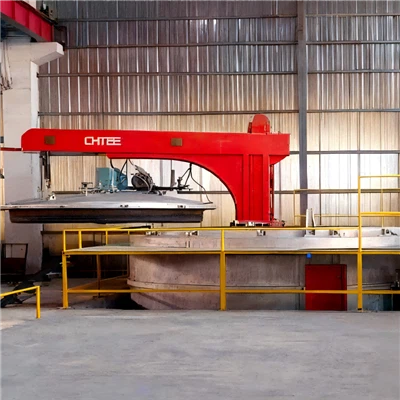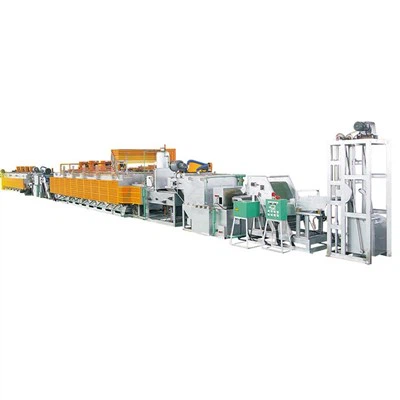
A mesh belt furnace is a continuous heat treatment system designed for high-volume production of small and medium-sized metal components. The equipment is commonly used for fasteners, bearings, automotive parts, transmission components, chains, springs, and precision metal parts.
Continuous operation, stable process control, and high production efficiency make mesh belt furnaces a common choice for manufacturers requiring consistent heat treatment results across large production batches.
What Is a Mesh Belt Furnace?
A mesh belt furnace uses a continuously moving metal belt to transport parts through different heat treatment zones. Components pass through preheating, heating, carburizing, quenching, tempering, and cooling sections according to the required process.
The entire production cycle operates automatically, reducing manual handling and improving production consistency.
Common heat treatment processes include:
Carburizing
Carbonitriding
Hardening
Quenching and tempering
Bright annealing
Stress relieving
Black oxide treatment
How a Continuous Mesh Belt Furnace Works?
Parts are loaded onto the mesh belt and transported through the furnace at a controlled speed.
Each heating zone operates independently. Temperature, atmosphere composition, and belt speed are controlled according to process requirements.
After heating, components enter the quenching section. Oil quenching systems are commonly used for steel components requiring high hardness and wear resistance.
Parts then move through cleaning and tempering stages before discharge.
The complete process operates as a continuous production line.
Main Components of a Mesh Belt Furnace
Loading and Pre-Cleaning System
Automatic loading systems help maintain stable production flow.
Pre-cleaning units remove oil, dirt, and contaminants from component surfaces before heat treatment.
Multi-Zone Heating Chamber
The furnace chamber is divided into multiple temperature zones.
Independent temperature control allows precise adjustment of each process stage.
Protective Atmosphere System
Protective atmosphere systems help reduce oxidation and decarburization during heat treatment.
Common gases include:
Nitrogen
Endothermic gas (RX Gas)
Methanol-based atmosphere systems
Carbon potential control systems are often used in carburizing applications.
Quenching System
Oil quench tanks are commonly integrated into the production line.
The system provides rapid cooling after carburizing or hardening.
Tempering Furnace
Tempering reduces internal stress and improves toughness after quenching.
PLC Control System
The control system manages:
Temperature control
Carbon potential control
Atmosphere control
Belt speed control
Process data recording

Advantages of Mesh Belt Furnaces
Continuous Production
A continuous mesh belt furnace operates without repeated heating and cooling cycles.
Production capacity is generally higher than batch-type heat treatment furnaces.
Stable Product Quality
All components travel through the same temperature profile and atmosphere conditions.
Process consistency helps reduce hardness variation and case depth deviation.
Reduced Labor Requirements
Automatic material handling reduces manual intervention throughout the heat treatment process.
Flexible Production
Belt speed, temperature settings, and atmosphere parameters can be adjusted for different products.
Energy Efficiency
Continuous operation minimizes energy losses associated with repeated furnace startup and shutdown cycles.
Mesh Belt Heat Treatment Furnace Typical Applications
Mesh Belt Furnace for Fastener
Common products include:
Bolts
Nuts
Screws
Rivets
Anchors
Mesh Belt Furnace for Bearing Components
Suitable for:
Bearing rings
Rollers
Precision bearing parts
Mesh Belt Furnace for Automotive Components
Common applications include:
Transmission parts
Shafts
Pins
Gears
Engine components
Mesh Belt Furnace for Hardware and Tool Manufacturing
Suitable for:
Hand tools
Wrenches
Screwdrivers
Pliers
Chain components
Mesh Belt Furnace for Industrial Metal Parts
Additional applications include:
Springs
Stamped parts
Small machined components
Conveyor chain parts
Mesh Belt Furnace Selection Guide
Selecting the right mesh belt furnace depends on product type, production volume, and heat treatment requirements.
Selection Factor | Typical Options | Considerations |
|---|---|---|
Heat Treatment Process | Carburizing, Carbonitriding, Hardening, Annealing | Determined by material and product specifications |
Production Capacity | 100 kg/h – 3000 kg/h | Based on daily output requirements |
Belt Width | 300 mm – 1500 mm | Depends on component size and loading volume |
Working Temperature | 650°C – 950°C | Selected according to process requirements |
Protective Atmosphere | Nitrogen, RX Gas, Endogas | Determines surface quality and process control |
Quenching Method | Oil Quenching, Gas Cooling | Selected according to material properties |
Automation Level | Semi-Automatic or Fully Automatic | Influences labor requirements and production efficiency |
Manufacturers often evaluate production volume, component geometry, material grade, and required hardness before selecting a continuous heat treatment furnace.
CHTEE Mesh Belt Furnace Solutions
CHTE designs and manufactures industrial heat treatment equipment for metal processing applications.
Available systems include:
Mesh Belt Furnace
Continuous Carburizing Furnace
Continuous Hardening Furnace
Continuous Heat Treatment Furnace
Tempering Furnace
Customized Heat Treatment Production Lines
Equipment configurations can be designed according to production capacity, process requirements, product dimensions, and factory layout.
Custom solutions are commonly used for automotive parts, fasteners, bearings, hardware products, and precision metal components.
Frequently Asked Questions
What products are suitable for a mesh belt furnace?
Fasteners, bearings, gears, chain parts, springs, hardware tools, and other small metal components.
What is the difference between a mesh belt furnace and a batch furnace?
A mesh belt furnace operates continuously. Batch furnaces process one load at a time.
Can a mesh belt furnace perform carburizing?
Yes. Many mesh belt furnaces are designed for carburizing and carbonitriding processes.
What industries use continuous heat treatment furnaces?
Automotive, fastener manufacturing, bearing production, hardware tools, machinery components, and industrial metal processing.
How do I select the right mesh belt furnace?
Key factors include production volume, material type, heat treatment process, furnace size, atmosphere requirements, and automation level.