Spheroidizing annealing is a critical heat treatment process for high-carbon steel, bearing steel, spring steel, and cold-heading wire. The process improves machinability, enhances cold-forming performance, and prepares materials for subsequent manufacturing operations.
For manufacturers producing bearings, fasteners, automotive components, steel wire, or precision mechanical parts, selecting the right spheroidizing annealing furnace directly affects product quality, production efficiency, and operating costs.
What Is Spheroidizing Annealing Furnace?
A spheroidizing annealing furnace is a heat treatment system designed to transform lamellar cementite structures into fine spheroidal carbides within steel materials.
After spheroidizing annealing, the steel becomes softer and easier to machine, draw, forge, or cold-form. The process also improves microstructure uniformity, which helps achieve consistent mechanical properties during later heat treatment stages.
Typical materials include:
- Bearing steel (GCr15 / SAE52100)
- High-carbon steel wire
- Spring steel
- Tool steel
- Cold-heading steel
- Alloy steel wire rod
Why Is Spheroidizing Annealing Important?
Many high-carbon steels are difficult to machine or form in their as-rolled condition.
Spheroidizing annealing can provide several benefits:
- Reduced hardness
- Improved ductility
- Better cold-forming performance
- Improved machinability
- More uniform carbide distribution
- Reduced risk of cracking during processing
- Better preparation for hardening and tempering
For manufacturers producing fasteners, bearings, springs, and wire products, proper spheroidization is often a mandatory production step.

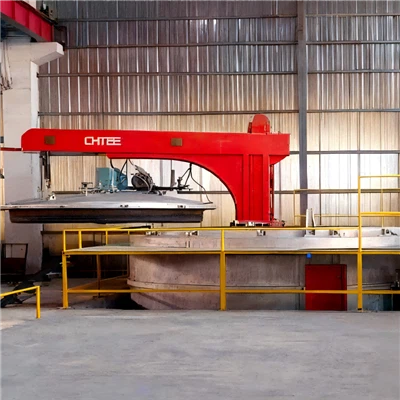
Pit Type Annealing Furnace
Pit furnaces are suitable for long shafts, bars, and heavy workpieces.
Advantages:
- Large loading capacity
- Suitable for long products
- Stable temperature distribution
Typical applications:
- Bearing steel bars
- Alloy steel bars
- Forged components

Key Factors When Choosing Industrial Spheroidizing Annealing Furnace
Material Type
Different materials require different annealing cycles.
| Material | Typical Furnace Type |
|---|---|
| Bearing Steel | Bell Type / Pit Type |
| High Carbon Wire | Bell Type |
| Spring Steel | Bell Type |
| Tool Steel | Box Type |
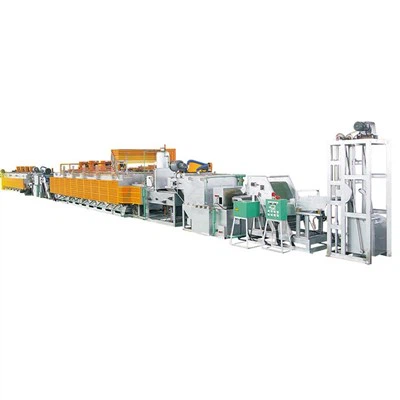
| Cold Heading Wire | Continuous Furnace |
Production Capacity
Production volume is one of the most important selection criteria.
Small batch production may only require a box furnace, while wire and fastener manufacturers often benefit from continuous or bell type systems.
Temperature Uniformity
Temperature uniformity directly affects carbide spheroidization quality.
For high-quality bearing steel and precision wire applications, consistent furnace temperature is essential for achieving uniform microstructures.
Protective Atmosphere
Atmosphere control helps prevent:
- Oxidation
- Surface scaling
- Decarburization
Common protective atmospheres include:
- Nitrogen
- Nitrogen-hydrogen mixtures
- Endothermic gas
Automation Requirements
Modern heat treatment plants increasingly adopt:
- Automatic loading systems
- PLC control
- Recipe management
- Remote monitoring
- Production data recording
Automation can improve consistency while reducing labor costs.

Typical Industries Using Annealing Furnaces
Bearing steel requires uniform spheroidized carbides before machining and final heat treatment.
Cold-heading wire for bolts, nuts, and screws often undergoes spheroidizing annealing to improve formability.
Wire drawing operations benefit from improved ductility and reduced drawing force.
Tool steels require spheroidized structures to facilitate machining before hardening.
Many automotive parts rely on spheroidized steel to ensure stable forming performance and mechanical properties.
CHTE provides customized spheroidizing annealing furnace solutions for steel wire, bearing steel, spring steel, cold heading wire, and alloy steel applications.
Send your material specifications, production capacity requirements, and process details to receive a customized proposal from our engineering team.
How to Prevent Decarburization During Spheroidizing Annealing
Surface decarburization can reduce hardness and fatigue resistance.
Recommended measures include:
- Using protective atmosphere furnaces
- Maintaining proper furnace sealing
- Monitoring oxygen content
- Optimizing heating and cooling cycles
- Performing regular furnace maintenance
For bearing steel and spring steel, decarburization control is often a critical quality requirement.

Frequently Asked Questions
Most spheroidizing annealing processes operate near the lower critical transformation temperature of the material, typically between 680°C and 800°C depending on steel grade and process requirements.
Cycle times vary according to material composition, section size, and desired microstructure. Industrial cycles commonly range from several hours to more than twenty hours.
Bell type spheroidizing annealing furnaces are widely used because they provide excellent atmosphere control and temperature uniformity.
Yes. The process significantly lowers hardness and improves machinability and cold-forming performance.
Spheroidizing Annealing Furnace Solutions from CHTEE
CHTEE designs and manufactures industrial heat treatment equipment for steel wire, bearing steel, fastener production, and alloy steel applications.
Available solutions include:
Bell Type Annealing Furnaces
Pit Type Annealing Furnaces
Box Type Annealing Furnaces
Continuous Annealing Furnaces
Protective Atmosphere Heat Treatment Systems
Equipment can be customized according to material type, production capacity, atmosphere requirements, and automation level to meet different manufacturing needs.