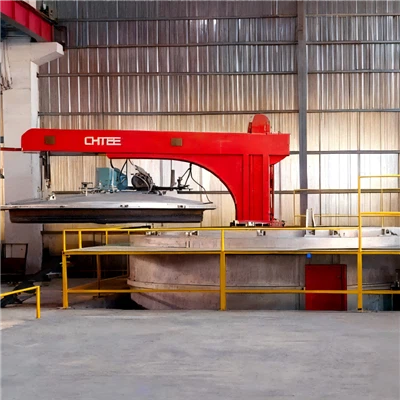
A vacuum furnace is a heat-treatment device that processes materials under a negative-pressure environment. By isolating air and significantly reducing oxidation, it enables precise control of heating, cooling, and phase transformation for metallic and non-metallic materials.
Its core applications include vacuum quenching, annealing, and brazing of aerospace components, molds, and precision mechanical parts. It is particularly suitable for materials that are prone to oxidation and require high surface quality.
Structural Composition and Working Principle of a Vacuum Furnace
A vacuum furnace mainly consists of the following systems:
1. Furnace Chamber
● Double-layer, water-cooled structure
● Inner wall made of stainless steel or high-temperature alloy
● Outer layer with thermal insulation
● Circulating cooling water between layers to maintain thermal stability
2. Vacuum System
● Composed of mechanical pumps, diffusion pumps, or molecular pumps
● Gradual evacuation reduces chamber pressure to 10⁻²–10⁻⁵ Pa
● Effectively prevents reactions between heated materials and oxygen or nitrogen
3. Heating System
● Heating elements typically made of graphite, molybdenum, or nickel-chromium alloy resistance wires
● Uniform temperature rise achieved through radiant heat transfer
4. Temperature Control System
● Real-time monitoring via thermocouples or infrared temperature sensors
● Combined with PID controllers
● Temperature accuracy controlled within ≤ ±5 °C
● Ensures process repeatability and stability
5. Cooling System
● Supports rapid cooling with inert gases (e.g., argon) or natural cooling
● Allows precise control of material phase transformation rates
👉 Learn more about industrial vacuum furnaces.

Key Technical Parameters and Design Features
1. Main Technical Specifications
● Power range: 55 kW–320 kW
● Rated power supply: 380 V, three-phase (compliant with Chinese industrial standards)
● Working chamber size: Customizable
① From small laboratory furnaces
② To large-scale industrial vacuum furnaces
2. Design Advantages
● High temperature control accuracy (≤ ±5 °C), suitable for precision heat treatment
● Vacuum environment greatly reduces surface oxidation, lowering post-processing cleaning costs
Under inert gas protection:
① Brazed joint strength is increased by over 30% compared to atmospheric conditions
② Equipment supports second-hand recycling and remanufacturing, aligning with circular economy principles
👉 Contact our vacuum heat treatment furnace experts now.

Operating Procedures and Safety Precautions
1. Pre-operation Checks
● Inspect vacuum system sealing to prevent air leakage and process failure
● Ensure no flammable materials are present in the furnace chamber
2. Operation and Cooling
● Control gas flow strictly during the cooling stage according to process requirements
● Excessive cooling rates may cause material cracking
3. Safety and Maintenance
● Regularly remove oxide scale and contaminants inside the furnace
● Equipment is equipped with:
① Over-temperature protection
② Abnormal pressure alarms
● Operators must receive professional training and be familiar with emergency procedures
4. Routine Maintenance
● Check vacuum pump oil level
● Replace thermocouples
● Calibrate temperature controllers
● To extend overall equipment service life

Application Scenarios and Material Compatibility
1. Metallic Materials
● Stainless steel:
① Vacuum annealing relieves internal stress
② Improves corrosion resistance
● High-speed steel:
① Vacuum quenching maintains cutting edge sharpness
● Titanium alloys:
① Vacuum brazing prevents oxide layers from degrading joint performance
2. Non-metallic Materials
① Ceramics
② Semiconductor materials
③ Suitable for sintering and degassing processes that require a vacuum environment
3. Sales and Service Support
① Equipment is available with sales and service coverage in Beijing, Tianjin, Shanghai, and most regions nationwide
② Complete spare-parts supply
③ Supports rapid maintenance and repair