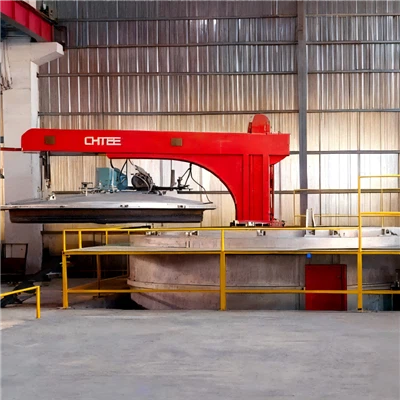
The process characteristics of the 1600-degree annealing furnace mainly include the following aspects:
High temperature processing capability: The 1600-degree annealing furnace can reach a high temperature of 1600 degrees, meeting the annealing needs of a variety of high-melting-point materials, such as refractory metals such as tungsten and molybdenum, as well as high-temperature alloys, special ceramics and other materials. This high-temperature processing capability ensures that the material achieves the expected physical and chemical changes at high temperatures, such as eliminating internal stress and improving organizational structure.
High temperature control accuracy: Equipped with advanced temperature control systems, such as intelligent PID controllers, the temperature control accuracy can usually reach ±1°C or even higher. This high-precision temperature control system can ensure the accuracy and stability of the temperature during the annealing process, and ensure the consistency and repeatability of the material processing quality.
Good temperature uniformity: Through reasonable heating element layout and furnace structure design, the temperature distribution in the furnace is uniform, and the general temperature uniformity can reach ±2°C. This uniform temperature distribution avoids the situation where the material has uneven performance due to local temperature differences, and improves the quality and yield of the product.
Atmosphere control: The annealing furnace can be fed with inert gases such as nitrogen and argon to effectively isolate oxygen and moisture in the air, prevent oxidation, decarburization, carburization, etc. of the material during high-temperature annealing, and ensure the purity and performance of the material.
Intelligent operation: Equipped with an advanced automatic control system, it supports a variety of preset programs. Users can set the temperature curve, insulation time and cooling rate according to specific needs, and realize intelligent operation with one-button start and full-process monitoring. This not only greatly improves production efficiency, but also reduces errors caused by human factors, ensuring the stability and repeatability of heat treatment results.
Significant energy-saving effect: The use of high-temperature and erosion-resistant high-quality refractory materials, such as ceramic fibers and alumina polycrystalline fibers, has good thermal insulation and high-temperature resistance, which can effectively reduce heat loss and reduce energy consumption. In addition, good sealing performance can also reduce heat leakage and keep the temperature in the furnace stable.