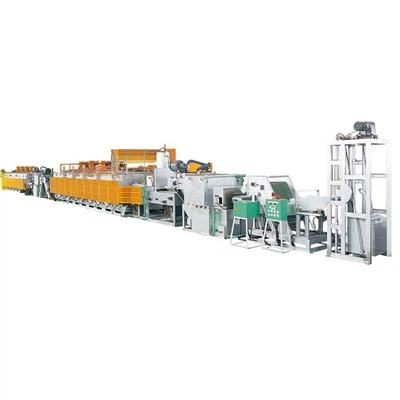

Heat Treatment Requirements for Steel Sleeves
Steel sleeves are used in mechanical assemblies where their inner and outer surfaces may serve different functions. Their heat treatment requirements depend on the contact conditions, material grade and dimensional tolerances.
Outer Surface Wear Resistance
Sleeves fitted into moving or rotating assemblies may experience repeated friction against shafts, pins or other components. Where the design requires a hardened outer surface, a suitable steel grade can be carburized and quenched to develop a wear-resistant case.
Inner Bore Hardness
The inner bore may also be a working surface, particularly in sleeves that guide, support or fit around moving components. If the bore requires specific hardness or wear resistance, the treatment route must account for the required hardness distribution rather than focusing only on the outside diameter.
Wall Thickness and Dimensional Stability
The wall thickness of a sleeve affects how it responds to heating and cooling. Thin-walled sleeves may be more sensitive to dimensional changes during quenching. Inner diameter, outer diameter, roundness and concentricity should therefore be included in the inspection requirements.
Core Properties
Depending on the application, a sleeve may need a hardened surface with a tougher core, or hardness through the entire section. The steel grade and component dimensions determine which heat treatment route is appropriate.
Steel Sleeve Types and Applications
Steel sleeves are used in different mechanical assemblies. Their function helps determine which surfaces need wear resistance and which dimensions require close control.
| Sleeve Type | Typical Application | Main Considerations |
|---|---|---|
| Bushing sleeves | Machinery joints and moving connections | Bore wear and fit with mating parts |
| Spacer sleeves | Mechanical assemblies and fastening systems | Length, flatness and dimensional accuracy |
| Shaft sleeves | Rotating shafts and drive assemblies | Inner and outer diameter requirements |
| Guide sleeves | Industrial machinery and positioning equipment | Bore condition and alignment |
| Coupling sleeves | Mechanical power transmission assemblies | Material strength and contact surfaces |
Heat Treatment Routes for Steel Sleeves
The appropriate process depends on whether the sleeve needs a hardened surface, through-hardness or a specific combination of surface and core properties.
Carburizing and Quenching
For suitable low-carbon and alloy steels, carburizing can increase the carbon content near the surface before quenching. This route is used when the sleeve requires a hardened case while retaining a tougher core. The specified case depth and the surfaces requiring treatment should be defined in advance.
Through Hardening and Tempering
When hardness is required throughout the sleeve section, through-hardening followed by tempering may be considered. The steel grade, wall thickness and required mechanical properties determine whether this route is suitable.
Quenching and Tempering Without Carburizing
Some sleeves require improved strength and hardness but do not need a carburized case. In these cases, the material can follow a suitable quenching and tempering process based on its specification.
Not every steel sleeve requires carburizing, and not every sleeve is suitable for continuous mesh belt processing. The final process should be confirmed against the material grade, component drawing and required hardness distribution.
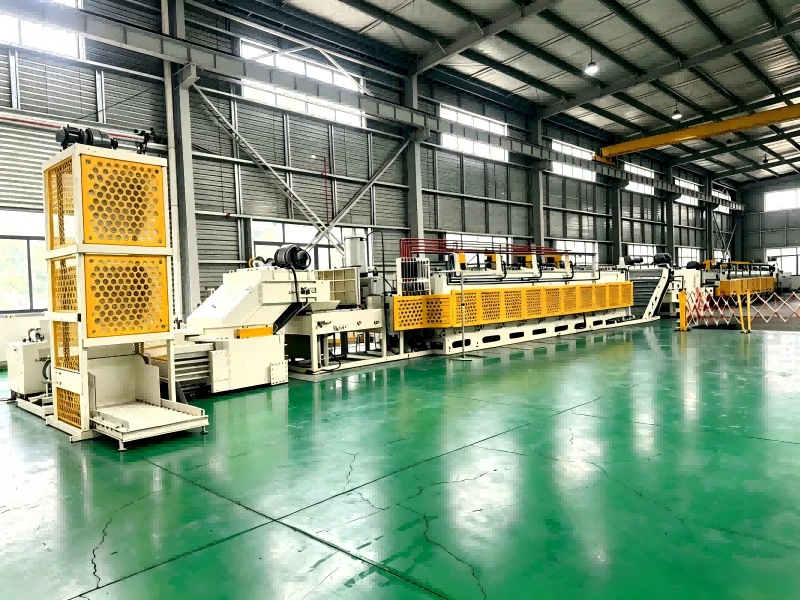
Mesh Belt Furnace Selection for Steel Sleeves
The hollow structure of steel sleeves makes loading and heat treatment evaluation different from solid components. The following details help determine whether a mesh belt furnace can handle the workpieces and meet the production requirements.
| Selection Factor | Information Required | Purpose |
|---|---|---|
| Steel grade | Material designation and specification | Determines the suitable heat treatment route |
| Outer diameter | Minimum and maximum diameter | Helps evaluate belt loading |
| Inner diameter | Bore size before treatment | Identifies critical fit dimensions |
| Wall thickness | Minimum and maximum thickness | Helps assess heating and quenching response |
| Sleeve length | Overall component length | Determines loading arrangement |
| Individual weight | Weight per sleeve | Helps calculate conveyor loading |
| Hardness requirement | Surface or through-hardness | Defines the treatment objective |
| Case depth | Required effective case depth, if applicable | Determines carburizing requirements |
| Dimensional tolerance | Inner diameter, outer diameter and roundness | Defines post-treatment inspection |
| Production volume | Pieces per hour or weight per hour | Supports furnace capacity selection |
FAQ
1. Can a mesh belt furnace process hollow steel sleeves?
Yes, small and medium-sized steel sleeves can be evaluated for mesh belt processing. Their outer diameter, inner diameter, length, weight and loading stability need to be checked before confirming suitability.
2. Do steel sleeves need carburizing or through-hardening?
It depends on the required hardness distribution. Carburizing is used when a hardened surface case and tougher core are required and the steel grade supports the process. Through-hardening is considered when hardness is needed throughout the component section.
3. Will quenching affect the inner diameter of steel sleeves?
Quenching can cause dimensional changes, including changes to the inner and outer diameters. The extent depends on material, wall thickness, geometry and process conditions. Critical bore dimensions should be measured after treatment, with finishing allowances considered during production planning.
Hot Tags: mesh belt quenching furnace for steel sleeves, China mesh belt quenching furnace for steel sleeves manufacturers, suppliers, factory, Batch Hearth Furnace, Batch Integral Quench Furnaces, quenching furnace