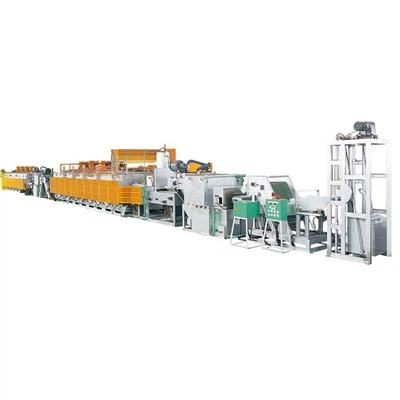

Heat Treatment Requirements for Steel Bushings
Steel bushings operate between mating components or around rotating shafts. Their heat treatment requirements depend on the contact conditions, material and dimensional tolerances.
Surface Hardness and Wear Resistance
Bushings used in sliding or rotating applications may require a hardened surface to resist repeated contact and friction. For suitable steel grades, carburizing followed by quenching can be used to develop a hardened surface layer. The required surface hardness and effective case depth should follow the component drawing or technical specification.
Inner and Outer Diameter Accuracy
The inner bore and outer diameter determine the fit between the bushing and its mating parts. Heating and quenching may cause dimensional changes, so both surfaces need to be checked after treatment. The required tolerances and any machining allowance should be considered before selecting the process.
Wall Thickness and Roundness
Thin-wall bushings are more sensitive to thermal stress and uneven cooling than thicker components. Wall thickness, overall length and diameter affect how the part responds during heating and quenching. Roundness and cylindricity are important inspection points, particularly for bushings used in close-fitting assemblies.
Surface and Core Hardness
Some applications require a hard outer layer with a tougher core, while others require hardness through the component section. These are different treatment objectives. The steel grade, component thickness and service requirements determine which process is appropriate.
Spring Pin Types and Applications
Different bushing designs serve different mechanical functions. Their geometry and operating conditions should be considered when evaluating furnace suitability.
| Bushing Type | Typical Application | Main Heat Treatment Considerations |
|---|---|---|
| Sleeve bushings | Shafts, rotating assemblies and industrial machinery | Bore dimensions, outer diameter and wall thickness |
| Flanged bushings | Mechanical joints and equipment connections | Flange geometry and dimensional stability |
| Automotive steel bushings | Vehicle mechanisms and component assemblies | Wear resistance, material and production consistency |
| Hardened steel bushings | High-contact and wear-resistant assemblies | Surface or through-hardness requirements |
| Machinery bushings | Industrial equipment and mechanical linkages | Load conditions, material grade and dimensional tolerances |
Continuous Heat Treatment Process for Bushings
A mesh belt furnace transports bushings through the required treatment stages without individual batch loading. The process sequence depends on whether the components require carburizing, quenching and tempering or another specified treatment route.
1. Feeding and Belt Loading
Bushings are distributed across the mesh belt before entering the heating section. Short sleeve bushings may roll or overlap during transport, while longer or heavier components may require different loading arrangements. Workpiece orientation, spacing and loading density should be evaluated using actual samples.
2. Heating
The bushings pass through the heating zone at a controlled belt speed. Temperature and residence time are determined by the steel grade, wall thickness and required treatment. For carburizing applications, the heating stage must also meet the specified carbon-enrichment requirements.
3. Quenching
After heating, the components enter the configured quenching stage. Cooling conditions must be matched to the material and required hardness. For cylindrical bushings, the effect of cooling on the inner diameter, outer diameter and roundness should be considered during process development.
4. Tempering
Where required, the quenched bushings proceed to tempering. The temperature and holding time depend on the steel grade and target mechanical properties. Final inspection can include surface hardness, core hardness where specified, bore diameter and roundness.
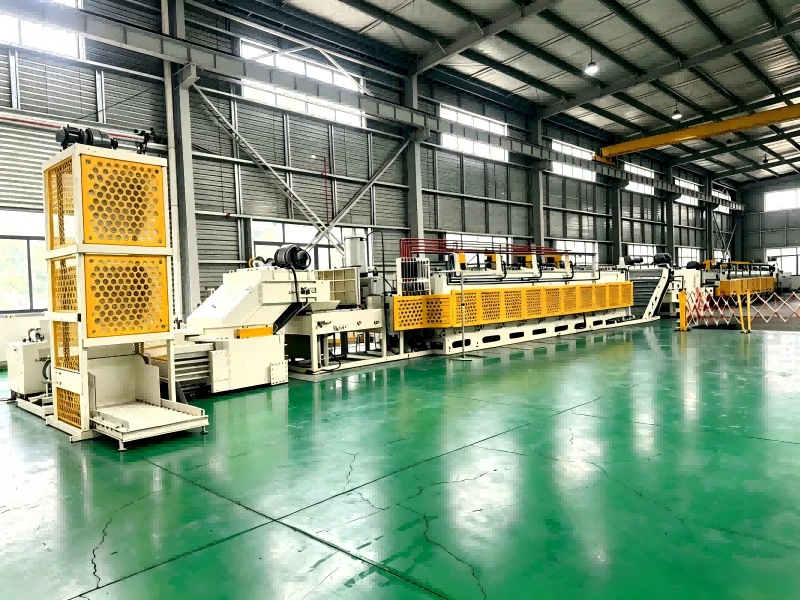
Selecting a Mesh Belt Furnace for Spring Pins
The furnace should be selected according to the complete workpiece dimensions and production requirements. Outer diameter alone is not enough to determine whether a bushing can be processed efficiently on a mesh belt.
| Selection Item | Details to Confirm | Effect on Furnace Selection |
|---|---|---|
| Material | Steel grade and material specification | Determines the suitable heat treatment route |
| Outer diameter | Minimum and maximum diameter | Helps assess loading and belt utilization |
| Inner diameter | Bore size and tolerance | Defines an important post-treatment inspection requirement |
| Wall thickness | Minimum and maximum thickness | Affects heating and cooling behavior |
| Component length | Overall bushing length | Influences workpiece arrangement on the belt |
| Hardness | Surface hardness or through-hardness | Defines the treatment objective |
| Case depth | Required effective case depth, if applicable | Determines whether carburizing is needed |
| Production capacity | Pieces per hour or weight per hour | Helps determine belt width and operating speed |
| Loading arrangement | Bulk loading, separated loading or fixtures | Affects part movement and production consistency |
FAQ
1. Can a mesh belt quenching furnace process different bushing sizes?
Yes. Different sizes can be evaluated for the same production line, provided their dimensions and process requirements are compatible. The outer diameter, inner diameter, length and wall thickness should all be considered when determining loading arrangements and operating conditions.
2. Do all steel bushings require carburizing?
No. Carburizing is suitable when a hardened surface layer is required and the steel grade supports the process. Other bushings may require through-hardening and tempering or a different treatment route according to their material and application.
3. How can bushing deformation after quenching be evaluated?
The inner diameter, outer diameter, roundness and overall dimensions should be checked against the component drawing. Material selection, wall thickness, heating conditions, quenching conditions and loading arrangements all need to be considered during process development.
Hot Tags: mesh belt quenching furnace for bushings, China mesh belt quenching furnace for bushings manufacturers, suppliers, factory, Batch Hearth Furnace, Batch Integral Quench Furnaces, quenching furnace