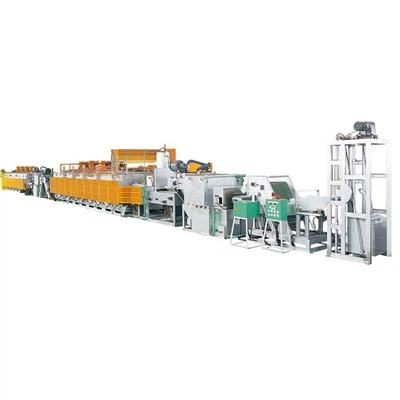

Spring Pin Heat Treatment Requirements
Spring pins rely on their material properties and structural design to maintain a secure fit after insertion. Heat treatment requirements vary with the pin type, steel grade and intended application.
Hardness and spring properties
Spring pins need to meet the specified hardness and mechanical property requirements. Excessive hardness or an unsuitable tempering condition can affect the balance between strength and flexibility. Heating and tempering parameters must be determined according to the material specification and product requirements.
Dimensional stability
Spring pins have relatively small cross-sections, and some designs use a split or coiled structure. Uneven heating and rapid cooling can contribute to dimensional changes. Pin diameter, wall thickness, length and geometry should be considered when evaluating the heat treatment process.
Loading and separation
Slotted and coiled spring pins can overlap or become entangled when handled in bulk. If too many parts accumulate on the mesh belt, the distribution of workpieces may become uneven. Loading density and feeding methods should be evaluated through production trials.
Surface condition
The required surface condition depends on the pin material and application. For parts requiring a hardened surface layer, carburizing may be considered only when the steel grade and technical specification are suitable. Many spring pins instead require a different hardening route, such as through-hardening and tempering.
Spring Pin Types and Applications
Spring pins are used to locate, retain or connect components in mechanical assemblies. Different pin structures have different deformation characteristics and heat treatment requirements.
| Spring Pin Type | Typical Application | Main Considerations |
|---|---|---|
| Slotted spring pins | Mechanical joints and component positioning | Slot geometry, wall thickness and spring properties |
| Coiled spring pins | Automotive and industrial assemblies | Coil structure, material and dimensional stability |
| Heavy-duty spring pins | Machinery and load-bearing connections | Required strength, hardness and pin dimensions |
| Light-duty spring pins | Small equipment and precision assemblies | Small cross-section and loading arrangement |
| Stainless steel spring pins | Equipment exposed to moisture or corrosive environments | Stainless steel grade and suitable heat treatment route |
Continuous Heat Treatment Process for Spring Pins
A mesh belt furnace can be configured for continuous processing, but the process sequence must match the spring pin material and required mechanical properties.
1. Feeding and belt loading
Spring pins are fed onto the mesh belt before entering the heating section. Their length, diameter and structural design affect how they sit on the belt. The loading method should limit excessive overlap and prevent parts from accumulating or becoming entangled during transport.
2. Controlled heating
The pins move through the heating zone at a set belt speed. Heating temperature and residence time are selected according to the steel grade, cross-section and required properties. Different pin sizes may require different process settings.
3. Quenching
After heating, the pins enter the configured quenching stage. Cooling conditions must be matched to the material and required hardness. For slotted or coiled pins, the effect of cooling on the finished geometry should be checked during process development.
4. Tempering
Tempering is applied after quenching when required by the selected heat treatment route. It helps establish the required balance of hardness and mechanical properties. The final temperature and holding time should follow the material specification and product requirements.
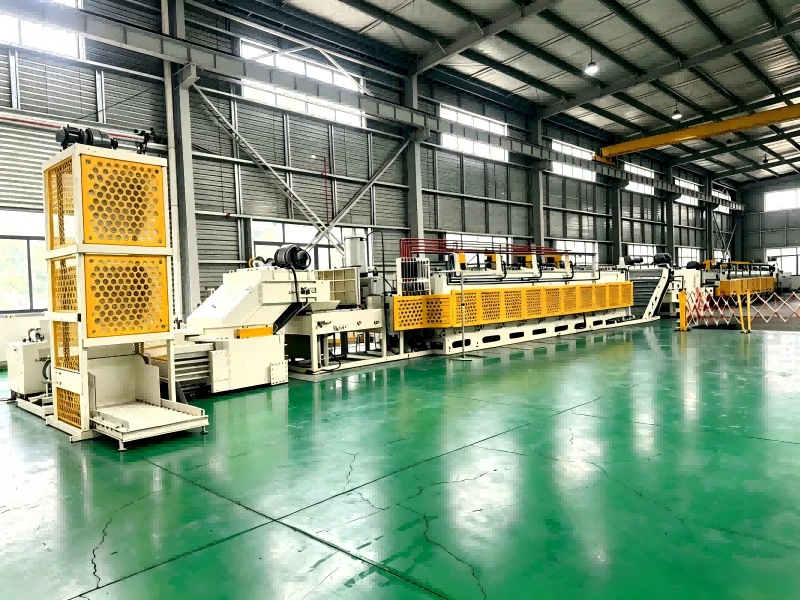
Selecting a Mesh Belt Furnace for Spring Pins
Spring pin dimensions and production requirements are important when choosing a continuous heat treatment line. The following information helps determine the appropriate furnace configuration.
| Selection Item | Details to Confirm | Effect on Equipment Selection |
|---|---|---|
| Pin design | Slotted, coiled or other structure | Affects loading and part separation |
| Material | Steel grade and material specification | Determines the suitable heat treatment route |
| Dimensions | Outer diameter, length and wall thickness | Helps assess heating and belt loading |
| Required properties | Hardness, strength and spring performance | Guides process development |
| Production volume | Pieces per hour or weight per hour | Helps determine belt width and operating speed |
| Loading method | Bulk feeding, separated loading or fixtures | Affects belt utilization and workpiece distribution |
| Process route | Quenching and tempering or another specified treatment | Determines the required furnace arrangement |
FAQ
1. Can a mesh belt quenching furnace process slotted and coiled spring pins?
Both types can be evaluated for mesh belt processing. Their structures and dimensions differ, so loading arrangements and heat treatment conditions should be assessed separately. Production trials can help confirm whether the parts can be transported and processed without excessive overlap or entanglement.
2. Do spring pins require carburizing or through-hardening?
The process depends on the steel grade and required mechanical properties. Some spring pins require through-hardening and tempering, while carburizing is only suitable when a hardened surface layer is specified and the material supports that process.
3. How can spring pin deformation be controlled during heat treatment?
Material selection, heating conditions, quenching conditions and loading arrangements all affect dimensional stability. Pin geometry and wall thickness should be considered during process development, and finished dimensions should be checked after heat treatment.
Hot Tags: mesh belt quenching furnace for spring pins, China mesh belt quenching furnace for spring pins manufacturers, suppliers, factory, Batch Hearth Furnace, Batch Integral Quench Furnaces, quenching furnace