


Heat Treatment Requirements for Piston Pins
Piston pins need to withstand repeated contact, friction, and mechanical stress during engine operation. The appropriate heat treatment depends on the material and the pin's design requirements.
✅ Surface hardness: Helps resist wear at contact surfaces.
✅ Core toughness: Supports resistance to repeated loading and impact.
✅ Case depth: For case-hardened pins, the hardened layer must meet the component specification.
✅ Dimensional stability: Heating and quenching conditions must account for the pin's geometry and distortion limits.
✅ Consistent material properties: Repeatable processing helps maintain quality across high-volume production.
Choosing the Right Process for Piston Pins
The heat-treatment route should be based on the piston pin's material specification and required performance, rather than the component name alone.
Carburizing and Quenching
For piston pins made from suitable low-carbon steel, carburizing can increase the carbon content near the surface. Subsequent quenching hardens this layer, helping the surface resist wear while retaining a comparatively tougher core when the process is properly designed.
Tempering After Quenching
Tempering adjusts the properties of the hardened steel and helps reduce residual stresses. The temperature and holding time must match the required hardness and toughness.
Hardness and Case-Depth Verification
Surface hardness, core hardness, and effective case depth should be checked against the applicable drawing or material specification. These measurements help confirm that the treatment meets the piston pin's performance requirements.
Continuous Processing for Piston Pin Production
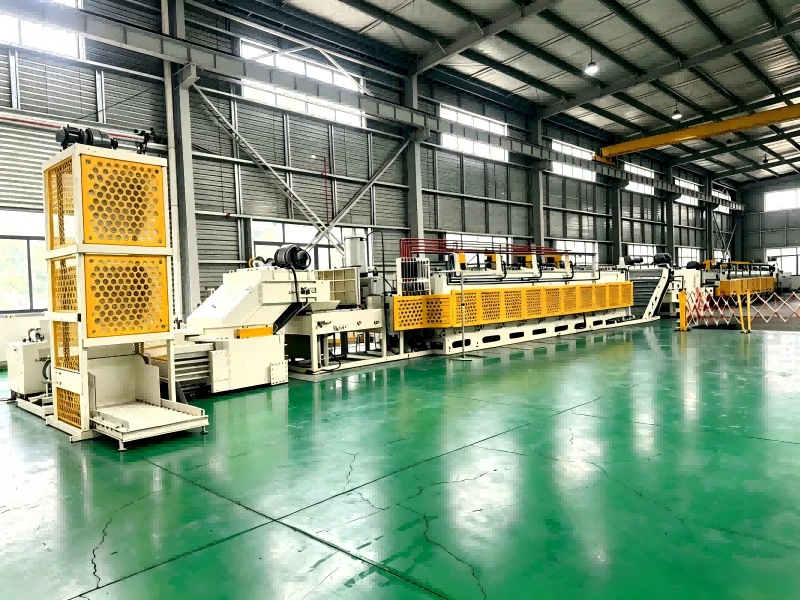
A mesh belt furnace moves components through the heat-treatment line at a controlled speed. This arrangement can suit manufacturers producing piston pins in large quantities, provided the parts can be loaded and conveyed reliably.
✅ Steady part movement
The mesh belt carries pins through the treatment zones without requiring separate manual loading for each furnace batch.
✅ Controlled heating conditions
Furnace temperature and belt speed can be set according to the selected process and component requirements.
✅ Quenching and tempering integration
A suitable production line can connect the heating stage with quenching and tempering equipment to support continuous manufacturing.
✅ Repeatable production settings
Consistent loading, thermal conditions, and line speed help reduce process variation. Actual results depend on furnace design, loading patterns, and process validation.
Applications in Engine Component Manufacturing
The furnace may be considered for continuous heat treatment of suitable piston pins used in:
✅ Passenger car engines
✅ Commercial vehicle engines
✅ Motorcycle engines
✅ Other combustion-engine applications requiring hardened steel piston pins
The final process must match the component design, steel grade, and performance specification. Not all piston pins require the same surface treatment.
FAQ
1. Why is heat treatment important for piston pins?
Piston pins experience repeated loading and sliding contact during engine operation. Appropriate heat treatment helps achieve the specified hardness, wear resistance, and core properties.
2. Is carburizing required for every piston pin?
No. The required process depends on the material and engineering specification. Carburizing and quenching are suitable for some case-hardened steel pins, while other materials may require a different treatment route.
3. Can a mesh belt furnace handle high-volume piston pin production?
A suitably configured line can process compatible piston pins continuously. Throughput depends on pin dimensions, loading arrangement, belt width, line speed, and required treatment time.
Hot Tags: mesh belt quenching furnace for piston pins, China mesh belt quenching furnace for piston pins manufacturers, suppliers, factory, Batch Hearth Furnace, Batch Integral Quench Furnaces, quenching furnace


