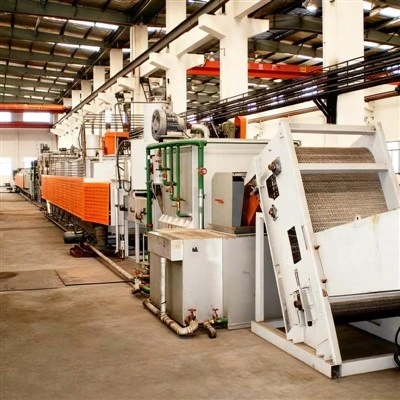

A mesh belt heat treatment furnace is a continuous industrial heating system designed for processing large quantities of metal components with stable temperature control and consistent heat treatment results. Unlike batch-type furnaces that process parts in separate cycles, a mesh belt furnace uses a continuous conveyor system to move workpieces through different heating and cooling zones, making it suitable for high-volume production.
For manufacturers producing automotive components, fasteners, bearings, gears, and other precision metal parts, selecting the right heat treatment equipment directly affects product hardness, wear resistance, dimensional stability, and production efficiency.
A continuous type carburizing quenching furnace is one of the important solutions for manufacturers requiring continuous carburizing, quenching, and tempering processes. This type of mesh belt heat treatment furnace integrates atmosphere control, automatic material transportation, heating, quenching, and tempering into one production line, helping manufacturers achieve stable quality for mass production.
CHTEE provides customized industrial furnace solutions for different heat treatment requirements, including continuous carburizing and quenching systems for automotive parts, fasteners, bearings, and hardware components.

What is a Mesh Belt Heat Treatment Furnace?
A mesh belt heat treatment furnace is a type of continuous heat treatment equipment that uses a heat-resistant metal mesh belt to transport workpieces through controlled temperature zones. During operation, metal parts move continuously through different sections of the furnace, including preheating, heating, carburizing, quenching, cooling, and tempering areas.
The main purpose of a mesh belt furnace is to modify the mechanical properties of metal components through controlled thermal processing. Depending on production requirements, the furnace can perform processes such as:
- Carburizing
- Carbonitriding
- Quenching
- Tempering
- Hardening
- Annealing
Compared with traditional batch furnaces, mesh belt heat treatment furnaces provide better production continuity and automation capability. The continuous movement of the belt allows each workpiece to experience similar heating conditions, reducing variations in hardness and improving product consistency.
✅ For industries requiring large quantities of small and medium-sized components, such as screws, bolts, nuts, gears, chains, and bearings, a mesh belt furnace is often selected as a reliable solution for automated heat treatment production.
Key Components of Mesh Belt Heat Treatment Furnaces
A mesh belt heat treatment furnace consists of several important systems that work together to achieve accurate temperature control, stable atmosphere conditions, and continuous production.
1.Mesh Belt Conveyor System
The mesh belt is the core transportation component of the furnace. It carries workpieces through different processing zones at a controlled speed.
The belt material is usually made from heat-resistant alloy steel, allowing it to operate under high-temperature conditions for long production cycles.
The belt speed can be adjusted according to:
- Material type
- Component size
- Heat treatment requirements
- Production capacity
A stable mesh belt movement ensures uniform thermal exposure and reduces product deformation caused by uneven heating.
2.Heating System
The heating system provides the required temperature for different heat treatment stages.
Depending on the furnace design, heating methods may include:
- Electric heating
- Gas heating
- Indirect heating systems
The heating chamber is divided into multiple temperature zones, allowing manufacturers to control each stage of the heat treatment process.
For carburizing applications, precise temperature control is necessary because carbon diffusion efficiency directly affects surface hardness and carburizing depth.
3.Atmosphere Control System
Atmosphere control is one of the key factors affecting carburizing quality.
During carburizing and carbonitriding processes, the furnace atmosphere must maintain stable carbon potential to prevent:
- Surface oxidation
- Decarburization
- Uneven hardness distribution
A continuous carburizing quenching furnace usually uses protective gases such as:
- Methanol carrier gas
- Propane enrichment gas
- Nitrogen-based protective atmosphere
Accurate atmosphere management allows manufacturers to achieve stable surface hardness and repeatable heat treatment results.
4.PLC Automatic Control System
Modern mesh belt heat treatment furnaces are equipped with PLC control systems to monitor and adjust:
- Furnace temperature
- Belt speed
- Atmosphere parameters
- Process time
- Equipment alarms
Automatic control reduces dependence on manual operation and improves production stability.
For manufacturers producing thousands of components per day, automated furnace control helps maintain consistent product quality throughout long production cycles.
How Does a Mesh Belt Heat Treatment Furnace Work?
The working principle of a mesh belt heat treatment furnace is based on continuous material transportation combined with controlled heating and cooling processes.
The typical working process includes:
1. Loading Process
Metal components are placed onto the mesh belt through an automatic loading system.
The loading method can be adjusted according to production requirements, especially for small components such as:
- Fasteners
- Screws
- Bearings
- Hardware parts
Continuous feeding allows the furnace to maintain stable production efficiency.
2. Preheating Stage
Before entering the main heating zone, components pass through a preheating section.
The preheating process gradually increases material temperature and reduces thermal stress.
This helps prevent:
- Cracking
- Uneven expansion
- Internal stress concentration
3. Heating and Carburizing Stage
During this stage, components enter the carburizing zone where temperature and atmosphere are carefully controlled.
Carbon atoms diffuse into the surface layer of steel components, improving:
- Surface hardness
- Wear resistance
- Fatigue strength
For example, automotive gears and fasteners often require carburizing treatment because their surfaces need high hardness while maintaining a tough internal structure.
4. Quenching Stage
After carburizing, components move into the quenching section.
The rapid cooling process transforms the material structure and increases hardness.
A continuous mesh belt quenching furnace can integrate automatic transfer between heating and quenching sections, reducing handling time and improving process consistency.
5. Tempering Stage
After quenching, components enter the tempering furnace.
Tempering reduces internal stress and improves toughness, allowing treated parts to achieve balanced mechanical properties.
The combination of carburizing, quenching, and tempering creates a complete heat treatment process suitable for high-volume industrial production.
Applications of Mesh Belt Heat Treatment Furnaces
Mesh belt heat treatment furnaces are widely used in industries that require high-volume production of metal components with consistent mechanical properties. Their continuous operation mode makes them suitable for manufacturers that need stable quality, repeatable processes, and efficient production.
1.Automotive Components
The automotive industry is one of the major application fields for mesh belt heat treatment furnaces.
Many automotive components require surface hardening to improve wear resistance and service life, including:
- Gears
- Transmission parts
- Shafts
- Chain components
- Fasteners
A continuous carburizing quenching furnace helps automotive parts manufacturers achieve uniform carburizing depth and stable hardness distribution during mass production.
For components exposed to repeated mechanical stress, controlled carburizing and quenching processes improve fatigue resistance and reduce premature failure.
2.Fastener Manufacturing
Fasteners such as bolts, screws, nuts, and special hardware components require reliable strength and durability.
During production, manufacturers need heat treatment equipment that can handle:
- Large production volumes
- Continuous operation
- Consistent hardness requirements
A mesh belt furnace for fasteners provides an automated solution for carburizing, quenching, and tempering small metal parts.
Compared with manual batch processing, continuous production reduces variation between batches and improves manufacturing efficiency.
3.Bearing Components
Bearings require precise heat treatment to achieve the correct balance between hardness and toughness.
Mesh belt heat treatment furnaces are suitable for processing:
- Bearing rings
- Small bearing components
- Rolling elements
Stable temperature control helps maintain consistent material properties and reduces quality issues caused by uneven heating.
4.Hardware and Machinery Parts
Many industrial hardware components require improved wear resistance and mechanical strength.
Applications include:
- Chains
- Clips
- Springs
- Metal connectors
- Precision hardware parts
A customized industrial heat treatment furnace allows manufacturers to adjust temperature curves, atmosphere conditions, and production speed according to different materials and component requirements.
Mesh Belt Heat Treatment Furnaces Advantages
Choosing the right heat treatment equipment affects not only product quality but also manufacturing efficiency and operating costs.
A mesh belt heat treatment furnace provides several advantages for continuous industrial production.
1.Continuous High-Volume Production
The biggest advantage of a mesh belt furnace is continuous operation.
Unlike batch furnaces that require repeated loading and unloading cycles, a continuous furnace allows components to move through the production line without interruption.
This design is suitable for manufacturers producing:
- Automotive fasteners
- Bearings
- Hardware components
- Precision metal parts
Continuous production improves output capacity and supports automated manufacturing systems.
2.Uniform Heating and Stable Quality
Consistent heat treatment results depend on accurate temperature control and stable processing time.
The multi-zone heating structure of a mesh belt furnace ensures that each component receives similar thermal conditions.
Benefits include:
- Reduced hardness variation
- Improved product consistency
- Lower rejection rates
For industries with strict quality requirements, stable heat treatment performance directly improves production reliability.
3.Controlled Atmosphere for Better Surface Quality
During carburizing and hardening processes, uncontrolled oxygen exposure can cause oxidation and surface defects.
A continuous carburizing furnace uses a controlled atmosphere system to maintain suitable processing conditions.
This helps manufacturers achieve:
- Stable carburizing depth
- Better surface quality
- Reduced oxidation problems
4.Automated Operation and Lower Labor Requirements
Modern mesh belt heat treatment furnaces use PLC control systems to automate key production parameters.
Operators can monitor:
- Temperature settings
- Belt speed
- Gas flow
- Process status
Automation improves production repeatability and reduces the impact of manual operation differences.

Mesh Belt Furnace vs Other Types of Heat Treatment Furnaces
Different heat treatment furnaces are designed for different production requirements. Understanding the differences helps manufacturers select the most suitable solution.
| Furnace Type | Production Mode | Suitable Applications |
|---|---|---|
| Mesh Belt Heat Treatment Furnace | Continuous production | Fasteners, gears, bearings, small metal parts |
| Box Furnace | Batch production | Small quantities, flexible processing |
| Pit Furnace | Batch production | Large components and deep heating applications |
| Roller Hearth Furnace | Continuous production | Larger and heavier components |
A mesh belt heat treatment furnace is mainly selected when manufacturers require:
- Large production capacity
- Stable product quality
- Automated processing
Continuous carburizing and quenching
For manufacturers producing thousands of small components daily, a continuous furnace system provides higher efficiency compared with batch-type equipment.
How to Choose a Mesh Belt Heat Treatment Furnace Manufacturer?
Selecting a suitable furnace supplier requires evaluating more than equipment specifications.
Manufacturers should consider:
1.Engineering Capability
A professional industrial heat treatment furnace manufacturer should understand:
- Material characteristics
- Heat treatment processes
- Production requirements
- Furnace configuration
Different products require different solutions. A furnace designed for automotive fasteners may have different requirements from one designed for bearings or precision hardware.
2.Customization Ability
Production requirements vary between manufacturers.
Important customization factors include:
- Furnace size
- Heating method
- Atmosphere system
- Production capacity
- Temperature control requirements
CHTEE provides customized continuous furnace solutions based on customer production conditions and heat treatment requirements.
3.Manufacturing Experience and Quality Control
CHTEE is a professional heat treatment furnace manufacturer specializing in industrial furnace design and production.
With more than 15 years of experience in furnace manufacturing, CHTEE provides customized solutions including:
Continuous carburizing quenching furnace
Mesh belt heat treatment furnace
Annealing furnace
Quenching furnace
Tempering furnace
The company operates a manufacturing facility with professional production teams and engineering specialists who support furnace design, manufacturing, installation, and technical service.
By combining process experience with customized furnace design, CHTEE helps manufacturers improve heat treatment consistency and production efficiency.
Maintenance and Operation Considerations
Proper maintenance helps extend furnace service life and maintain stable production performance.
Important maintenance areas include:
1.Mesh Belt Inspection
Regular inspection helps identify:
- Belt wear
- Deformation
- Tension problems
A stable conveyor system is necessary for continuous production.
2.Heating System Maintenance
Regular checks should include:
- Heating elements
- Temperature sensors
- Control components
Accurate temperature measurement ensures reliable heat treatment results.
3.Atmosphere System Inspection
For carburizing furnaces, atmosphere stability directly affects product quality.
Manufacturers should regularly monitor:
- Gas supply
- Carbon potential
- Sealing performance
FAQ
1.What is a mesh belt heat treatment furnace?
A mesh belt heat treatment furnace is a continuous industrial furnace that uses a metal mesh conveyor to transport components through controlled heating, atmosphere treatment, and cooling zones.
It is commonly used for high-volume heat treatment of fasteners, automotive parts, bearings, and small metal components.
2.What parts can be processed in a mesh belt furnace?
Mesh belt furnaces are suitable for many small and medium-sized metal components, including:
- Screws
- Bolts
- Nuts
- Gears
- Bearings
- Hardware parts
The specific furnace design depends on material type, production volume, and required heat treatment process.
3.Can a mesh belt furnace perform carburizing and quenching?
Yes.
A continuous carburizing quenching furnace integrates carburizing and quenching processes into a continuous production system.
It is commonly used for components requiring:
- High surface hardness
- Wear resistance
- Improved fatigue strength
4.What is the difference between a mesh belt furnace and a box furnace?
The main difference is the production mode.
A mesh belt furnace is designed for continuous automated production, while a box furnace usually operates in separate batches.
Mesh belt furnaces are more suitable for high-volume manufacturing environments.
5.How do I choose a suitable mesh belt heat treatment furnace supplier?
Manufacturers should evaluate:
- Furnace design capability
- Heat treatment experience
- Customization ability
- Production support
- After-sales service
Working with an experienced mesh belt heat treatment furnace manufacturer helps ensure the equipment matches production requirements.