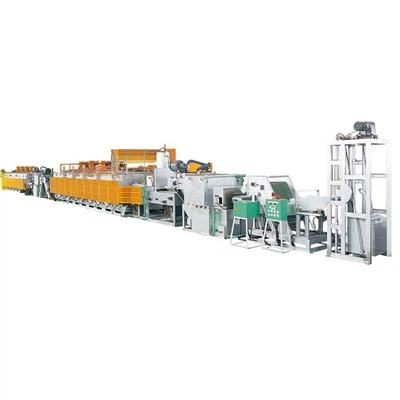

Heat Treatment Requirements for Steel Washers
Washers are generally small, thin components with central holes. Their dimensions and geometry affect how they are heated, arranged and quenched. The process must be selected according to the washer's material and intended mechanical properties.
Hardness requirements
Hardened washers used in bolted connections and mechanical assemblies need to meet the specified hardness range. Heating temperature, holding time and quenching conditions must be matched to the steel grade and washer thickness.
Flatness and deformation
Thin washers can be sensitive to thermal stress and uneven cooling. Their thickness, diameter and loading arrangement should be considered when determining the quenching process. Excessive stacking or uneven distribution on the mesh belt may also affect heat treatment consistency.
Surface condition
For washers requiring a hardened surface, the selected process must account for the required case depth and surface condition. Carburizing may be considered when the material and application call for surface carbon enrichment; it is not required for every washer.
Batch consistency
When washers are produced in large quantities, consistent feeding and distribution help maintain a stable production process. The belt speed, furnace temperature and loading density need to be considered together.
Washer Types and Applications
Different washer designs serve different mechanical purposes. Their material, thickness and required properties determine whether quenching or carburizing is appropriate.
| Washer Type | Typical Application | Heat Treatment Considerations |
|---|---|---|
| Flat washers | Bolted joints and machinery assemblies | Material, thickness and required hardness |
| Hardened washers | High-strength bolted connections | Hardness requirements and quenching conditions |
| Spring washers | Fastening systems requiring spring action | Material properties and heat treatment requirements |
| Automotive washers | Vehicle components and assemblies | Dimensional consistency and production volume |
| Industrial washers | Machinery, equipment and structural assemblies | Workpiece size, material and service requirements |
How a Mesh Belt Furnace Processes Washers
A continuous mesh belt furnace moves washers through successive treatment stages. The production line can be configured according to the required process.
1. Feeding and distribution
Washers are loaded onto the mesh belt and distributed across its working width. The loading method should prevent excessive overlap or accumulation, particularly when processing thin washers in large quantities.
2. Heating
The washers pass through the heating zone at a controlled belt speed. Heating temperature and residence time are selected according to the steel grade, washer thickness and target properties.
3. Quenching
After heating, the workpieces enter the configured quenching stage. The quenching medium and cooling conditions must match the material and required hardness. The arrangement of washers on the belt also affects how consistently they are exposed to the cooling process.
4. Tempering
Where required, the quenched washers proceed to the tempering furnace. Tempering conditions are selected to obtain the required balance of hardness and toughness for the intended application.
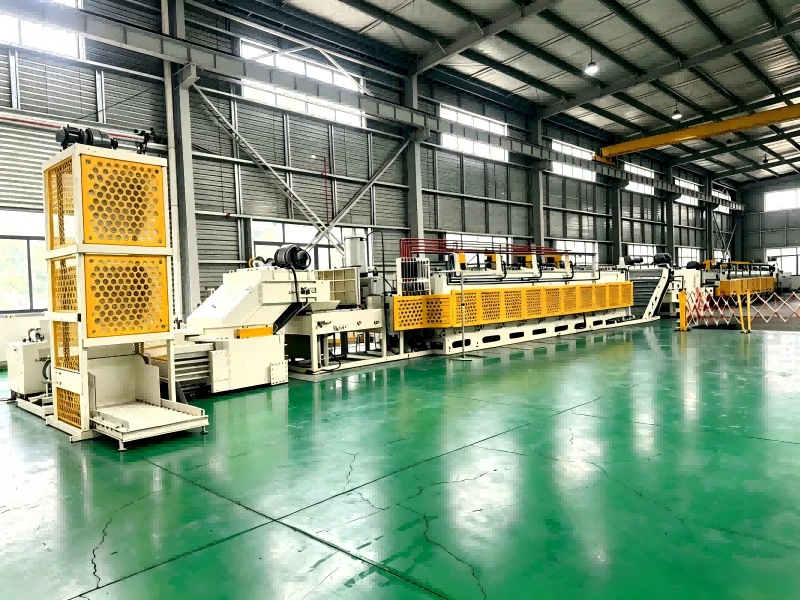
Washer Quenching Furnace Selection
Before selecting a mesh belt quenching furnace, manufacturers should provide the basic workpiece and production information. These details help determine the belt width, heating capacity, furnace length and process arrangement.
| Selection Item | Information to Provide | Why It Matters |
|---|---|---|
| Washer type | Flat, spring or hardened washer | Identifies the component structure and process requirements |
| Material | Steel grade or material specification | Determines suitable heating and quenching conditions |
| Dimensions | Outer diameter, inner diameter and thickness | Helps assess loading and heating requirements |
| Target hardness | Required hardness range | Guides the heat treatment process |
| Production capacity | Required output per hour or shift | Helps determine belt speed and equipment capacity |
| Loading arrangement | Single layer, distributed loading or other method | Affects belt utilization and process consistency |
| Process route | Quenching and tempering, or carburizing and quenching | Determines the furnace configuration |
FAQ
1. Can a mesh belt quenching furnace process different washer sizes?
Yes, different washer sizes can be evaluated for the same production line. However, the diameter, thickness and loading arrangement must be considered when determining the suitable belt width, belt speed and process conditions.
2. Do all steel washers need carburizing before quenching?
No. Carburizing is used when a surface-hardened layer is required and the material is suitable for the process. Some washers may only require conventional quenching and tempering.
3. What information is needed to configure a washer heat treatment line?
The main information includes washer material, outer diameter, inner diameter, thickness, target hardness, required output and loading method. Drawings and samples can help with technical evaluation.
Hot Tags: mesh belt quenching furnace for washers, China mesh belt quenching furnace for washers manufacturers, suppliers, factory, Batch Hearth Furnace, Batch Integral Quench Furnaces, quenching furnace