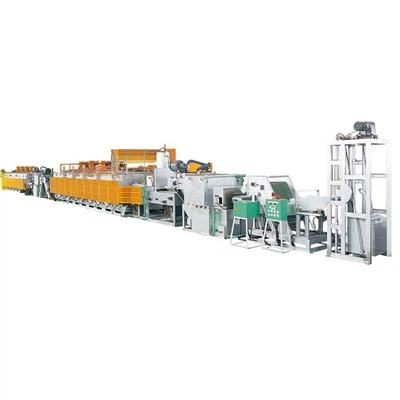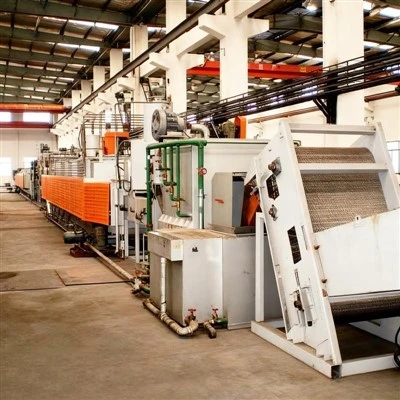

Mesh Belt Quenching Furnace Specifications
CHTEE offers multiple furnace configurations for different output requirements, component sizes, and production layouts.
| Model | Heating Type | Total Power / Heat Input | Carburizing Furnace Length | Tempering Furnace Length | Mesh Belt Width |
|---|---|---|---|---|---|
| TE-QM-E-1 | Electric | 220 kW | 28.5 m | 30.5 m | 400 mm |
| TE-QM-E-2 | Electric | 400 kW | 32.5 m | 34.5 m | 600 mm |
| TE-QM-E-3 | Electric | 450 kW | 36.5 m | 38.5 m | 600 mm |
| TE-QM-E-4 | Electric | 550 kW | 36.5 m | 38.5 m | 800 mm |
| TE-QM-E-5 | Electric | 650 kW | 40.5 m | 42.5 m | 800 mm |
| TE-QM-G-6 | Gas | 76,000 kcal/h | 44.5 m | 46.5 m | 1,000 mm |
| TE-QM-G-7 | Gas | 125,000 kcal/h | 49 m | 57 m | 1,200 mm |
Heat Treatment for Different Metal Components
Different parts require different combinations of surface hardness, core properties, and resistance to repeated contact or friction. The furnace process should match the component's material and working conditions.
Fasteners and threaded parts
Bolts, screws, and nuts may require carburizing and quenching to develop a hardened surface while maintaining the required core properties. The process depends on the steel grade, component dimensions, and specified case depth.
Bearings and rolling components
Bearing parts require controlled heat treatment to achieve their specified hardness and wear resistance. The appropriate process depends on the bearing material and component design.
Gears and transmission parts
Gears and related components may require surface hardening to withstand repeated contact and loading. Carburizing parameters and quenching conditions must be selected according to the component specification.
Stamped and small mechanical parts
Suitable steel stampings and small components can be processed continuously when their dimensions, shape, and loading arrangement allow stable movement through the furnace.
How the Continuous Quenching Line Works
1. Feed and distribute the parts
Components are loaded onto the mesh belt at a controlled rate. Appropriate spacing helps reduce overlap and supports more consistent heat exposure.
2. Heat the workpieces
The parts move through the heating zones under the selected temperature profile. For carburizing applications, the controlled atmosphere supports carbon diffusion into the steel surface.
3. Quench to develop hardness
After heating, the components enter the quenching stage. Rapid cooling transforms the steel microstructure according to the material and process conditions.
4. Temper and prepare for inspection
Tempering adjusts the properties of the quenched parts and helps reduce residual stresses. The required temperature and holding time depend on the component specification.
5. Discharge for downstream operations
Treated parts leave the continuous line for subsequent operations such as cleaning, inspection, sorting, or assembly, depending on the production setup.
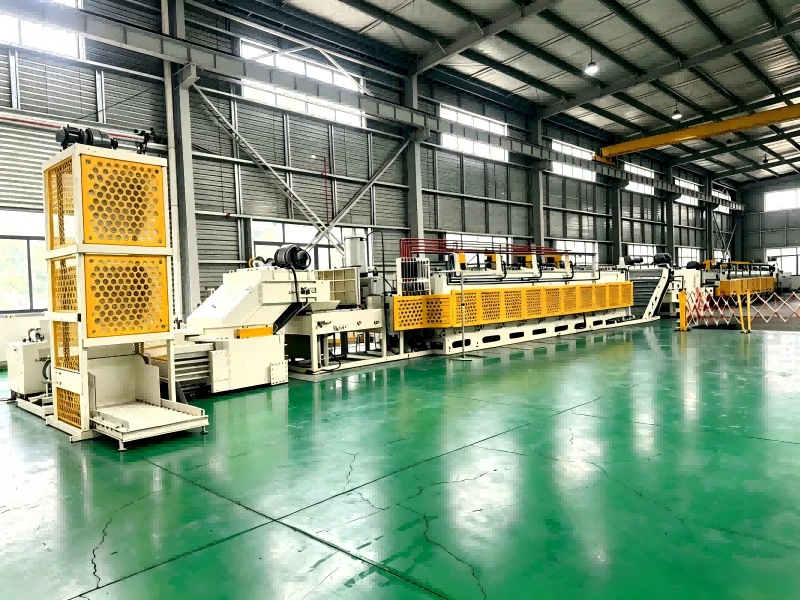
Mesh Belt Quenching Furnace Applications
Typical production uses include:
✅ Automotive and industrial fasteners
✅Bearing components and rollers
✅Small gears and transmission parts
✅Metal hardware and mechanical fittings
✅Suitable stamped steel components
Other small and medium-sized steel parts requiring continuous heat treatment
Parts must be suitable for mesh belt conveying and the selected thermal process. Workpieces that overlap, stick together, or require individual positioning may need a different loading arrangement.
FAQ
1.What is a mesh belt quenching furnace used for?
It is used for continuous heat treatment of metal components that require hardening, tempering, or carburizing followed by quenching. It is particularly suitable for repetitive production of small and medium-sized parts.
2.Can this furnace perform carburizing and quenching in one line?
Yes. A suitable configuration can combine controlled-atmosphere carburizing, quenching, and tempering. The process sequence depends on the material and the required surface and core properties.
3.How do I choose between electric and gas heating?
The decision depends on available utilities, operating conditions, required thermal output, factory infrastructure, and production economics. CHTEE can evaluate the options against the intended process and production target.
Hot Tags: mesh belt quenching furnace for metal parts, China mesh belt quenching furnace for metal parts manufacturers, suppliers, factory, Batch Hearth Furnace, Batch Integral Quench Furnaces, quenching furnace